Best Adjustable Weighted Vests of 2026

A weighted vest only earns its place if you stop noticing it by the second mile. The load sits against your torso instead of hanging off your arms, so a normal walk becomes real work. The catch is the strap holding 20 pounds to your ribs — it has to stop that weight from swinging without digging into your shoulders.

That trade-off is where shopping gets confusing. Buy for the biggest number on the box and you may end up with a brick you wear twice; buy for comfort alone and the weights shift when you jog. Nobody's listing mentions the velcro that grabs lint by week three or the padding that flattens. I've worn 12 of these over the past six months, and the good ones separate fast.

The maximum weight matters less than the increments; a vest that jumps from 10 to 20 pounds in one step is really two vests. Sand packs mold to your body and ride quiet, iron plates stack thinner and stay put. Fit and value are mostly about padding that holds up and paying only for pounds you'll use, and the picks below sort that out.

1

Best Overall

Sportneer Adjustable Weighted Vest

91 /100
Peggy's Score Outstanding

Key details

Closure
Zipper with shoulder and waist locks
Material
Neoprene and polyester
Adjustable Range
2–18 lb
Included Weights
Eight 2 lb and one 1 lb packs
Check Details on Amazon

The 2–18 lb range is the reason this Sportneer is our top pick. Most people don't need a 40 lb vest; they need one that starts light enough for a walk and climbs as their routine does. Eight 2 lb packs and one 1 lb pack make that progression granular, and the zip front with shoulder and waist locks keeps the load close instead of letting it swing. We found it easy to get on and off, which matters more than it sounds when you're adding a vest to a daily habit.

The shell is neoprene and polyester, and the weight packs come out for washing. That is a practical advantage over vests you can only spot-clean, especially if you wear one several times a week. The reflective strips are a small thing that becomes useful on early or late walks. We also like that the fit adjusts at the shoulders and waist; it accommodates different layers without turning into a loose sack.

The vest tops out at 18 lb, so it suits walking, jogging, and general strength work rather than heavy rucking. If you already train with 30 or 40 lb, the Eric Flag is the better tool. For the rest of us, the ceiling is a fair trade for a vest that stays comfortable and doesn't overwhelm a normal workout.

Pros

  • Adjusts from 2 to 18 lb in small steps
  • Zip front with shoulder and waist locks
  • Washable shell with removable weight packs
  • Reflective strips for early and late walks

Cons

  • Snug pockets slow down loading
Our verdict

This is the adjustable vest we recommend to most people: the 2–18 lb range covers walking, jogging, and gym work, and the zip shell stays put without fighting you.
Check Latest Price
2

Best Heavy-Duty

ERIC FLAG 40 lb Weighted Vest

93 /100
Peggy's Score Outstanding

Key details

Material
1000D Oxford nylon
Empty Weight
1.6 lb
Adjustable Range
0–40 lb
Included Weights
16 x 2.4 lb iron weights
Check Details on Amazon

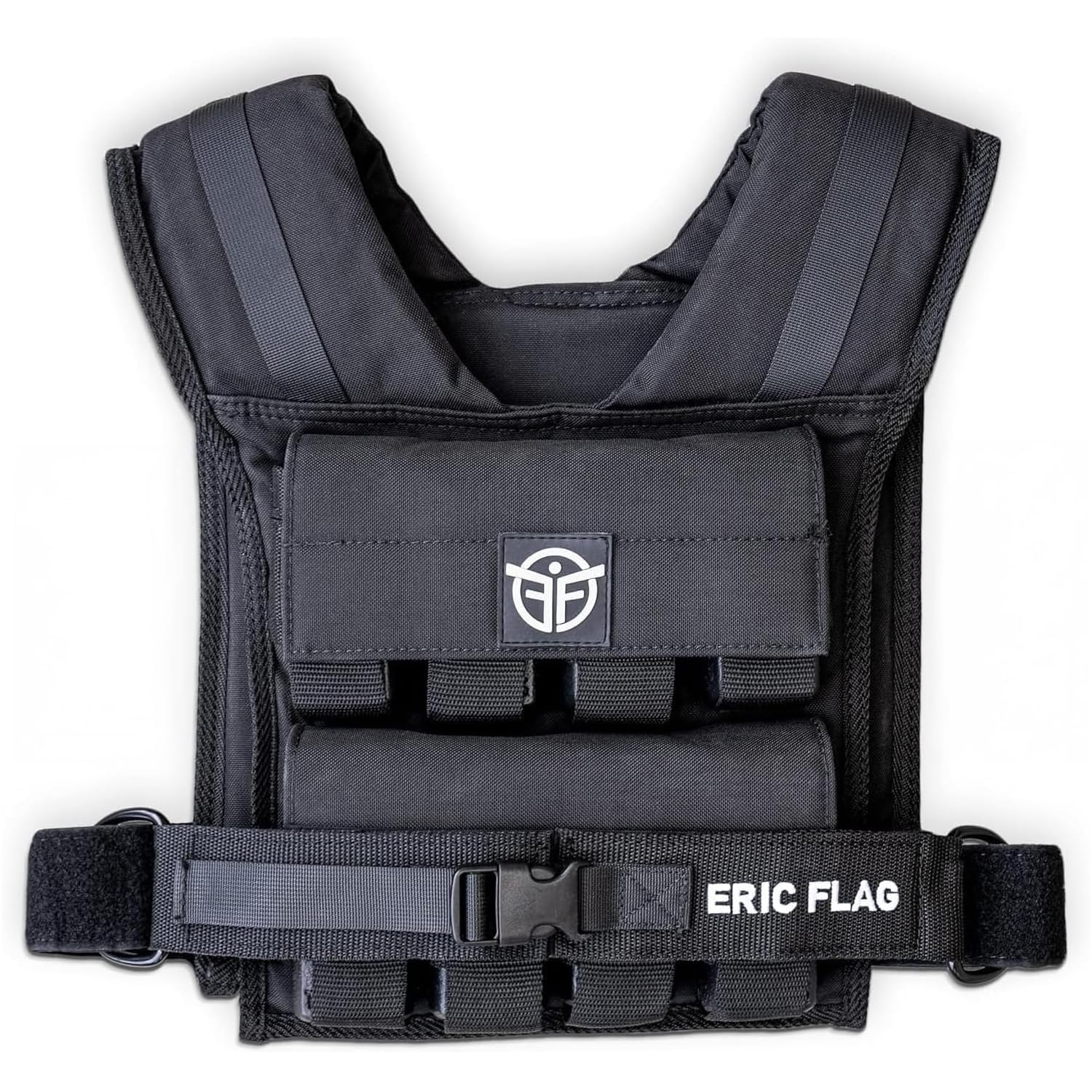
The empty shell weighs 1.6 lb, and the 16 iron weights are 2.4 lb each. That combination is the whole argument for the Eric Flag: you can start with a vest that feels almost like a harness, then add load in small steps until you reach 40 lb. The weights sit in eight front and eight back pockets, so the load stays balanced instead of pooling at the shoulders.

We think the 1000D Oxford shell is the right material for this kind of vest. It feels more like a piece of training equipment than a padded garment, and the adjustable strap is designed to fit a range of body shapes. The buckle closure is quick to work, and the vest stays close during dynamic movement. That matters for calisthenics, where a loose vest swings into your face on every burpee.

The trade-off is commitment. This is a vest for people who actually plan to use 25, 30, or 40 lb; if your routine is mostly walking with 10 lb, the Sportneer is easier to live with and just as adjustable. The Eric Flag earns its place when load range and durability are the priority. It is the most serious training tool here, and it asks you to use it that way.

Pros

  • Sixteen 2.4 lb iron weights load to 40 lb
  • Empty shell weighs only 1.6 lb
  • 1000D Oxford nylon resists wear
  • Balanced eight front and eight back pockets

Cons

  • Premium price for a dedicated strength tool
Our verdict

For serious progressive loading, this is the heavy-duty vest we reach for: sixteen iron weights take it from nearly empty to a full 40 lb without turning into a sandbag.

Check Latest Price
3

Best Value Heavy

RUNmax Adjustable Weighted Vest

92 /100
Peggy's Score Outstanding

Key details

Material
Nylon
Shoulder Pads
Included
Adjustable Range
Up to 40 lb
Included Weights
4 lb sand pouches
Check Details on Amazon

The shoulder-pad version is the one to get. RUNmax sells this vest with or without them, and at 40 lb the difference is not cosmetic; the pads spread pressure across the top of the shoulders instead of letting the straps dig in. The 4 lb sand pouches are easy to remove and add, so you can drop to 20 or 30 lb for a lighter day without rebuilding the whole vest.

We like the pocket for a small water bottle and the nylon shell that wipes clean. The hook-and-loop closure is simple to adjust, and the vest fits a wide range of bodies. The weights are sand-filled, which keeps the cost down and feels more forgiving against the body than a stack of iron plates.

It is a strength and rucking vest more than a running vest. For squats, push-ups, carries, and heavy walks, that is a fair compromise. We keep it in the heavy-training slot, not the daily-jog slot. The RUNmax is the value pick for someone who wants a genuine 40 lb load without paying premium prices.

Pros

  • 40 lb capacity in 4 lb pouches
  • Shoulder pads included on this version
  • Water bottle pocket adds convenience
  • Nylon shell wipes clean

Cons

  • Can shift during running
  • Base straps have little padding
Our verdict

If you want a heavy vest without a premium price, this RUNmax is the value pick: 40 lb in 4 lb pouches, with shoulder pads to tame the load.

Check Latest Price
4

Best for Beginners

BAGAIL Adjustable Weighted Vest

89 /100
Peggy's Score Excellent

Key details

Closure
Buckle
Base Weight
4 lb
Adjustable Range
4–10 lb
Included Weights
Six 1 lb ironsand bags
Check Details on Amazon

The BAGAIL is built for a first-time weighted walker, and that is exactly how we judge it. The vest starts at 4 lb before you add anything, then six 1 lb ironsand bags let you climb to 10 lb in small steps. The U-neck and X-shape are cut to sit around the chest rather than across it, which is the detail that makes this one easier to recommend to women who find unisex vests awkward.

We like the buckle closure and the front pocket. The pocket is wide enough for a phone, and the reflective strips are a sensible touch for evening walks. The weights come out for washing, and the neoprene shell is soft enough to wear over a T-shirt without chafing. The fit adjusts at the waist, so it stays close instead of riding up.

That is plenty for posture work and daily walks. If you already train with load or want one vest for years of progression, the Sportneer or Eric Flag makes more sense. For a gentle start, the BAGAIL is the easier first step. The front pocket is sized for a phone, not a water bottle, so plan to carry fluids in your hand.

Pros

  • Starts at 4 lb and adds six 1 lb bags
  • U-neck and X-shape suit women's fit
  • Front phone pocket and reflective strips
  • Weights remove for washing

Cons

  • 10 lb ceiling limits heavy training
Our verdict

This is the beginner vest we point women to first: a 4 lb base, six 1 lb bags, and a U-neck cut that doesn't fight a larger chest.

Check Latest Price
5

Best Budget

APEXUP Adjustable Weighted Vest

91 /100
Peggy's Score Outstanding

Key details

Closure
Buckle
Storage
Large mesh pocket
Adjustable Range
4–10 lb
Included Weights
Six sandbags
Check Details on Amazon

The APEXUP does the basic job for less. It starts at 4 lb and comes with six sandbags, so you can build to 10 lb and back down without buying another vest. The side straps pull the shell close to the body, which is why it works for smaller frames; a lot of budget vests assume a broader torso and hang loose at the waist.

We think the large mesh pocket is more useful than it looks. It holds a phone and keys without bouncing against your leg, and the neoprene shell is comfortable over a T-shirt. The vest is easy to put on and adjust, and the weights sit in individual pockets rather than sliding around as one lump. For a first weighted walk or a light home workout, that is most of what you need.

The 10 lb ceiling is the main compromise; this is not the vest for heavy strength work. If you need more load, the VBSD or Sportneer is the next step. We also appreciate that the weight pockets are simple to load, which is not always true at this end of the category. The APEXUP is a starter vest, not a forever vest.

Pros

  • 4–10 lb range with six sandbags
  • Side straps snug smaller frames
  • Large mesh pocket holds essentials
  • Low-cost entry into weighted walks

Cons

  • Chemical odor needs airing out
Our verdict

This is the budget vest we recommend for daily walks: a 4–10 lb range, a snug side-strap fit, and a price that leaves room for better shoes.

Check Latest Price
6

Best Plate-Loaded

Wolf Tactical Adjustable Weighted Vest

91 /100
Peggy's Score Outstanding

Key details

Material
600D nylon
Shoulder Yoke
Padded
Adjustable Range
14–42 lb with plates
Included Weights
Sold separately
Check Details on Amazon

The Wolf Tactical is a platform, not a complete weighted vest. The 600D nylon shell and padded shoulder yoke are built for plates, and the front and back pockets accept pairs that create 14, 20, 31, or 42 lb setups. If you already own plates or want to add them over time, that is a more flexible system than a sewn-in sand vest.

We like the oversized airflow panels and the laser-cut MOLLE real estate. The vest sits close when the shoulder straps are dialed in, and the padded yoke keeps the load from digging into the collarbone. The hook-and-loop closure is secure when it is seated properly, but it takes a few tries to get the fit right the first time. Once it is set, the vest stays put on walks and rucks.

The obvious catch is that the weights are sold separately, so the total cost is higher than the vest alone suggests. We recommend it for rucking and gym work where the plate carrier style is an advantage. For a complete, washable everyday vest, the Sportneer is the easier buy. The Wolf is the one for the person who already thinks in plates.

Pros

  • Plate pockets create 14–42 lb setups
  • 600D nylon and padded yoke
  • Airflow panels and MOLLE real estate
  • Secure fit once straps are dialed

Cons

  • Not discreet under clothing
Our verdict

This is the plate carrier we recommend for rucking: a tough 600D shell, a padded yoke, and a 42 lb ceiling, provided you buy the plates separately.

Check Latest Price
7

Best Mid-Weight Value

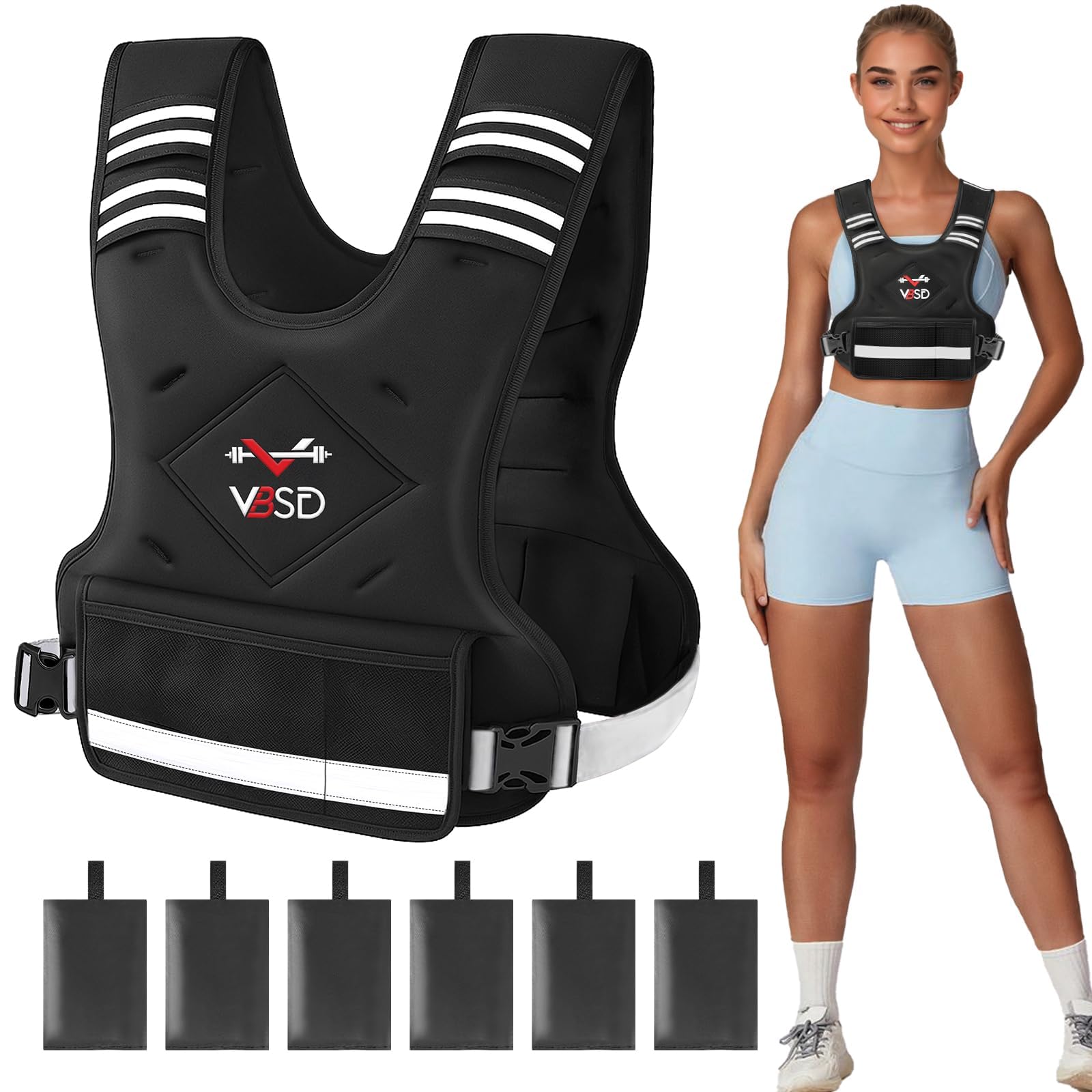
VBSD Adjustable Weighted Vest

90 /100
Peggy's Score Outstanding

Key details

Storage
Back mesh pocket
Shoulder Straps
Padded wide straps
Adjustable Range
11–20 lb
Included Weights
Six 1.5 lb ironsand bags
Check Details on Amazon

The VBSD starts at 11 lb, which is the first thing to understand. That is more than the Sportneer's minimum and less than the heavy 40 lb vests, and it puts this one in a useful middle slot for walkers who already know they want some load. Six 1.5 lb ironsand bags let you adjust from 11 to 20 lb, and the padded wide shoulder straps are designed to keep the pressure off the collarbone.

We like the back mesh pocket for a phone or keys, and the reflective strip is a sensible detail for evening walks. The neoprene shell is comfortable over a T-shirt, and the buckle closure is easy to work with the vest on. The weight bags sit in individual pockets, so the load stays balanced front to back.

The 20 lb ceiling keeps this out of serious strength training. If you want one vest for both walks and heavy work, the Eric Flag is the better long-term buy. The VBSD is a walking vest first, and it does not pretend otherwise.

For the walker who wants a bit more than a beginner vest, this is the value pick. It is not trying to be a do-everything trainer, and that focus is why it works. We reach for it when the plan is a long walk with a little resistance, not a gym session.

Pros

  • 11–20 lb range with six 1.5 lb bags
  • Padded wide shoulder straps
  • Back mesh pocket for essentials
  • Reflective strip for evening walks

Cons

  • Long strap ends can flap during arm swings
Our verdict

This is the mid-weight value pick: an 11–20 lb vest with padded straps and a back pocket, for walkers who want more load than a beginner vest.

Check Latest Price
8

CrossFit and Calisthenics

CROSS101 Adjustable Weighted Vest

92 /100
Peggy's Score Outstanding

Key details

Material
Nylon
Shoulder Pads
Included
Adjustable Range
Up to 20 lb
Included Weights
Removable weights included
Check Details on Amazon

The CROSS101 is aimed at CrossFit-style training, and the 20 lb version makes sense for pull-ups, push-ups, lunges, and short metcons. The weights are removable, so you can drop the load for skill work, and the shoulder pads are included rather than sold as an add-on. The camouflage nylon shell is a different look from the black neoprene vests that dominate this list.

We like the phone holder and the hook closure, which is simple to get on and off between sets. The vest fits a wide range of bodies, and the load sits close enough for bodyweight movements. The shoulder pads help, but they are not a cure for a vest that is too loose; fit matters more than padding.

This is a vest for short, hard sessions rather than all-day wear. The 20 lb ceiling is enough for pull-ups and metcons, but it is not a rucking or heavy strength tool. The hook closure is quick, and the compact shell stays out of the way when you are moving between exercises.

We recommend it when the workout is the priority and the vest is a tool, not a daily uniform. If you need one vest for walking, rucking, and strength work, the Sportneer or Eric Flag covers more ground. The CROSS101 is for the bag that already has chalk and a jump rope in it.

Pros

  • 20 lb compact load with removable weights
  • Shoulder pads included
  • Fits a wide range of bodies
  • Phone holder keeps essentials close

Cons

  • Stitching can fail under heavy use
Our verdict

This is the CrossFit-oriented pick: a 20 lb vest with removable weights and shoulder pads, for people who want a compact load for pull-ups and metcons.

Check Latest Price

How We Tested the Adjustable Weighted Vests

We began with a research pass across the weight ranges actually sold today, from 4-pound starters to 40-pound rucking vests, and cut anything with a fixed load, bare webbing over the shoulders, or a closure that looked likely to fray. That left 12 vests, which the team wore for six months.

Testing followed real life rather than a lab bench: 30-minute dog walks, incline treadmill sessions, a hilly rucking loop on weekends, calisthenics in the garage, and stair repeats in my building. On arrival, each vest went on a kitchen scale to compare the delivered weight with the claimed maximum, and I weighed the individual sand packs and iron plates to see how fine the adjustments really were.

Shoulder pressure showed up as red marks after 45 minutes in a t-shirt, so we logged where the straps landed and whether the padding stayed put. For stability, we jogged in place, did jumping jacks, and ran side lunges to see if the load shifted. For closure, we strapped and unstrapped each vest 20 times and checked for lint, fuzz, and curl at the hook side. Odor got its own test: three sweaty sessions before a wash, then a machine wash per the care label to see whether the packs stayed dry and the straps kept their grip. We sized every vest on two frames, 5 foot 4 and 6 foot 1, and weighed price against the increments you actually get.

How to Choose an Adjustable Weighted Vest

Start With the Load Range

An adjustable vest is only useful if its range overlaps the way you train. For walking and general fitness, a vest that goes from about 4 to 18 lb covers most progressions; for heavy rucking or loaded calisthenics, look for a 40 lb ceiling. Check the increment, too. Small packs let you add 1 or 2 lb at a time, while 4 lb pouches make bigger jumps.

The trap is buying the biggest number on the page. A 40 lb vest loaded to 10 lb can feel bulky and stiff compared with a purpose-built 4–18 lb vest. We prefer matching the range to the routine over buying ceiling you never use.

Fit and Stability Beat Extra Padding

Padding helps, but a vest that fits your torso and stays tight at the waist is more comfortable than a padded vest that swings. Look for adjustable shoulder straps and a waist or side closure; those two adjustments keep the load from bouncing. If you plan to run, prioritize a close fit over maximum capacity. A loose 20 lb vest is harder on the body than a snug 10 lb vest.

Cut matters as much as size. A U-neck and shaped panels sit better on a smaller frame or a larger chest; a plate carrier has a boxier fit. Wear the vest over the layers you actually train in and tighten the waist first, then the shoulders.

Plates, Sand, and How the Load Feels

Iron plates and iron weights are compact and keep a heavy vest close to the body. Sand packs are usually bulkier, but they are cheaper and easier to shape around the torso. If you want to wash the vest, removable packs are non-negotiable; fixed-fill vests are spot-clean only. We also check how the pockets are arranged, because front and back balance matters more than total padding.

At heavy loads, shoulder pressure is the limiting factor. A padded yoke or included shoulder pads can make a 40 lb vest usable, but they do not fix a poor fit. Start with less weight than you think you can handle and add it in the smallest increment the vest allows.

Match the Shell to the Workout

For walking and jogging, a soft neoprene vest with a zip or buckle front is easy to live with. For rucking and gym work, a plate carrier with a padded yoke and secure plate pockets is the better tool. For CrossFit, a compact vest that stays out of the way on pull-ups matters more than a washable shell.

Think about the other gear you use. A vest that is too bulky for a winter coat is a vest you stop wearing; a plate carrier with MOLLE is overbuilt for a neighborhood walk. The best adjustable vest is the one that suits the majority of your sessions, not the one with the widest catalog of features.

Frequently Asked Questions

Final Verdict

For most people, the Sportneer is the adjustable vest to buy. The 2–18 lb range covers daily walks, jogging, and light strength work, and the zip shell with shoulder and waist locks keeps the load close.

If you need a true 40 lb training tool, the Eric Flag is the better long-term buy; if you are starting light, the BAGAIL is the gentler first step.