Best Overall Hot Yoga Mat
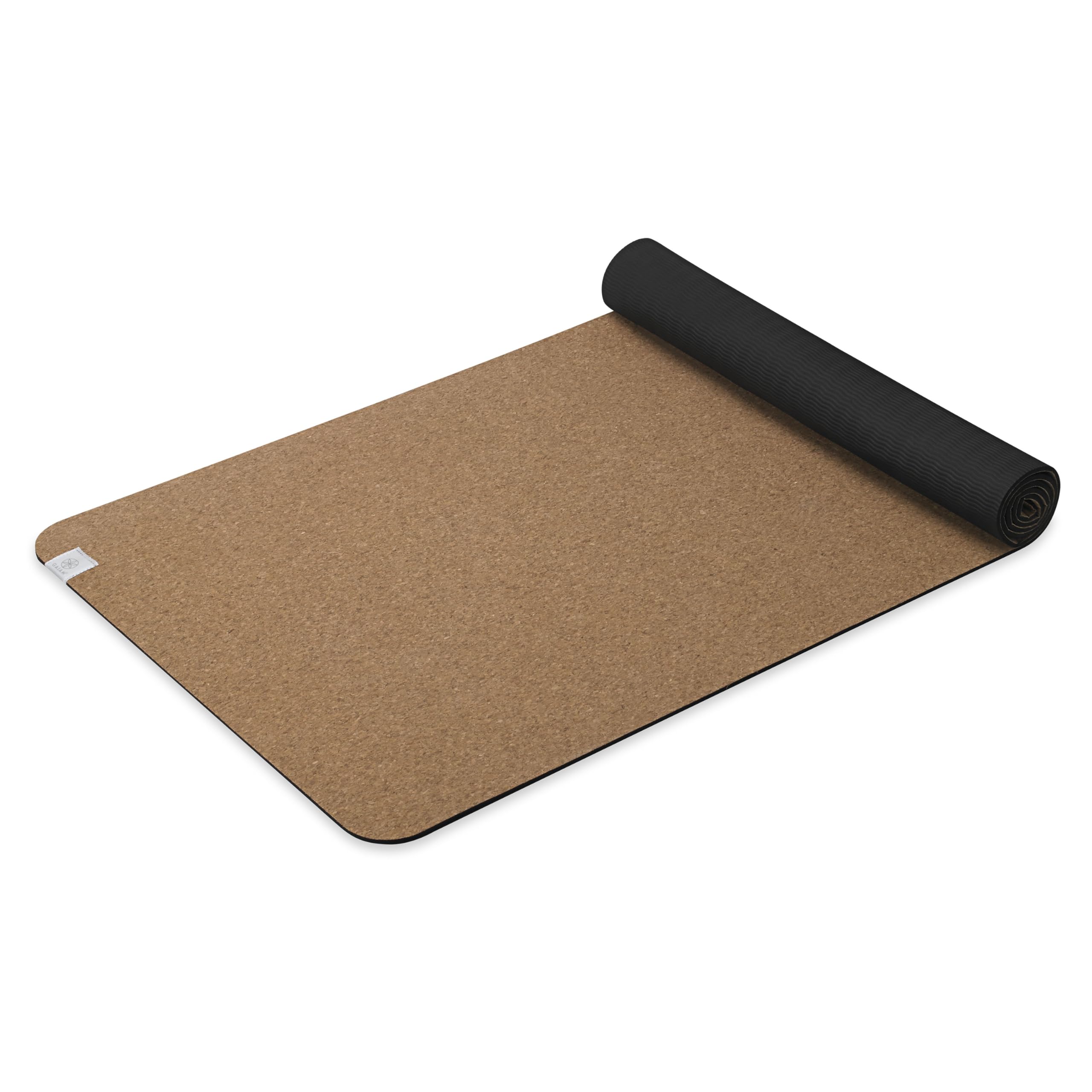
Gaiam Cork Yoga Mat
Key details
- Size
- 68 x 24 in
- Material
- Cork top, TPE bottom
- Thickness
- 0.2 in
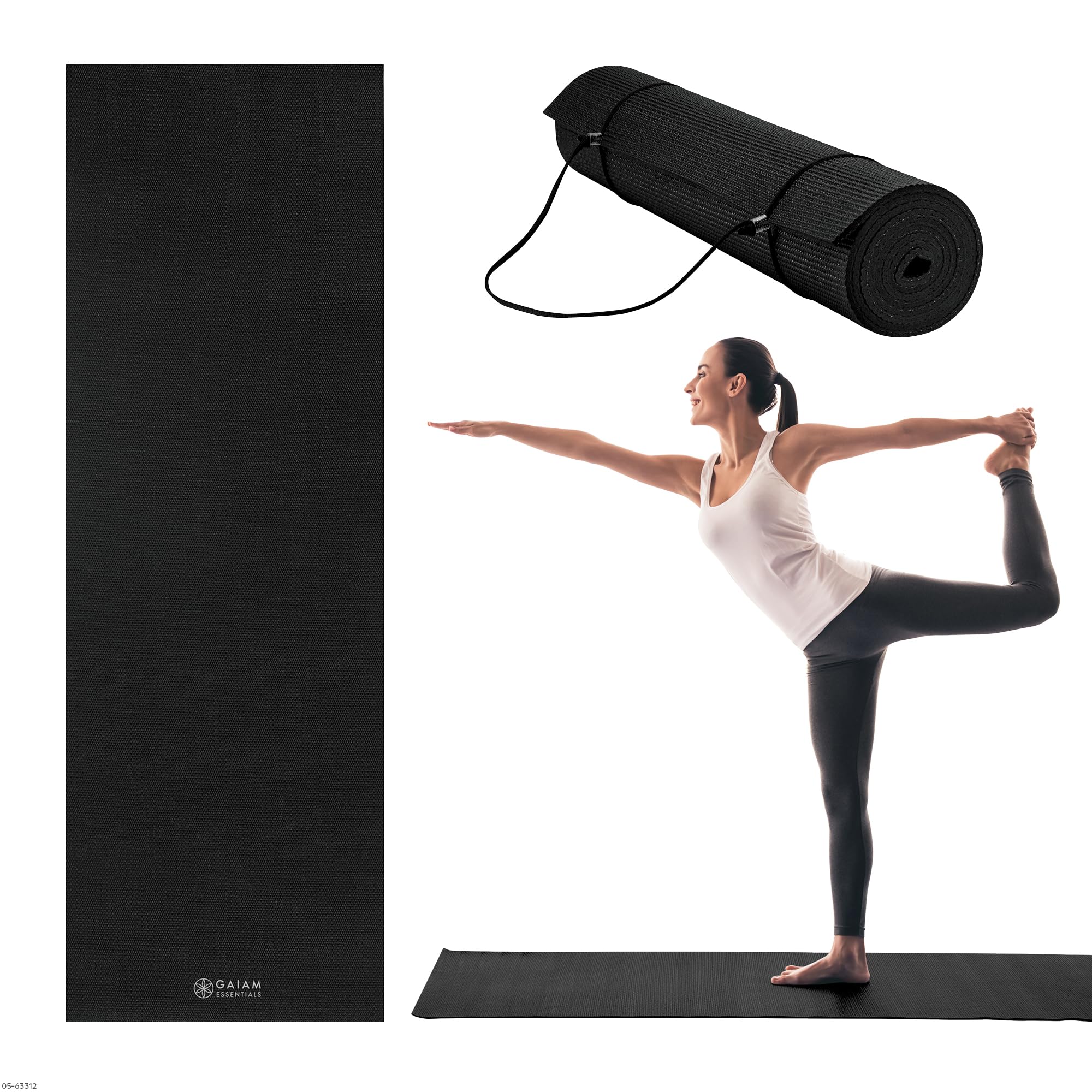
Cork grips better as it absorbs sweat, so hot yoga stays stable without a mat towel. The natural cork surface resists odor and wipes clean between classes. At 0.9 kg, it is light enough to take to a studio without weighing down a bag, and the 68-by-24-inch surface covers the standard practice area.
The moisture-activated top is the differentiator: PVC mats lose traction as sweat builds, while the cork layer gets tackier with damp hands and feet. The 5mm platform provides enough firmness to keep balances grounded rather than sinking into foam. Dry, low-sweat practice will feel less grippy at first, so this is a specialist tool for heated rooms. The grip comes from the cork absorbing moisture, so it holds up when damp.
This suits hot yoga regulars who sweat enough to need extra grip and don't mind a firmer contact feel. The 5mm build is less cushioned than thick foam mats, so joint-sensitive yogis may want a knee pad; if plush cushioning is your priority, a softer mat is the better fit. Natural cork with a TPE backing gives eco-conscious yogis a PVC-free construction.
💡 A knee pad or folded mat adds cushioning under sensitive joints without changing the cork grip.
Pros
- Cork surface gets tackier as it absorbs sweat, keeping hot yoga grippy without a towel.
- Natural cork resists odor and wipes clean between sessions.
- Cork top with TPE backing is an eco-friendly build without PVC.
Cons
- Firm 5mm base provides less joint cushioning than thick foam mats; knees may feel it.
Hot yoga regulars who sweat through standard mats get the stable, towel-free grip they came for — that is the function that matters in a heated room.