7 Best Inversion Table of 2026: Real Relief, No Gimmicks

Find the best inversion table for your height, weight, and pain-relief goals — with honest guidance on ankle comfort and assembly realities.

Inversion tables all hinge on the same promise: gravity takes over so your spine can lengthen. But after a few sessions, the differences that matter have nothing to do with marketing. Ankle hold, rotation smoothness, and whether you can get back up comfortably decide if the table gets used or becomes a bulky clothes rack.

Price separates those experiences, but not in a straight line. A budget table can deliver genuine lower-back relief if the frame is stable and the ankle system fits you. The real upgrade is entry and exit: models with a boarding platform, deep ankle cups, and a tether make inversion feel controlled, and that convenience carries a premium.

This guide sorts the tables by capacity, ankle design, and assembly reality so you can match the tool to your body and your space. The goal is a table you actually use — not one that impresses on paper.

1

Best Overall

Teeter FitSpine LX9

95 /100
Peggy's Score Outstanding

Key details

User Height
4'8-6'6
Angle Control
20/40/60° tether
Build / Storage
74 lb
Weight Capacity
300 lb
Check Details on Amazon

The LX9 is the easiest table in this comparison to enter and exit: the boarding platform raises you to table height, and the EZ-Reach ankle lock closes from an upright stance. Once inverted, the EZ-Angle tether with 20/40/60-degree markings controls how far you tilt, with full inversion available for a deeper stretch. The tether settings let you build up gradually before attempting full inversion. The FitSpine backrest and acupressure nodes distribute traction along the lumbar curve during longer sessions.

The heat-treated steel frame stays stable at full extension and throughout rotation, and the 300-lb capacity covers the full-size category without flex. The BILT app provides an interactive 3D view, and the hardware labeling is clear enough to avoid guesswork during setup. The 5-year warranty plus US-based support cover long-term ownership.

This is the pick for back-pain sufferers who want rigorously engineered FitSpine positioning. The premium price puts it out of strict-budget territory; buyers who don't need FDA-registered positioning can spend less elsewhere. The next FitSpine model down keeps the core backrest but doesn't include the boarding platform or EZ-Reach ankle lock.

Pros

  • Boarding platform and EZ-Reach ankle lock make entry and exit the easiest in this set.
  • FitSpine contour and acupressure nodes deliver consistent back and sciatica relief during regular sessions.
  • Heat-treated steel frame and 300-lb capacity keep the table stable through full inversion.

Cons

  • At 74.1 lb, moving the assembled table between rooms requires a second person.
  • Acupressure nodes add stimulation, but the firm contact can be intense for body types that prefer a cushioned backrest.
Our verdict

This is the table for back-pain sufferers who plan to use inversion regularly and want the least awkward routine around it.

Check Latest Price
3

Best Value with Heat & Massage

Innova Advanced Heat & Massage

93 /100
Peggy's Score Outstanding

Key details

User Height
4'10-6'6
Angle Control
6-position pin
Build / Storage
65 lb
Weight Capacity
300 lb
Check Details on Amazon

The Advanced Heat and Massage table pairs a stable 300-lb frame with a lumbar pad that adds heat and vibration, and the therapy extra is genuinely useful rather than a gimmick. Six inversion angles and a 65-lb build give it a planted feel, with a user range from 4 ft 10 in to 6 ft 6 in.

This is the value pick for households that want back-pain relief, heat therapy, and multi-user adjustability without paying Teeter pricing. It is not positioned as an FDA-registered medical device, and the fixed ankle rests are the main boundary: comfort varies by body type, and the lock-in is not as refined as Teeter's wrap-around cups. Sensitive ankles may need aftermarket padding.

Pros

  • Heat-and-massage lumbar pad turns an inversion session into a back-pain therapy break.
  • Frame stays stable and sturdy at full recline.
  • Back-pain relief is the headline benefit.

Cons

  • One-year warranty trails the five-year coverage on Teeter's competing tables.
Our verdict

For households that want heat and massage alongside inversion, this table delivers the therapy extras without the Teeter premium.

Check Latest Price
4

Best for Heavier Users

Innova ITX1200 Stretch Bars

91 /100
Peggy's Score Outstanding

Key details

User Height
4'10-6'6
Angle Control
3-position pin
Build / Storage
74 lb, no fold
Weight Capacity
350 lb
Check Details on Amazon

The Innova ITX1200 pairs a 350-lb weight rating with patented stretch bars, giving heavier users a full-size table that supports deeper lower-back stretches. Lower back and sciatica relief is the standout result, and the frame feels solid under regular use. That combination makes it the heavy-duty alternative in this lineup.

This table is for buyers who need heavy-duty capacity and want stretch-bar-assisted traction more than compact storage. It requires a roomy spot: the base is large, the frame does not fold, and assembly can take one to three hours. If you can accommodate that, the payback is a stable decompression station that won't feel undersized.

Pros

  • Stretch bars add targeted decompression options that standard tables don't offer.
  • Lower back and sciatica relief is the standout benefit.
  • Heavy-duty frame supports users up to 350 lb.

Cons

  • Ankle support clamp fit can be position-sensitive; precise adjustment is needed to feel secure.
Our verdict

If you need 350 lb of capacity and stretch-bar utility, the floor space is a worthwhile trade.

Check Latest Price
5

Budget Pick for First-Timers

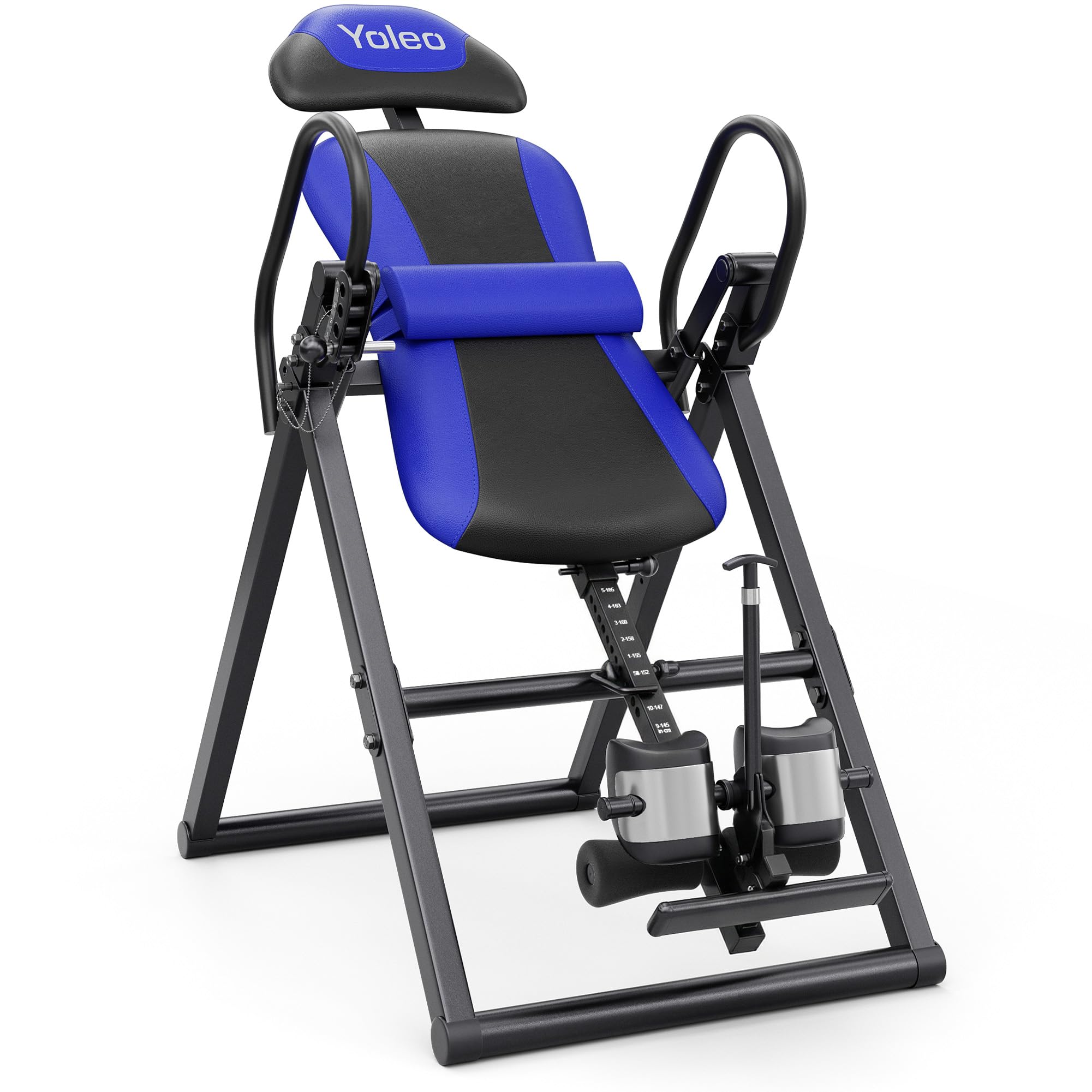
YOLEO Gravity

87 /100
Peggy's Score Excellent

Key details

User Height
4'1-6'2
Angle Control
Multi-angle crossbar
Build / Storage
Foldable frame
Weight Capacity
300 lb
Check Details on Amazon

The YOLEO Gravity pairs a budget-friendly price with a 300-lb capacity, memory-foam backrest, and multi-angle rear crossbar — a functional setup for spinal decompression and back-pain relief. Compared with the foldable comfort option in this set, it leads with an explicit 300-lb limit and a lower entry price; the aluminum/steel frame stays stable at the upper end of its weight range.

This table suits first-time inversion buyers on a tight budget, including heavier users up to 300 lb, who want an affordable path to spinal decompression without chasing premium extras. Assembly instructions and hardware labeling can frustrate some buyers, so patience during setup is part of the deal.

Pros

  • Back-pain relief can appear from the first inversion session.
  • Frame quality feels solid for a budget-priced table.
  • Assembly is manageable for buyers with basic tool skills.

Cons

  • Ankle holders are basic rather than premium; sensitive ankles may want extra cushioning.
Our verdict

The YOLEO Gravity is a cost-effective starting point for 300-lb inversion buyers who want functional back-pain relief without premium extras.

Check Latest Price
6

Foldable Comfort

YOLEO ITX320

89 /100
Peggy's Score Excellent

Key details

User Height
4'10-6'6
Angle Control
4-position pin
Build / Storage
Foldable, 53 lb
Weight Capacity
Check Details on Amazon

The wider backrest and adjustable headrest make this foldable table comfortable for space-conscious buyers with back pain. It folds for storage, and inversion feels smooth and stable. There is no declared weight capacity, so buyers needing a confirmed 300-lb rating should look at the budget best-seller in this set. Assembly is time-consuming, and the 53-lb frame is heavy to reposition.

Pros

  • Wider backrest and adjustable headrest support comfortable inversion for back-pain relief.
  • Frame feels secure and steady through the full range of tilt.

Cons

  • The 53-lb frame is heavy to move, and assembly takes genuine effort.
Our verdict

For at-home back-pain relief that prioritizes a wider backrest and folding storage, this table suits buyers who can keep it in one place.

Check Latest Price
7

Budget Alternative

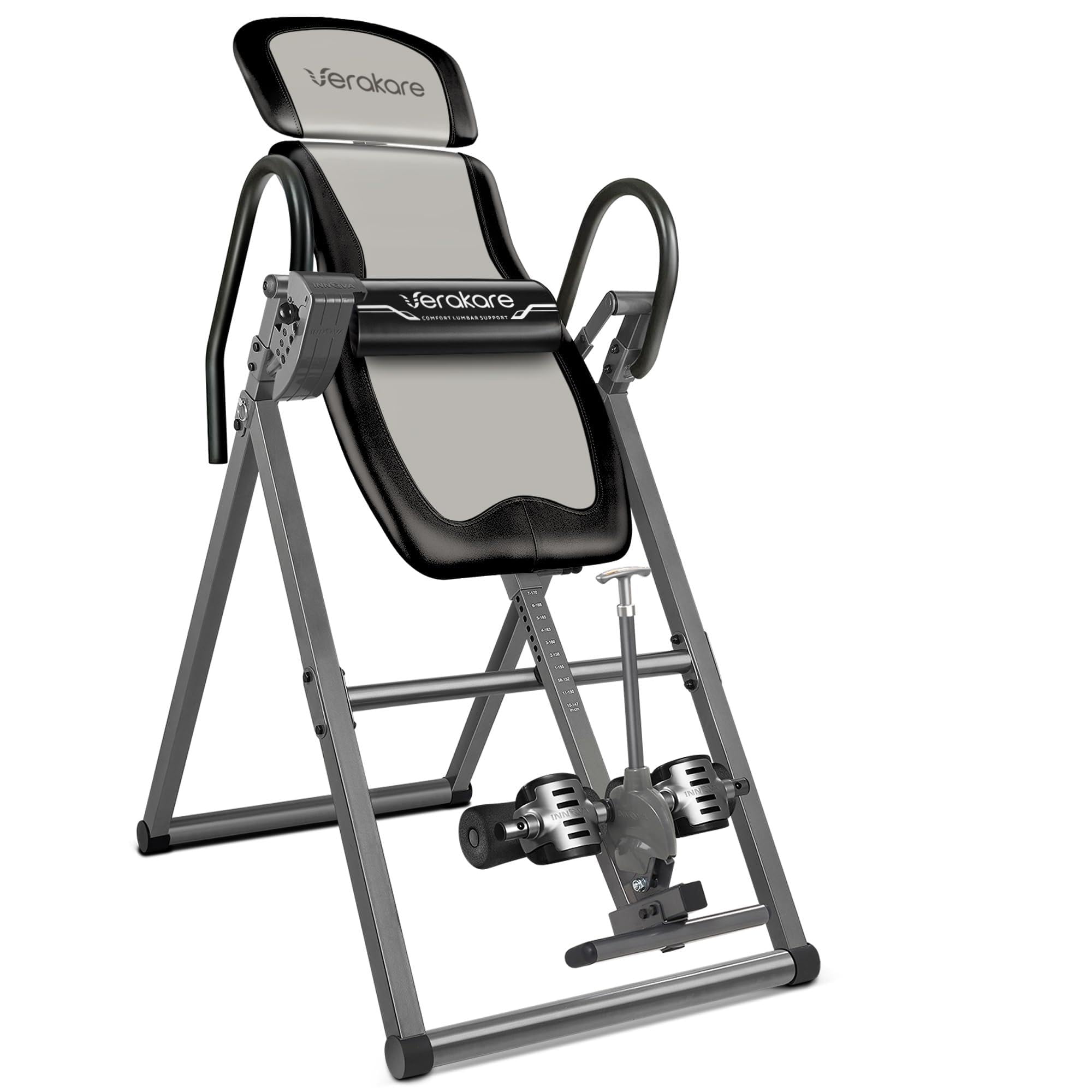
Verakare ITX9550

89 /100
Peggy's Score Excellent

Key details

User Height
4'10-6'6
Angle Control
6-position pin
Build / Storage
Weight Capacity
300 lb
Check Details on Amazon

The Verakare ITX9550 uses solid stitching and a stable 300-lb frame at a near-entry price, making it a sensible budget option for decompression. The return-to-upright motion can feel effortful until the balance is dialed in, so the first few sessions require patience. That balance-dependent quirk, not build quality, is what keeps it below the top value picks.

Pros

  • Solid stitching and construction at a near-entry price.
  • Stable and secure frame for a 300-lb capacity table.

Cons

  • Return-to-upright motion can feel effortful until the balance is dialed in.
Our verdict

Budget-focused buyers who want a full-size 300-lb table without paying for add-ons will get solid construction for less.

Check Latest Price
8

Lighter Users

Body Vision IT9550

91 /100
Peggy's Score Outstanding

Key details

User Height
5'1-6'6
Angle Control
20/40/60/90°
Build / Storage
46 lb
Weight Capacity
250 lb
Check Details on Amazon

A 46-lb table with a 250-lb rating and four preset angles is a cost-conscious fit for lighter users on a strict budget, and assembly is quick. It sits outside the 300-lb category baseline, so heavier shoppers need a 300-lb table; occasional upholstery or bolt wear in some units makes an arrival inspection worthwhile.

Pros

  • Quick assembly gets the table ready without a complicated build.
  • Budget-friendly price with functional lower-back stretching for daily use.

Cons

  • Upholstery seams and bolts can show premature wear in some units.
Our verdict

Buyers under 250 lb who want a lightweight, budget-friendly table for spinal decompression and lower-back relief can use the IT9550; anyone near or over 250 lb should choose a 300-lb-rated option.

Check Latest Price

How to Choose

Weight Capacity

The 300-lb rating is the category baseline, not a sign of extra toughness. Capacity comes from the steel tubing, hinge pivot, and ankle-lock assembly working as one system; if any one of those is undersized, the table can feel unstable before it reaches the limit.

A 350-lb table needs a stiffer frame and heavier steel. That usually means a larger footprint and a longer assembly — a fair trade if you need the headroom, but unnecessary if you are well under 300 lb.

User Height Range

Height range is set by the distance between the ankle lock and the backrest pivot, so a table that fits a 6-foot-6 user will feel different to a 5-foot-2 user. When the pivot sits too high or low for your hips, rotation feels less balanced and you have to adjust the tension more often.

Check the range against your height, then adjust the table while standing in the ankle locks. A correct pivot height should let you tip back with minimal effort.

Ankle Locking and Comfort

Ankle comfort is not about padding; it is about how the lock distributes pressure across the foot. Wrap-around cups and standing lock systems spread the load more evenly, while basic foam rollers concentrate pressure on the top of the ankle and the Achilles area.

No table is ankle-proof. If you have narrow ankles or foot sensitivity, prioritize an adjustable cup system and test the fit before you commit.

Inversion Angle Control

Preset angle positions matter because decompression happens at low slopes — most people do not need full inversion to feel relief. A pin or tether that stops at 20, 40, and 60 degrees lets you control the stretch gradually and prevents overshooting while you are still learning.

Full inversion is useful for deeper traction, but it demands more hamstring flexibility and body control. Buyers who only want decompression can save money by choosing a table with clear angle stops rather than a full-inversion model.

Build Heft and Storage

A stable inversion table is heavy by design; the frame needs enough mass to stay planted when your body shifts. Lighter tables are easier to move but feel less anchored and are often rated for lower capacities.

Plan where the table will live. If it has to be stored, look for a folding frame and measure the folded footprint before buying — a 60- to 75-lb table is not something you want to wrestle out of a closet.

Frequently Asked Questions