5 Best Pilates Ball of 2026: 9-Inch Picks That Hold Air

Find a 9-inch Pilates ball that holds air for Pilates, barre, PT, and core work without constant re-inflating.

Most 9-inch Pilates balls look nearly identical in product photos, but the differences show up after a few sessions. The plug and valve are the real weak point across the category: air escapes while you insert the stopper, the ball softens by morning, and the PVC itself is rarely the problem.

A ball that loses air between workouts turns a 20-minute barre session into a frustration. The picks in this guide are the ones where the valve design, included spare plugs, and overall build actually support regular home use, not just the first inflation.

For Pilates, physical therapy, and core work, the right 9-inch ball should feel firm but give slightly under pressure. That Goldilocks feel depends less on the brand name than on how well the stopper seals and how consistently the ball keeps its shape between sessions.

1

Best Overall

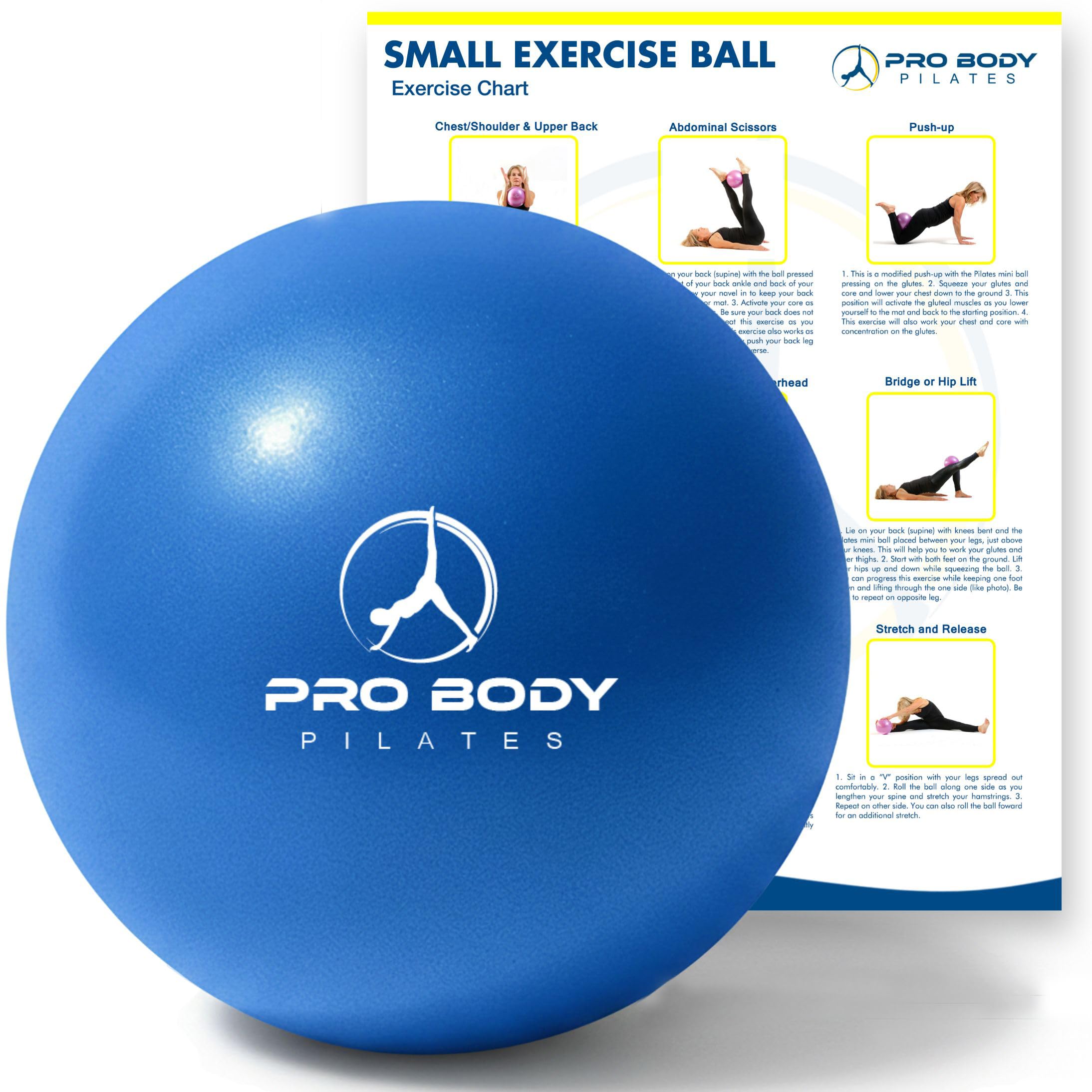
ProBody Pilates 9" Ball

91 /100
Peggy's Score Outstanding

Key details

Diameter
9 inches
Included
2 straws, spare plug, guide
Material
Anti-burst PVC, latex-free
Check Details on Amazon

The ProBody 9-inch ball holds a firm shape under body weight and keeps enough surface tension for PT protocols, Pilates, barre, and home core work. The anti-burst PVC material has the feel of a therapy-clinic ball rather than a toy-store inflatable, and that construction is a practical safety feature for at-home use. A one-year replacement warranty adds protection that budget balls skip, and the latex-free build suits people with latex sensitivity. The 3.2-ounce weight keeps it easy to move between a mat and a chair.

The 9-inch diameter is what makes it useful: it fits between knees, under palms, or behind the lower back for targeted engagement. That size also works for seated balance work. Inflation is easy with the included straws, and the spare plug is a useful backup. The printed guide covers enough basic moves to get started without an instructor nearby.

This suits home rehab protocols, Pilates, barre, and postpartum/diastasis-friendly movement once your OB clears you. Air retention can vary, and some units need periodic topping off; buyers who want a maintenance-free ball should choose another product. For a home routine, that is a minor interruption worth planning around.

๐Ÿ’ก Keep the plug fully seated whenever the ball is stored; the spare plug and straws are worth keeping nearby.

Pros

  • Firm anti-burst PVC holds a clinic-grade shape during PT and Pilates work.
  • Inflation is easy with the included straws, and the spare plug is a useful backup.
  • Works across Pilates, barre, PT, and home core routines without the flimsy feel of cheap inflatables.

Cons

  • The 9-inch size is purpose-specific; it won't offer the support of a full-size stability ball.
  • Air retention can vary, and a unit may soften over a few days before needing a top-off.
Our verdict

For PT-style home work, Pilates, barre, and core routines, this is a cost-effective mid-range ball with a clinic-grade feel.
Check Latest Price
2

Best for Physical Therapy / Clinical Rehab

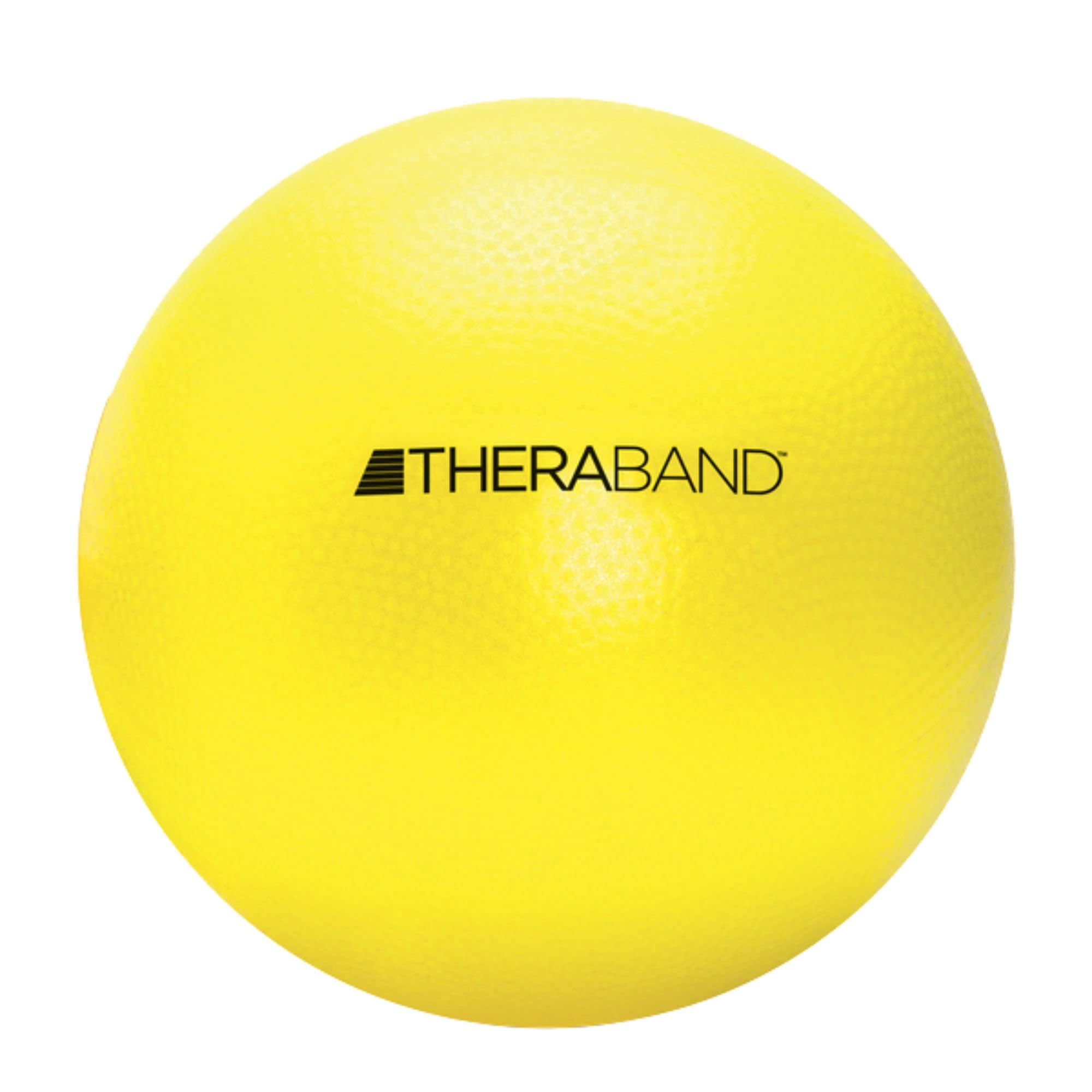
TheraBand Mini Ball 9"

92 /100
Peggy's Score Outstanding

Key details

Diameter
9 inches
Included
Inflation tube, stopper, guide
Material
Anti-burst PVC, textured
Check Details on Amazon

TheraBand's 9-inch mini ball is the clinical rehab standard: a soft-but-firm, pebbly-textured ball that stays put between the knees or under the lower back during Pilates and PT work. The included exercise guide, inflation tube, and extra stopper make it a self-contained option for core, hip, and glute strengthening.

This suits anyone who wants the therapy-clinic style of ball and a printed rehab guide, not a rock-hard full-size substitute. The valve has no check valve, so air can escape while you swap the straw for the plug; occasional top-ups may be needed, and that is easier to accept if you keep the stopper within reach during inflation.

๐Ÿ’ก Pinch the valve opening while swapping the inflation straw for the plug to keep air loss to a minimum.

Pros

  • The pebbly, soft-but-firm surface holds position between knees or under the back during rehab moves.
  • The 9-inch diameter is the expected therapy-ball size for Pilates and physical therapy routines.
  • Performs well in physical therapy, hip/glute, and core strengthening workouts.

Cons

  • Sealing can be fiddly because the valve lacks a check valve; air may escape when switching from straw to plug.
  • Some balls may eventually leak or split after months of regular use.
Our verdict

For home users who want a therapy-room-style ball with a grippy surface and a printed guide, this is the most clinically aligned 9-inch option in the set, inflation quirk included.

Check Latest Price
3

Best Budget All-Rounder

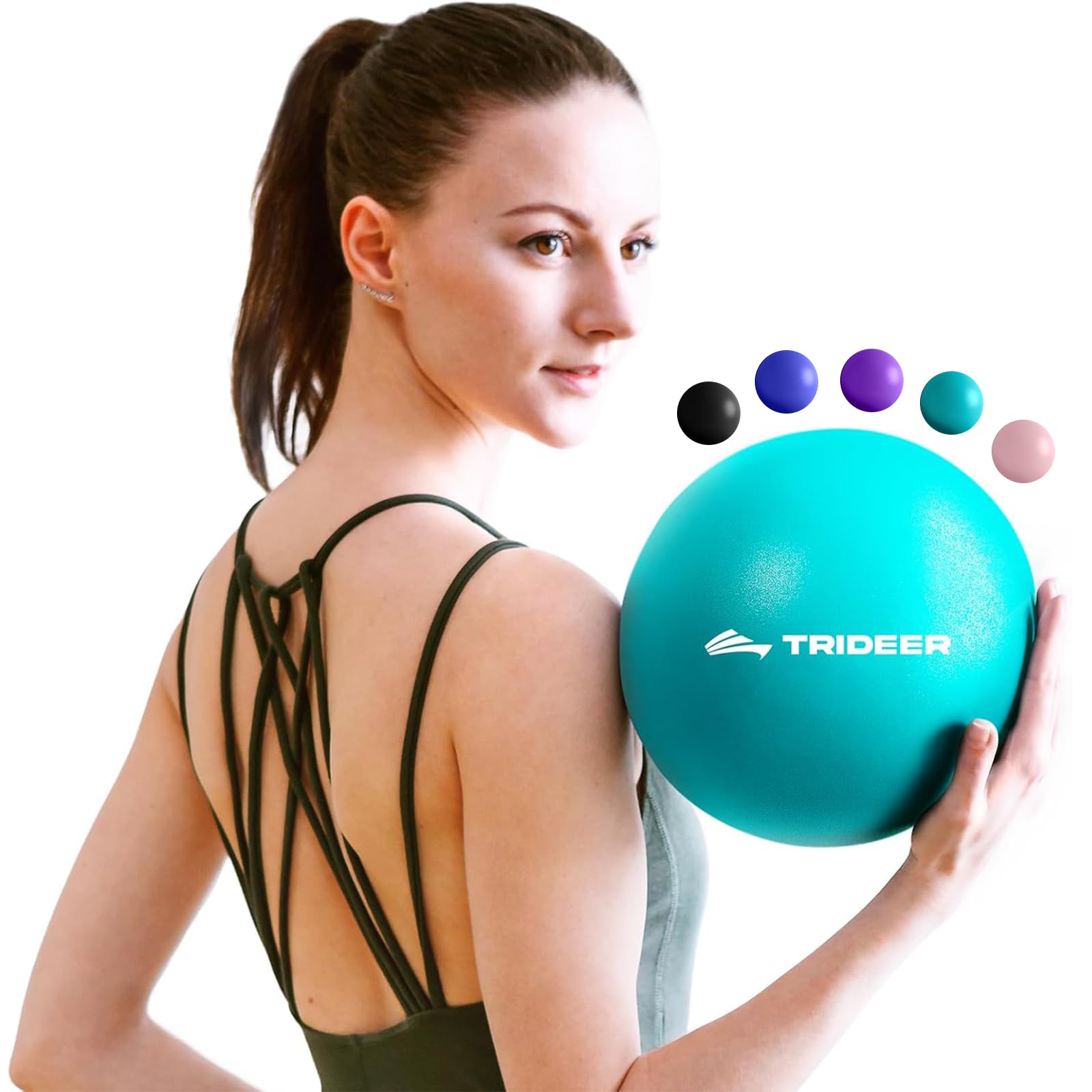
Trideer 9" Pilates Ball

91 /100
Peggy's Score Outstanding

Key details

Diameter
9 inches
Included
Inflation straw
Material
Soft PVC, non-slip
Check Details on Amazon

Trideer's 9-inch ball handles the core Pilates, barre, and physical-therapy movements at a budget price. The soft, low-odor PVC has a slight give, and the included straw makes inflation easy. Its size keeps it easy to tuck away between sessions.

This suits families and budget-focused home exercisers who want one ball for Pilates, knee rehab, and kids' active play. It is not a firm, heavily textured clinic-grade ball, and air retention can vary by unit โ€” occasional re-inflation may be part of the routine.

Pros

  • Sturdy feel and good value for the price.
  • Easy to inflate with the included straw.
  • Supports physical therapy and Pilates-style home workouts.

Cons

  • Plug seating can be fiddly; a firm push is needed to keep the valve seated.
Our verdict

For a budget home setup, this one small ball covers workouts and play without the clinic-grade price.

Check Latest Price
4

Best Budget / Travel-Friendly Pick

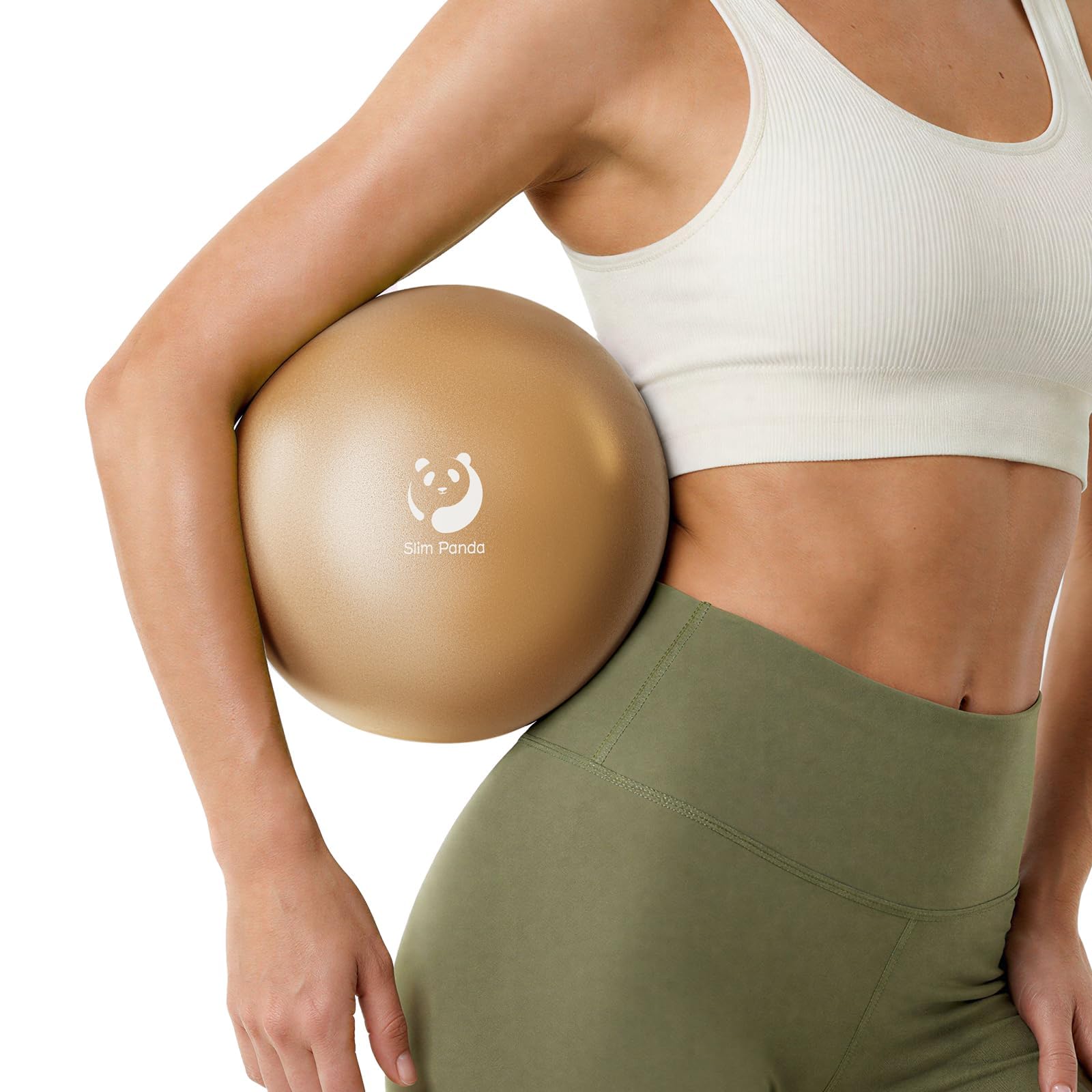
Slim Panda Pilates Ball 9"

91 /100
Peggy's Score Outstanding

Key details

Diameter
9"
Included
Steel straw, plug, guide
Material
Anti-burst PVC, non-slip
Check Details on Amazon

The Slim Panda combines a budget price with anti-burst PVC, a stainless steel straw, and a printed guide, making it the easiest 9-inch ball in this set to deflate, pack, and carry. The non-slip coating holds well on a mat or hard floor, and the small diameter suits Pilates, barre, and stretching moves that target smaller stabilizing muscles.

This fits a traveler or a first-time Pilates buyer who wants basic equipment without a big spending commitment. The stopper can be snug, and the included guide is a starting point rather than a clinical rehab plan.

Pros

  • Attractive finish and soft non-slip coating for a budget-priced ball.
  • Works for Pilates, barre, physical therapy, stretching, and core work.
  • Maintains its shape and resists bursting under regular home use.

Cons

  • A slow air leak can leave the ball soft between sessions, so a quick top-up is part of normal upkeep.
Our verdict

For budget-focused travelers and Pilates newcomers, this is the compact choice that covers the essentials without a big investment.

Check Latest Price
5

Budget Home Exercise

kisnbld Mini Pilates Ball 9"

88 /100
Peggy's Score Excellent

Key details

Diameter
9 inches
Included
2 straws, 2 plugs, puller
Material
Non-toxic PVC, non-slip
Check Details on Amazon

Two straws, two spare plugs, and a plug puller make this a value pick for budget home exercisers doing Pilates, barre, or basic PT-style core/leg work. The grippy surface suits controlled moves, and the extra accessories add practical value. Air retention and durability can vary more than in the top tiers, which keeps it out of the top picks.

Pros

  • Soft, grippy 9-inch ball suits Pilates, barre, PT, and core/leg recovery moves.
  • Two straws, two air plugs, and a plug puller stretch the budget-friendly bundle.

Cons

  • Fully inflating the ball can be fiddly, so the fill level may come out softer than intended.
Our verdict

For casual home Pilates and PT sessions on a budget, this is a reasonable pick.

Check Latest Price

How to Choose

Diameter

A true 9-inch ball is small enough to sit between your knees, behind your back, or under one palm during Pilates and PT moves. A ball that is even slightly larger changes the angle of your legs and shifts the exercise away from the target muscles.

Stick to the 9-inch spec if you are following Pilates or physical therapy videos that call for a mini ball. The recommended inflation firmness also depends on this diameter, so substituting a larger size can make the ball feel too squishy or too hard.

Valve and Air Retention

The valve is a simple one-way or push-in plug, but the design differences are huge. Some balls have no check valve, so air escapes while you pull the straw out and push the plug in; that makes a perfectly fine ball look defective.

Look for a ball that includes a spare plug and an inflation straw that fits snugly. If the plug is tapered or hard to seat, you will be re-inflating before every session. A ball that holds air for multiple days is worth paying a few extra dollars for.

Anti-Burst Material

Anti-burst PVC does not mean indestructible. It means the material is thick enough to tear gradually under over-inflation rather than explode violently. In practice, a ball rated to 400+ pounds is still vulnerable to sharp edges, pet claws, and repeated over-inflation.

For home use, the material matters most when you inflate beyond the recommended pressure. Use the size markings or a pump with a gauge if you want consistent firmness without stressing the seams.

Included Tools and Spare Parts

A ball that comes with two straws, two plugs, and a plug puller is usually easier to live with than one that includes a single straw. The plug puller alone prevents the 'I can't get the stopper back out' problem that shows up in reviews across the category.

If you travel with the ball, a steel straw is more durable than plastic and easier to pack. The extra plugs are small but meaningful: losing one can turn a working ball into a paperweight.

Surface Texture

Texture affects grip more than comfort. A pebbled or lightly grippy surface stays put between your knees during inner-thigh work and does not slide out from under your lower back the way a slick PVC ball can.

For physical therapy, a grippier texture also helps when you are squeezing the ball between your legs or pressing it against a wall. If you plan to use the ball mostly for stretching, a smooth surface is fine and slightly easier to clean.

Frequently Asked Questions