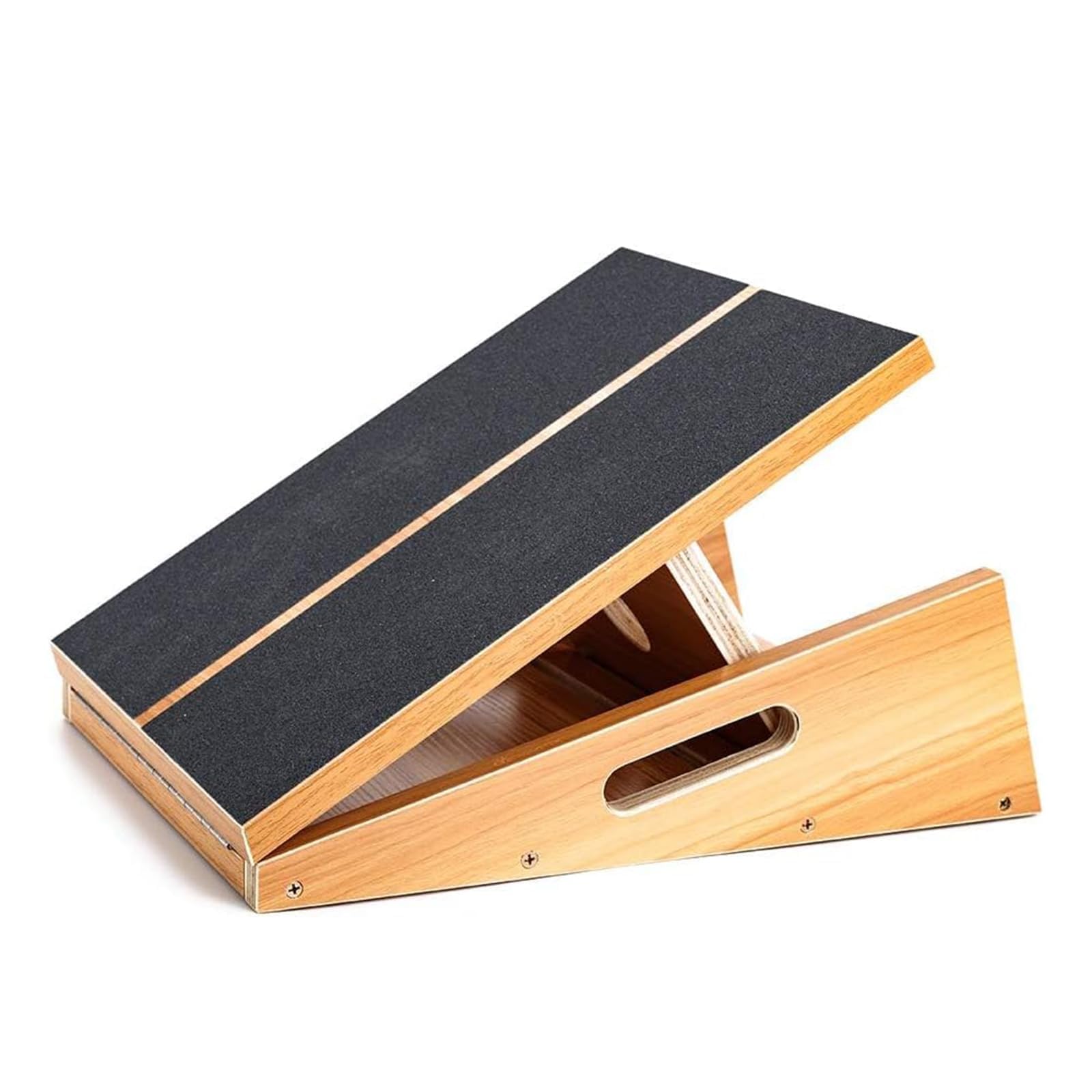
11 Best Slant Board of 2026: Built to Last, Not to Break

Find the best slant board that won't crack at the hinge or lose grip after weeks. Options for calf stretching, squats, and rehab across budgets.

Browse any fitness retailer and you'll see a dozen wooden slant boards that appear nearly identical. The subtle differences — in hinge design, grip surface adhesion, and minimum incline — are what separate a board that lasts years from one that ends up in the back of a closet.

This guide avoids the look-alike trap by focusing on the real-world details that matter for daily use: does the hinge creak under body weight? Will the grip tape stay glued after sweaty sessions? Which starting angle is actually safe for tight calves?

The right slant board becomes a daily tool — not a dust collector — when it matches your real flexibility level and workout style. The picks that follow prioritize stable construction and usable angle ranges for everything from gentle calf stretches to heavy heel-elevated squats.

1

Best Overall

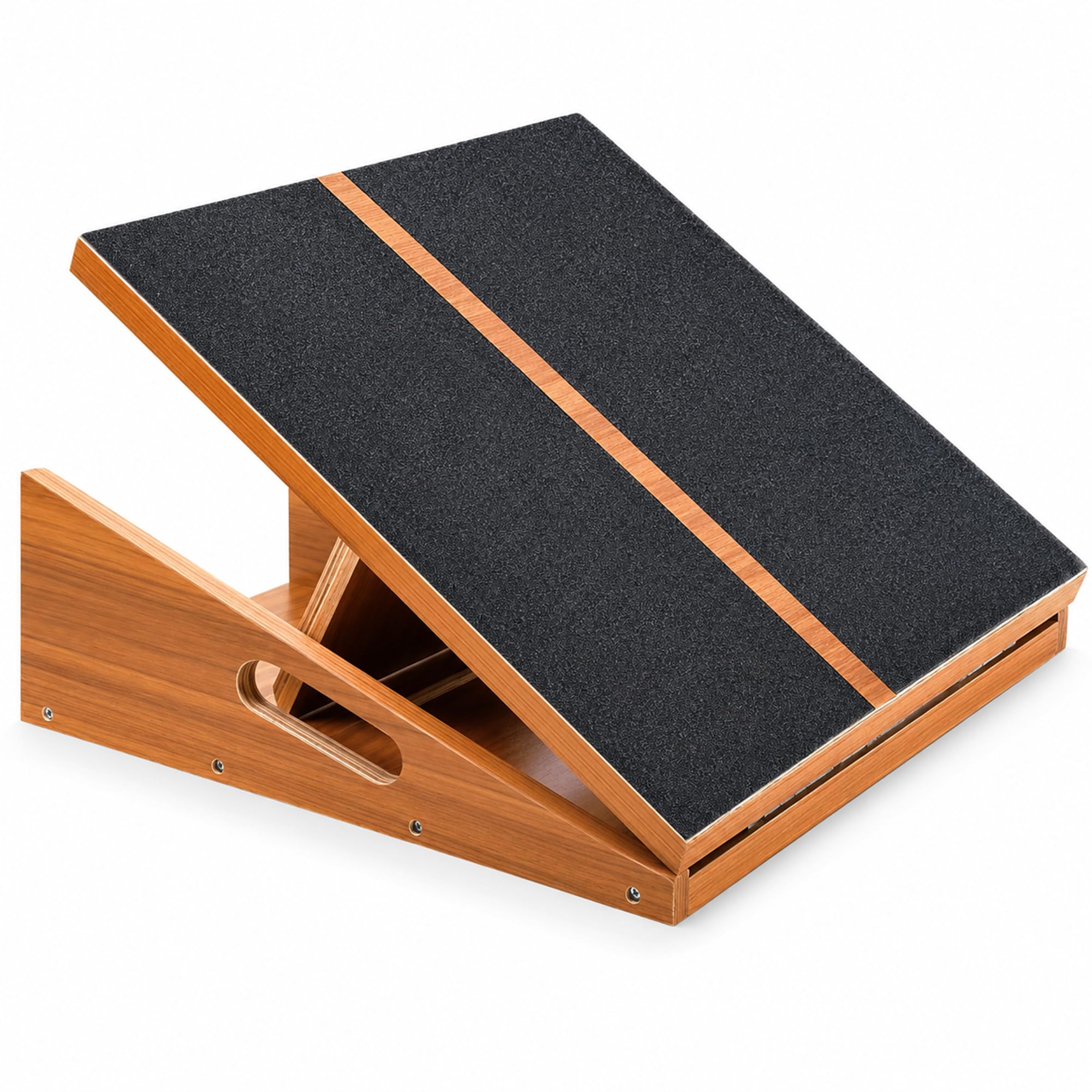
StrongTek Adjustable Slant Board

96 /100
Peggy's Score Outstanding

Key details

Weight Capacity
Non-Slip Surface
Tread top, anti-slip base
Material & Hinge Type
Wood, adjustable
Angles & Start Incline
5 angles, 15° min
Check Details on Amazon

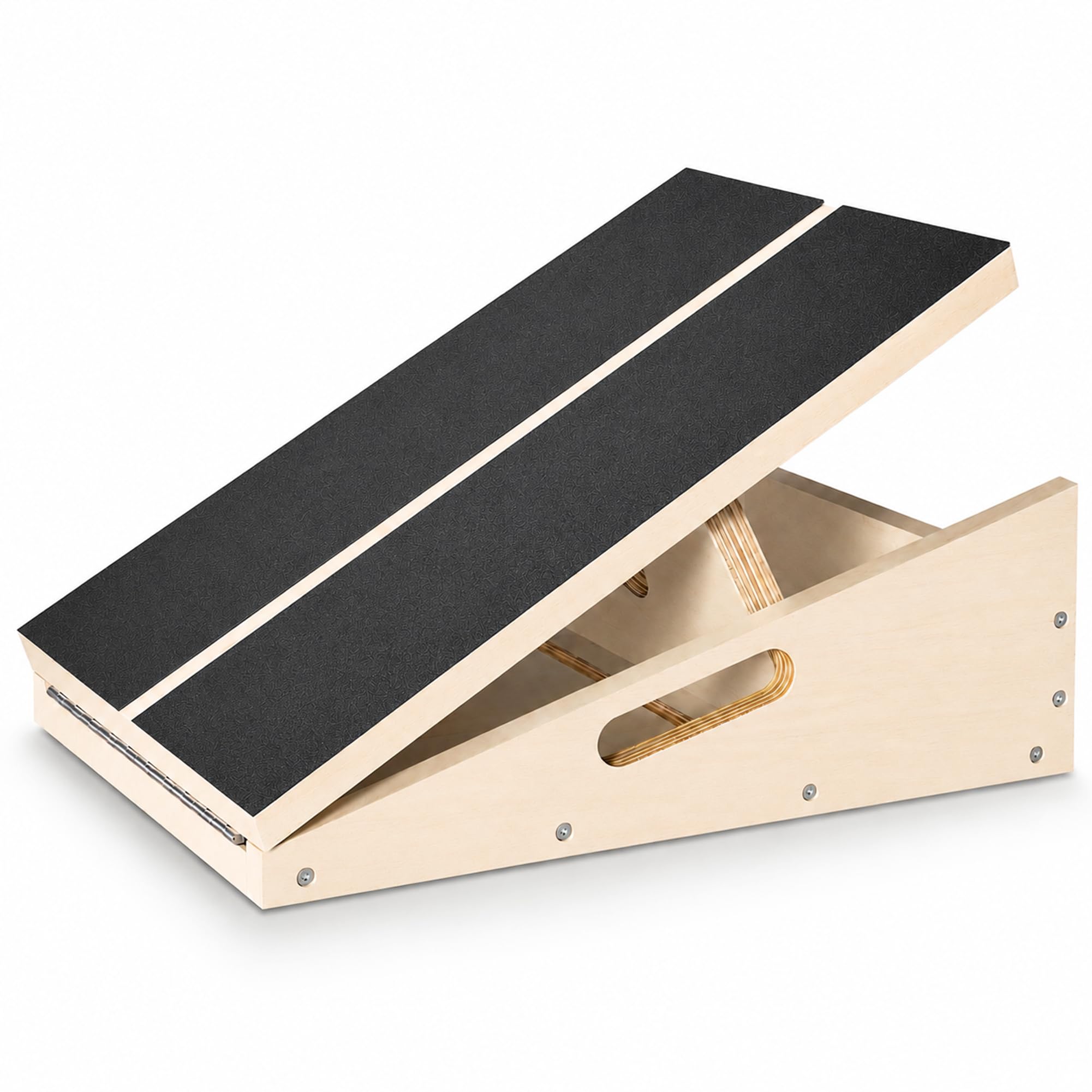
The StrongTek slant board moves through five locked incline positions, from a gentle 15° up to a steep 35°, making it easy to start rehab gently and increase intensity as flexibility improves. The wooden platform measures 16 inches deep by 12.5 inches wide, giving stable footing for most users, and integrated side handles let you carry it without touching the grip surface. Built from solid wood with an anti-slip base, the board stays planted during use and doesn't flex under bodyweight, earning it a reputation for dependable daily use.

Adjusting the angle requires only a quick repositioning of the support block — no tools needed — and each setting locks securely without wobble. The board's 9-pound mass and grippy bottom prevent sliding on hardwood, tile, or gym mats. During calf stretches, the incline feels stable and the tread on top keeps feet from slipping, even in socks. The side handle is a practical addition for moving it between rooms or tucking it against a wall.

This board is ideal for anyone dealing with plantar fasciitis, tight calves, or limited ankle mobility, as well as those incorporating bodyweight squats or physical therapy exercises. The standard-width platform suits most foot sizes, but if you plan to do heavy weighted squats or need extra room for size 13+ feet, the fixed wedge or a wider board may be a better match. Potential grip tape peeling at the edges can occur after months of use; it's a manageable fix with reapplication and doesn't affect the board's structural integrity.

💡 If grip tape edges lift over time, clean the surface and reapply with strong adhesive; many owners switch to skateboard tape for a longer-lasting fix.

Pros

  • Exceptional build quality with solid wood construction that resists flexing under bodyweight.
  • Highly effective for relieving calf tightness and plantar fasciitis symptoms.
  • Smooth, tool-free adjustability across five angles from 15° to 35° for progressive stretching.
  • Strong overall value with quality materials and long-term durability that justifies the mid-range price.
  • Sturdy and stable platform for bodyweight exercises, with durable construction that holds up over years of use.

Cons

No notable drawbacks to flag.

Our verdict

If you need a dependable adjustable slant board for daily calf and ankle mobility work, the StrongTek delivers solid angles and a build that lasts, with a minor grip tape maintenance lift that's easy to manage.
Check Latest Price
2

Best Value Adjustable Board

MUCITAGF Professional Slant Board

95 /100
Peggy's Score Outstanding

Key details

Weight Capacity
500 lbs
Non-Slip Surface
Textured surface, anti-slip pads
Material & Hinge Type
Hardwood plywood
Angles & Start Incline
5 angles, 15° min
Check Details on Amazon

This board delivers a 500-pound weight capacity and five clearly marked incline positions at a cost that's significantly lower than most adjustable wooden boards with similar specs. The textured surface stays intact through daily use, without the peeling that forces owners to reapply grip tape on some competing boards. Fixed-angle construction means no folding hinges to develop play or snap under load.

Heavy users up to 500 pounds get a wobble-free platform for deep calf stretches, Achilles rehab, and plantar fasciitis relief. The five angles from 15° to 35° cover the typical rehab progression, and the non-slip base keeps it planted on hard floors or carpet.

The 12.5-inch width matches the industry standard for adjustable boards, but if you wear size 12 or larger shoes, your heels will hang slightly off the sides. That's not a stability issue — it's simply the platform width that comes with this compact, budget-friendly design. For a wider stance, the extra-large board in this category offers a 16x18-inch surface.

Pros

  • Supports up to 500 lbs without any wobble or flex
  • Five clearly marked angles from 15° to 35° lock in securely
  • Deep, effective calf stretch improves plantar fasciitis and Achilles tightness
  • Mid-range price undercuts boards with identical specs

Cons

No notable drawbacks to flag.

Our verdict

If you need a proven, no-excuses slant board for daily rehab and stretching and don't mind the standard 12.5-inch width, this is the smartest money you'll spend in the category.

Check Latest Price
3

Best Fixed‑Angle Squat Wedge

StrongTek 19.6" Squat Wedge

91 /100
Peggy's Score Outstanding

Key details

Weight Capacity
1000 lbs
Non-Slip Surface
Dual non-slip
Material & Hinge Type
Hardwood plywood, fixed
Angles & Start Incline
Fixed 25°
Check Details on Amazon

Where the top pick delivers an adjustable range for stretching and rehab, this StrongTek wedge commits entirely to one angle and one job: heavy heel-elevated squats. The 19.6-inch platform is noticeably wider than typical slant boards, letting you set a natural shoulder-width stance without overhang — a detail that immediately matters the moment you load a bar across your back.

Under a loaded barbell, the three-point support and dual non-slip surfaces prevent any slide or rock. Barefoot, in socks, or in metcon shoes, the grip holds without the peel-prone grip tape found on some adjustable boards. The hardwood plywood build feels heavy and inert, exactly what you want when you need the floor to stay perfectly still during a max-effort rep.

This board is for the lifter who already knows they want a fixed 25° wedge for ATG and knees-over-toes work and won't miss the ability to dial the angle down for calf stretches or up for other mobility drills. If your search started with 'slant board for calf and ankle stretching,' the lack of adjustability will be a hard boundary — 25° is steep for gradual dorsiflexion work or gentle plantar fasciitis rehab, and you cannot back it off.

Pros

  • Unshakable stability for weighted squats
  • Dual non-slip surfaces keep feet locked in place barefoot or in training shoes, without grip tape that peels.
  • 19.6-inch width accommodates a natural, shoulder-width stance, especially helpful for size 12+ feet.
  • Hardwood plywood construction feels dense and durable enough for heavy daily gym use.

Cons

  • At over 15 pounds, the board is cumbersome to move frequently
  • The fixed 25° incline limits versatility: it cannot serve as a progressive calf stretcher or adjustable rehab tool, and may be too steep for users with very tight calves.
Our verdict

If your primary goal is heavy heel-elevated squats and you have the space for a dedicated wedge, this board's width and stability are unmatched. Buyers needing adjustable angles for progressive stretching and mobility work should look to a multi-angle board instead.

Check Latest Price
4

Best Independent Stance Board

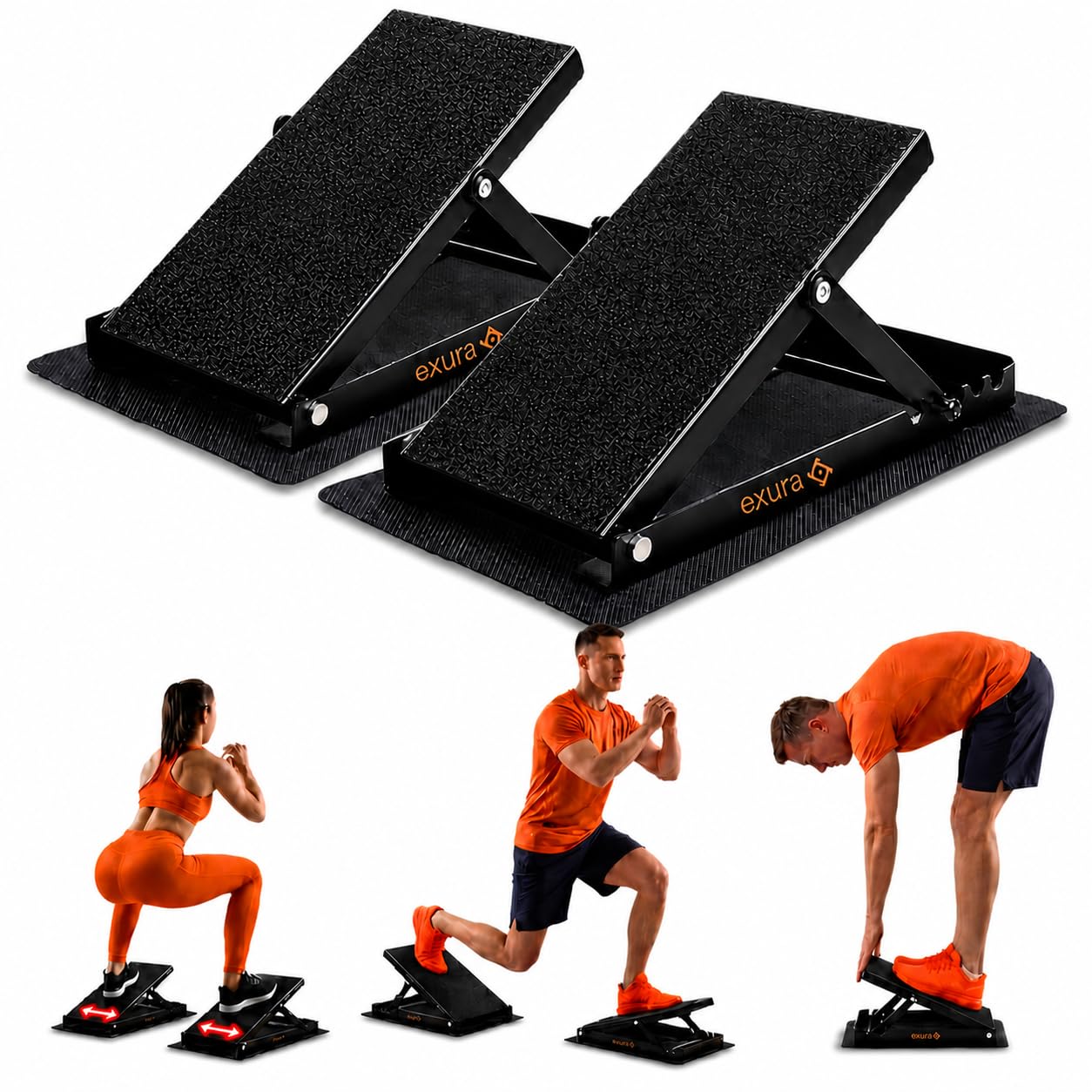
EXURA Metal Slant Board Set

89 /100
Peggy's Score Excellent

Key details

Weight Capacity
900 lbs
Non-Slip Surface
Sandpaper top, rubber base
Material & Hinge Type
Steel, independent
Angles & Start Incline
4 levels per platform
Check Details on Amazon

Separate adjustable platforms let you set different angles per foot for split squats and lunges. Unlike standard slant boards that make both feet share a single angled surface, this pair of independent metal wedges opens up genuine split-stance training — front-foot-elevated Bulgarian split squats, ATG split squats, and offset lunges where each leg may need a different incline. Each platform clicks into four positions, so you can dial in asymmetry-specific progressions for rehab or mobility work.

The steel frame and sandpaper-like top grip provide a planted feel under heavy loads. The 7.6-lb total and low-profile design keep the platforms stable on carpet; on smooth hardwood, a non-slip mat underneath eliminates any drift. The grip surface works barefoot or with shoes, giving confident foot purchase through full range of motion without sliding.

This is a specialized tool for ATG athletes and lifters who routinely perform weighted split squats and lunges requiring independent foot angles. If your routine is straightforward calf stretching, a single adjustable board gives the same incline range at a much lower price. The sandpaper grip, while effective when new, can start to peel off the metal over time; re-gluing restores it, but it's a maintenance point to expect. The value lives in the dual-platform design, not the grip's longevity.

💡 On slick floors, place a grippy mat underneath each platform — this eliminates any drift.

Pros

  • Solid metal construction stays rock-steady underfoot, even under heavy loads.
  • Independent platforms allow true independent foot positioning for split squats and lunges.
  • Sandpaper surface provides strong grip, suitable for barefoot or shoes.
  • Effective for plantar fasciitis pain reduction and knee-supporting muscle strengthening.

Cons

  • The price is significantly higher than a single adjustable board for simple calf stretching.
  • Sandpaper grip may detach from the metal over time and need re-gluing.
Our verdict

If you're an ATG practitioner logging weighted split squats and lunges, the independent foot positioning is something no single slant board can replicate. For calf stretches alone, a standard adjustable board gives equal stretch for much less.

Check Latest Price
5

Best 2‑in‑1 Balance & Slant Board

Woodure 2‑in‑1 Balance Slant Board

86 /100
Peggy's Score Excellent

Key details

Weight Capacity
350 lbs
Non-Slip Surface
Material & Hinge Type
Wood, convertible
Angles & Start Incline
4 inclines
Check Details on Amazon

The Woodure 2-in-1 is the only slant board in this set that pulls double duty as a balance trainer — four incline angles for calf stretching and a detachable wobble base that turns the platform into a balance board. While most slant boards do one job, this unit’s reversible design lets you swap between supported incline work and an unstable surface for ankle and core activation, all from a single 4-lb platform.

On the incline side, the four preset angles allow for a smooth progression from mild to steeper calf and hamstring stretches. The board feels stable underfoot during static holds, and the wood surface provides enough grip for sock or barefoot use. Flipping to balance mode adds a moderate wobble that challenges ankle stability without feeling excessively tippy — it is well suited for rehab drills or standing balance breaks rather than high-intensity plyometrics.

This hybrid suits home gym users under 250 lb who want to combine daily calf stretching with light balance work without cluttering their space with two separate tools. It is not built for weighted squats or aggressive daily sessions where the bracket absorbs repeated stress. The listed weight capacity is ambiguous — some packaging states 200 lb while the product page claims 350 lb — so sticking to bodyweight and moderate use avoids pushing the hardware past its practical limit. The main tradeoff is durability: the bracket and wood joint can crack over time, particularly if used for heavy impact drills or if the balance base is left attached during deep stretches.

💡 Remove the balance base when doing deep stretches or heavy bodyweight use — direct floor contact spreads the load and preserves the bracket.

Pros

  • Combines slant and balance board in one unit, saving space and equipment clutter.
  • Adjustable incline positions let you progress calf stretches from gentle to deep angles.
  • Balance board mode improves ankle stability and core engagement during bodyweight exercises.

Cons

  • Weight capacity is inconsistent across listings
  • The bracket and wood can crack under repeated heavy loads, and early breakage has been reported.
Our verdict

For those wanting a two-in-one tool for gentle stretching and balance training, this hybrid conserves space while adding ankle stability work that a standard slant board can't offer. However, if your routine includes frequent heavy squats or you weigh above 250 lb, a dedicated incline board without a removable bracket will hold up more reliably over time.

Check Latest Price
6

Best Budget Adjustable Board

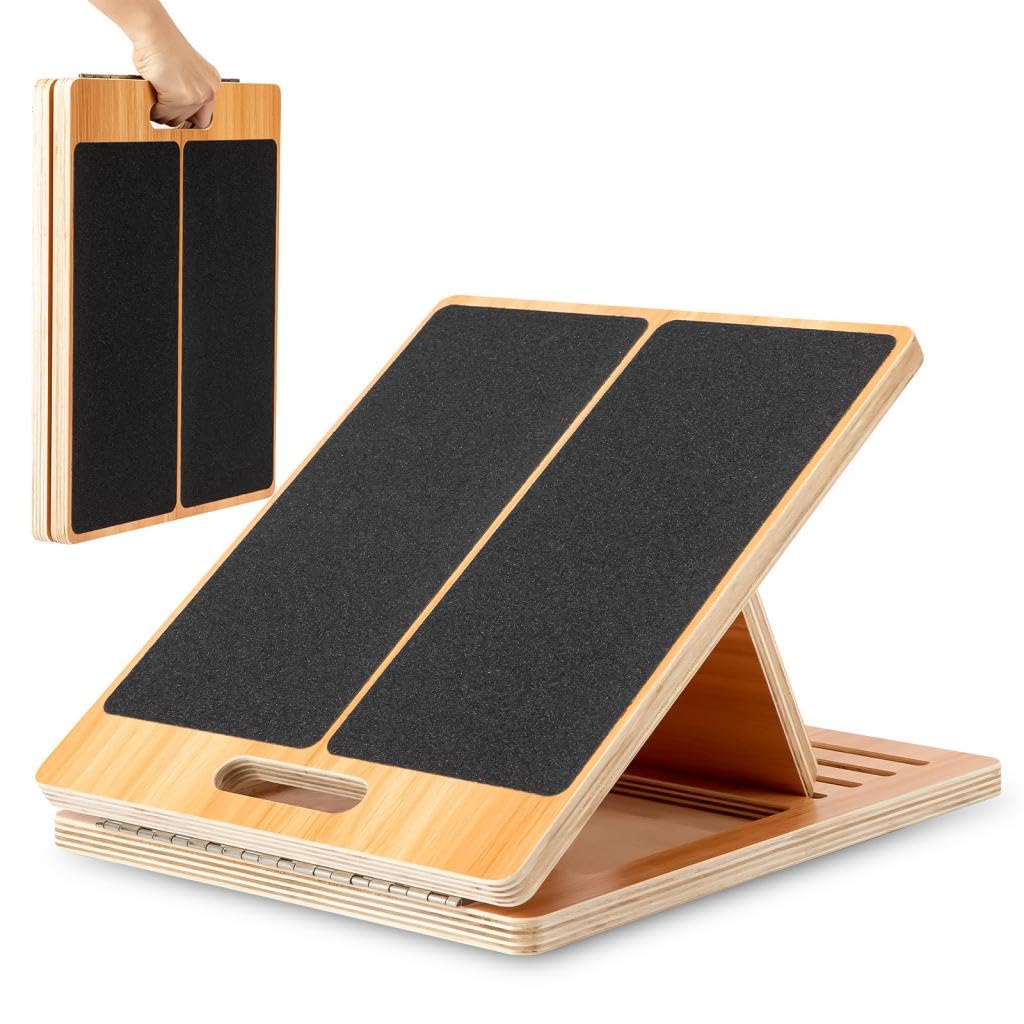
XCMVCN Adjustable Slant Board

90 /100
Peggy's Score Outstanding

Key details

Weight Capacity
300 lbs
Non-Slip Surface
No-slip surface
Material & Hinge Type
Wood, foldable
Angles & Start Incline
5 angles, 23° min
Check Details on Amazon

Where the top pick builds deep community trust, the XCMVCN carves a niche as the most portable adjustable wooden board at a budget price. It folds flat in seconds, slipping under a couch or into a carry-on, which no other adjustable board in this bracket can claim. The lower starting angle is sacrificed for that portability and cost, but for those who already touch their toes, the 23° floor is not a drawback.

The wooden platform feels solid under bodyweight, resisting the creaks and flex that plague lighter plastic boards. Grip tape holds feet securely even during barefoot stretching, and the exercise poster adds a thoughtful nudge for trying all five positions. The folding mechanism locks flat without wobbly hinges, making it easy to slide behind a door after use.

This is a board for daily limbering, not for cautious first steps out of a walking boot. The 23° starting incline asks for a baseline of ankle mobility; if that doesn't daunt you, you'll enjoy working up to 45° for deeper dorsiflexion. For plantar fasciitis rehab or chronically tight calves, a board that starts at 15° is the safer choice — that gentle gradient is missing here. But for the flexible athlete, the XCMVCN delivers a full-range stretch routine without monopolizing floor space or wallet.

Pros

  • Feels solid underfoot for bodyweight and light weighted stretching, with wood that resists flexing.
  • Engages calves and hamstrings well across 5 angles, and the included poster guides a full lower-body routine.
  • Folds completely flat, sliding under furniture or into a gym bag with no protruding hardware.
  • One of the most affordable adjustable boards available, hitting a price that makes a second unit for travel or office easy to justify.

Cons

No notable drawbacks to flag.

Our verdict

For flexible stretchers who want a five-angle board that folds away, the XCMVCN delivers without demanding much cash or floor space — rehab-focused users will find a gentler start elsewhere.

Check Latest Price
7

Large Feet

MUCITAGF Extra Large Slant Board

85 /100
Peggy's Score Excellent

Key details

Weight Capacity
500 lbs
Non-Slip Surface
Full-surface grip
Material & Hinge Type
Wood
Angles & Start Incline
5 angles, 15° min
Check Details on Amazon

A 16-inch wide, 18-inch deep platform provides full contact for shoe sizes 12 and up — no more hanging heels or cramped toes during calf raises. The 12.5-pound board stays planted under 450-plus pounds, with a non-slip surface that grips even during heavy stretching. Build quality feels substantial and consistent. One thing to check: the highest incline setting may only reach about 30° instead of 35° on some units, due to a tolerance in the locking mechanism. For deep-tissue calf stretches, this matters; for general mobility work and squats, the 30° position still delivers a useful slope. If you prioritize platform room over a guaranteed max angle, this board fits the bill.

💡 Upon arrival, confirm the 35° locking pin engages; if not, the 30° setting still provides a steep-enough angle for most mobility work.

Pros

  • Extra-wide 16-inch platform prevents foot overhang for size 12+ shoes.
  • Sturdy enough for heavy users and weighted stretches, with no discernible flex.
  • High-quality materials and solid construction feel durable long-term.

Cons

  • The steepest 35° incline may be unreachable on some units; the board can stop at roughly 30°.
Our verdict

The board suits users who prioritize a roomy, stable platform for large feet and moderate inclines, and can accept that the very top angle may not be available.

Check Latest Price
8

Beginners, Wider Stance

StrongTek 13‑Inch Slant Board

92 /100
Peggy's Score Outstanding

Key details

Weight Capacity
350 lbs
Non-Slip Surface
Non-slip surface
Material & Hinge Type
Wood, foldable
Angles & Start Incline
5 angles, 15° min
Check Details on Amazon

This StrongTek slant board widens the platform to 13 inches while keeping the same 5-angle adjustment from a gentle 15° start that makes calf stretching and squat mobility accessible to beginners. The non-slip surface, smooth angle changes, and fold-flat design work as expected, and the built-in carry handle simplifies storage. The tradeoff is a 350-lb weight limit that keeps it firmly in bodyweight and light dumbbell territory. For heavy barbell squats, a higher-capacity board is a better match, but for daily stretching and rehab routines, the extra foot room and low incline make a tangible difference.

Pros

  • Solid wood construction feels sturdy and stable during use.
  • Non-slip surface keeps feet securely in place for stretches and squats.
  • Quick angle adjustments and folds flat for storage, making it easy to use and stow.

Cons

  • Maximum 350-lb capacity limits it to bodyweight and light dumbbell exercises, making it unsuitable for heavy loaded squats.
Our verdict

For bodyweight stretching, calf raises, and light mobility work, the extra width and low 15° starting angle provide a forgiving, portable platform.

Check Latest Price
9

Portable Stretching

TEMI Wooden Slant Board

90 /100
Peggy's Score Outstanding

Key details

Weight Capacity
500 lbs
Non-Slip Surface
Anti-slip surface, soft pad
Material & Hinge Type
Wood, foldable
Angles & Start Incline
4 angles, 20° min
Check Details on Amazon

This board's portability is its defining feature: the built-in handle and sub-5-lb weight slide neatly into a gym bag. With 500-lb capacity, an anti-slip surface, and four incline settings (20° to 40°), it handles squats, calf stretches, and foot exercises without shifting.

The 20° starting angle can be too steep for very tight calves or early rehab, which limits the board's accessibility for those needing a gentle ramp. Some units also arrive with rough wooden edges that require a quick sanding to avoid snagging socks, a small trade-off for the affordable price and easy portability.

Pros

  • Builds calf flexibility and strengthens feet/knees during weighted and bodyweight movements
  • Sturdy with a grippy surface that stays put during use, even under heavy load
  • Folds compactly with a built-in handle and supports up to 500 lbs without bulk

Cons

  • Lowest incline of 20° may be too intense for those with very tight calves or plantar fasciitis rehabilitation
Our verdict

A portable board suited for moderate calf and ankle mobility work, provided you already have enough flexibility to start at 20° and can spend a minute sanding the edges flat.

Check Latest Price
10

Steel Durability

CTRL Sports Adjustable Slant Board

90 /100
Peggy's Score Outstanding

Key details

Weight Capacity
Non-Slip Surface
Grip tape surface
Material & Hinge Type
Alloy steel
Angles & Start Incline
5 angles, 15° min
Check Details on Amazon

The CTRL Sports slant board uses alloy steel to sidestep wood splinters, with five angles that shift smoothly through heel drops and hamstring stretches. Motivational sayings add a distinct look. The grip tape edges can gradually lift from the steel surface — a quick press restores adhesion, but occasional attention may be needed. At a premium price, it costs more than capable wood boards with the same range, making it a niche option for those who prefer metal.

💡 If a tape edge lifts, press it back down or use a thin adhesive strip — the board remains fully functional.

Pros

  • Steel frame feels planted during stretches and bodyweight exercises.
  • Five-angle mechanism shifts smoothly without sticking.
  • Grip tape keeps feet stable in socks or barefoot.

Cons

  • Grip tape edges can peel away from the steel bed over time, needing reapplication.
  • Price sits well above wood boards that deliver the same effective stretch.
Our verdict

This board fits a niche: it's the right choice if you're set on a sleek steel design and don't mind the occasional tape touch-up, but the value-seeking stretcher will find identical angles on wood for far less.

Check Latest Price
11

Clinical Rehab

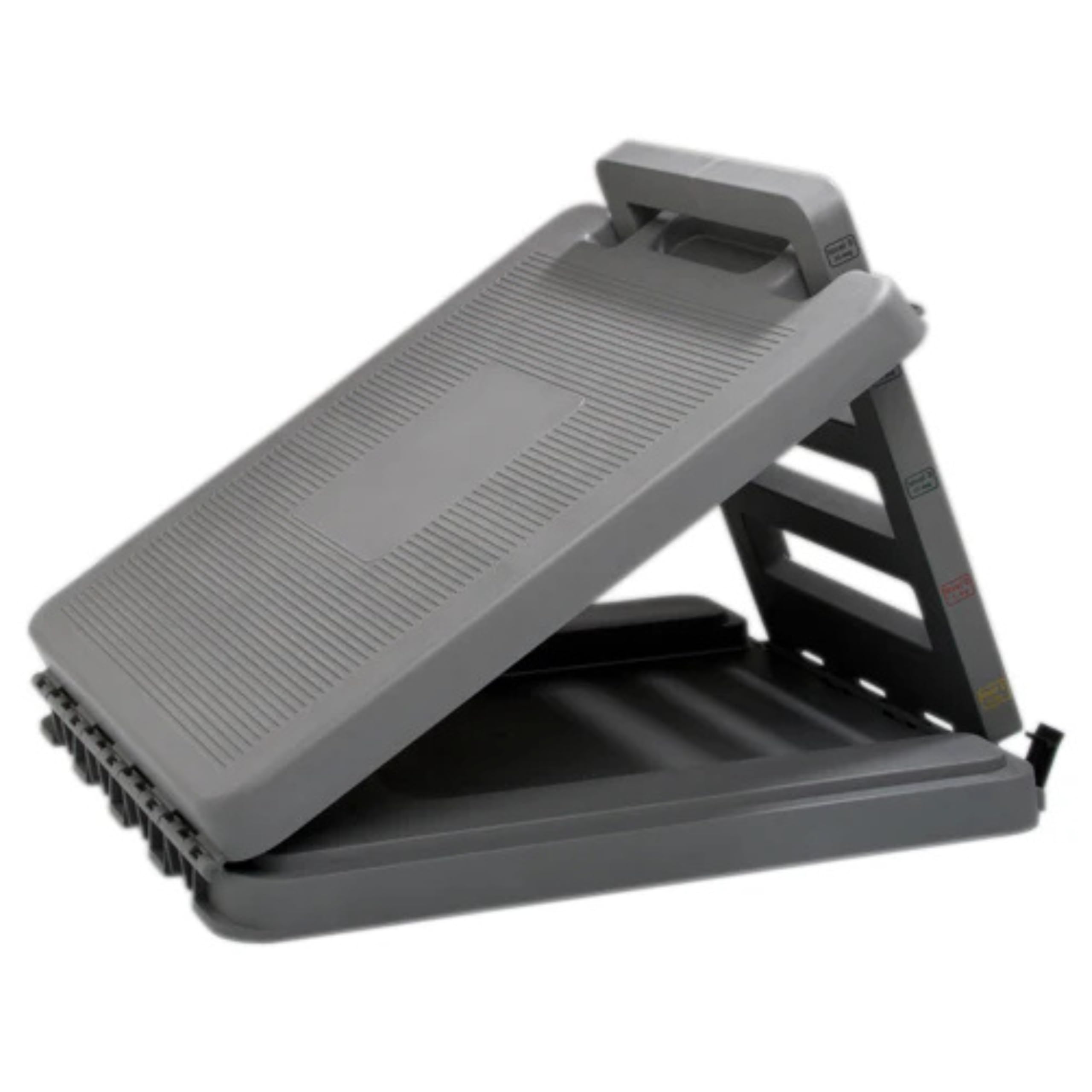
CanDo Plastic Slant Board

81 /100
Peggy's Score Excellent

Key details

Weight Capacity
Non-Slip Surface
Material & Hinge Type
Plastic
Angles & Start Incline
5 levels, 0° min
Check Details on Amazon

The CanDo PS Medical Multi-Angle Plastic Slant Board earns its clinical niche with the only true 0° flat setting among adjustable boards, a critical detail for physical therapy patients who need to start ankle mobility work at absolute zero incline. It folds flat, weighs under 7 lb, and slips easily into a gym bag — a genuine asset for clinicians moving between appointments. Seated calf stretches and light standing use feel effective thanks to the five-angle range, with the 0° and 5° positions allowing gradual progression that other boards skip. That portability comes from a composite plastic build that flexes under moderate weight. If you weigh over 180 lb or plan to use it for standing squats, the platform will feel unstable. This board works best for seated calf raises and gentle ankle rehab where body weight isn't fully bearing down.

Pros

  • True 0° flat position enables gradual ankle mobility work that no other adjustable board offers.
  • Folds flat and weighs under 7 lb, easily portable in a clinic bag or backpack.
  • Provides an effective stretch for seated calf raises and light standing use.

Cons

  • Plastic platform can flex under moderate weight, compromising stability for standing stretches.
Our verdict

This board makes sense for seated calf raises and gentle ankle rehab when a 0° starting point matters more than rock-solid stability, provided you're under 180 lb.

Check Latest Price

How to Choose

Adjustable Angles and Minimum Incline

A board that adjusts from 15° to 35° gives you a progressive path from gentle rehab stretches to deep mobility work. The starting angle is the real gatekeeper: tight calves or early plantar fasciitis need 15° or less to avoid strain. Boards that start at 20° or 23° force your Achilles into a stretch it isn't ready for, which often leads to discomfort and abandoned routines.

If you already have decent flexibility, a 20° minimum is workable, but anyone in active recovery should prioritize 15°. Fixed-angle boards at 25° are fine for squats but not for progressive calf stretching.

Platform Width and Depth

Standard 12.5-inch width works for most feet up to size 11, but if you squat with a shoulder-width stance or wear size 12+, look for platforms 16 inches or wider. Depth matters for heel support: 16 inches of depth keeps your entire foot on the board without feeling perched, which is especially important during deep squats.

Weight Capacity

A 300-lb capacity covers bodyweight stretching for almost everyone, but if you plan to add weight—dumbbells, kettlebells, or barbell squats—500 lb or higher is non-negotiable. The board must not flex under load; even slight bending can throw off your balance mid-squat and stress the hinges on adjustable models.

Material and Hinge Quality

Hardwood plywood is the standard for good reason: it resists cracking under repeated stress. The weakness is almost always the hinge mechanism on foldable boards. Central hinges carry your full weight and create a leverage point that can split the wood over time. Fixed-angle wedges eliminate that risk entirely. If you need portability, look for boards with reinforced hinge brackets and user reports that confirm long-term survival.

Non-Slip Surface Type

Most boards use either abrasive grip tape or textured tread. Grip tape provides excellent friction when new, but adhesive failure is a common complaint—expect to reapply it after months of sweaty use. Full-surface sandpaper-like finishes last longer and feel secure barefoot. Boards with soft rubber pads may slip on hardwood floors unless you add a separate mat.

Frequently Asked Questions