15 Best Yoga Strap of 2026: Length, Loops, Width That Fit

The best yoga strap for your body depends on length, webbing width, and loop vs D-ring design. Match one to your stretching style and routine.

Shopping for a yoga strap looks simple until the package arrives and the strap is shorter than expected. A 75-inch strap drops to roughly 3 feet of working length when you hold both ends and loop a foot, so height and intended stretches matter more than the advertised length.

The bigger decision is form: multi-loop straps give you fixed grip points for guided PT-style stretching, while D-ring straps let you cinch a precise loop for yoga poses. Both work, but one usually fits how you actually use a strap.

This guide sorts those trade-offs by length, width, and loop design so you can pick the strap that matches your body and routine. Non-elastic construction is assumed throughout; if you want bounce, you are shopping for a resistance band.

1

Best Overall

OPTP Stretch Out Strap

95 /100
Peggy's Score Outstanding

Key details

Length
6 ft
Webbing
1-inch woven nylon
Handles / Bag
Guide / Poster
40-page book
Check Details on Amazon

The OPTP Stretch Out Strap is a 10-loop woven nylon strap with a 40-page exercise book, so it functions as both a stretching assistant and an at-home rehab guide. The non-elastic weave holds each loop position without bounce, which lets you control hamstring, hip, and lower-back stretches without loading the spine. That combination is what sets this strap apart from simple loop-only options.

The 10 loops provide enough adjustment range that you can start with a longer working section and shorten it as flexibility improves. At home, that translates to smooth transitions between seated hamstring stretches, lying leg pulls, and shoulder mobility work — no rethreading a buckle between moves. You can also progress through the loops without losing tension mid-stretch.

This fits physical therapy, post-surgery recovery, and beginners who want the included guide rather than a bare strap. The 6-foot length is shorter than the 8-foot alternatives in this set, so tall users who need extra reach for full-body stretches may need to size up. If you only need the cheapest possible loop, a budget strap will save money, but it gives up the book and the PT-style structure; the included guide is what makes this model worth its premium price.

💡 Choose a loop near the far end to get the longest working length during seated hamstring stretches.

Pros

  • Ten non-elastic loops give incremental positions for hamstring, hip, and back stretches without lower-back strain.
  • Woven construction holds its shape through repeated pulls and daily home rehab use.
  • Included 40-page exercise book gives beginners a practical routine for post-surgery recovery.

Cons

  • An order can arrive without the 40-page booklet, so the guide is not guaranteed in every shipment.
  • Six-foot length is shorter than the 8-foot straps in this set, so tall users may need more reach.
Our verdict

For home rehab and guided flexibility work, this is a complete package that pairs a durable strap with a useful exercise plan.
Check Latest Price
2

Best Budget / Home Rehab

Trideer PT Loop Strap

95 /100
Peggy's Score Outstanding

Key details

Length
75 in
Webbing
1-inch polyester
Handles / Bag
Guide / Poster
Check Details on Amazon

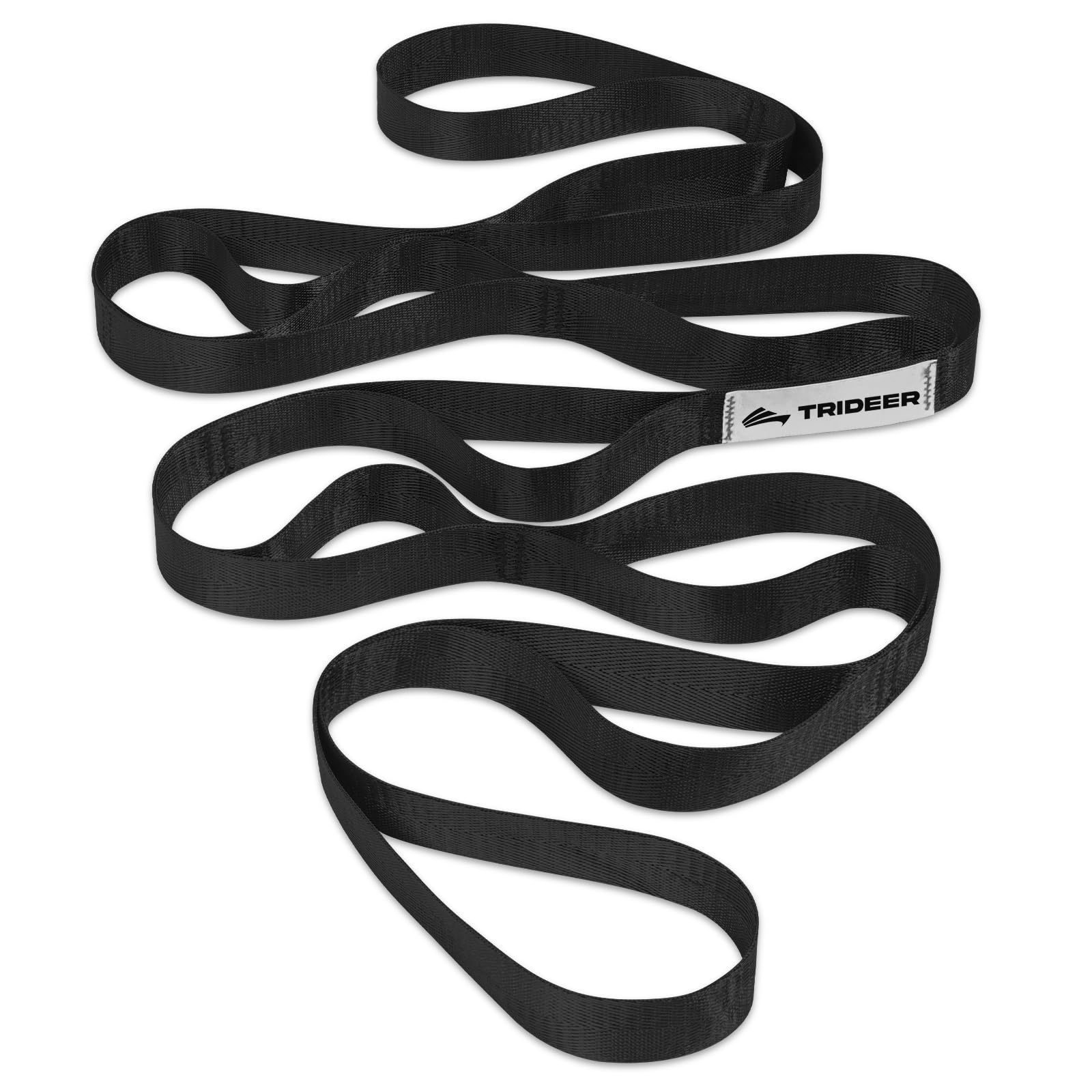
The 10-loop non-elastic Trideer strap handles knee and hip mobility work at a budget price, without the PT branding or exercise book of the top pick. The loops are well placed for hamstring, calf, hip, and knee stretches, and the polyester webbing holds firm without stretching. It also handles post-run stretching duties.

It suits budget home rehab, post-surgery knee and hip mobility, and light yoga for first-time strap buyers. The 1-inch webbing and 75-inch length are on the slender and short side, so average-height users get the most benefit; tall users needing an 8-foot reach will want a longer strap.

💡 Anchor the strap around the foot and pull on the nearest loop for seated hamstring work.

Pros

  • Sturdy stitching keeps the loops intact through regular stretching sessions.
  • Covers hamstring, calf, hip, and knee mobility work in one strap.
  • Budget-friendly enough for a first strap or a home-rehab spare.

Cons

  • Holding both ends for a stretch leaves about 3 feet of reach; taller users may run out.
Our verdict

For average-height buyers doing budget home rehab or light yoga, this is the more affordable loop strap.

Check Latest Price
3

Best Adjustable Yoga Prop

Tumaz D-Ring Yoga Strap

96 /100
Peggy's Score Outstanding

Key details

Length
6/8/10 ft
Webbing
1.5-inch cotton blend
Handles / Bag
Guide / Poster
Check Details on Amazon

The welded D-ring locks at any point along the strap and releases with a simple pull, so finding your working length takes seconds. The cotton blend feels softer against bare skin than typical nylon webbing, and the 1.5-inch width spreads tension across hamstring and shoulder stretches. Because it is non-elastic, the position stays put once set.

This strap suits class or studio use and anyone who dislikes rough nylon straps. No printed guide is included, so beginners should follow a teacher or online video rather than expect self-guided routines. The smooth material also makes it easy to maintain a secure hold during longer poses.

Pros

  • Holds up through deep stretching and repeated yoga practice.
  • Serves yoga, Pilates, and physical therapy routines equally well.
  • Length and color options make it easy to match studio or home gear.

Cons

  • No multi-loop grab handles for users who want preset grabbing points; the D-ring adjusts manually.
Our verdict

For practitioners who already have a stretching routine, the soft cotton D-ring design delivers exactly what they need.

Check Latest Price
4

Best 8-Foot Loop Strap

SANKUU 12-Loop Strap

95 /100
Peggy's Score Outstanding

Key details

Length
8 ft
Webbing
1.57-inch nylon
Handles / Bag
Guide / Poster
Workout poster
Check Details on Amazon

The SANKUU 12-loop strap gives the most working length in this group: 8 feet of 1.57-inch nylon webbing with 12 loop positions spread along the way. That extra reach helps tall users and full-body stretches, while the wide web distributes pressure better than slimmer 1-inch straps. Stitching is clean and the webbing holds firm without stretching out under load.

This is the strap for yoga and Pilates practitioners who like loop handles, plus anyone doing home physical therapy routines that need multiple grip heights. The tradeoff is smooth nylon: it is strong and durable, but less cozy against bare skin than a cotton blend. If you prefer one simple D-ring cinch with no loop placement, the multi-loop format can feel busier than needed.

Pros

  • Longest working length in the main picks thanks to the 8-foot strap.
  • Twelve loop positions offer a secure grip for different body sizes and stretch angles.
  • Wide 1.57-inch nylon webbing distributes pull and holds firm under tension.

Cons

  • Smooth nylon can feel slick and less cozy against bare legs and feet than cotton blends.
Our verdict

For tall users, loop-lovers, and PT-style stretching, this is the loop strap with the most reach and grip positions; the smooth nylon is the only reason to prefer a cotton-blend alternative.

Check Latest Price
5

Best Padded PT Strap

Gradient 1.5-inch Strap

95 /100
Peggy's Score Outstanding

Key details

Length
8 ft
Webbing
1.5-inch nylon
Handles / Bag
Padded handles, bag
Guide / Poster
Workout poster
Check Details on Amazon

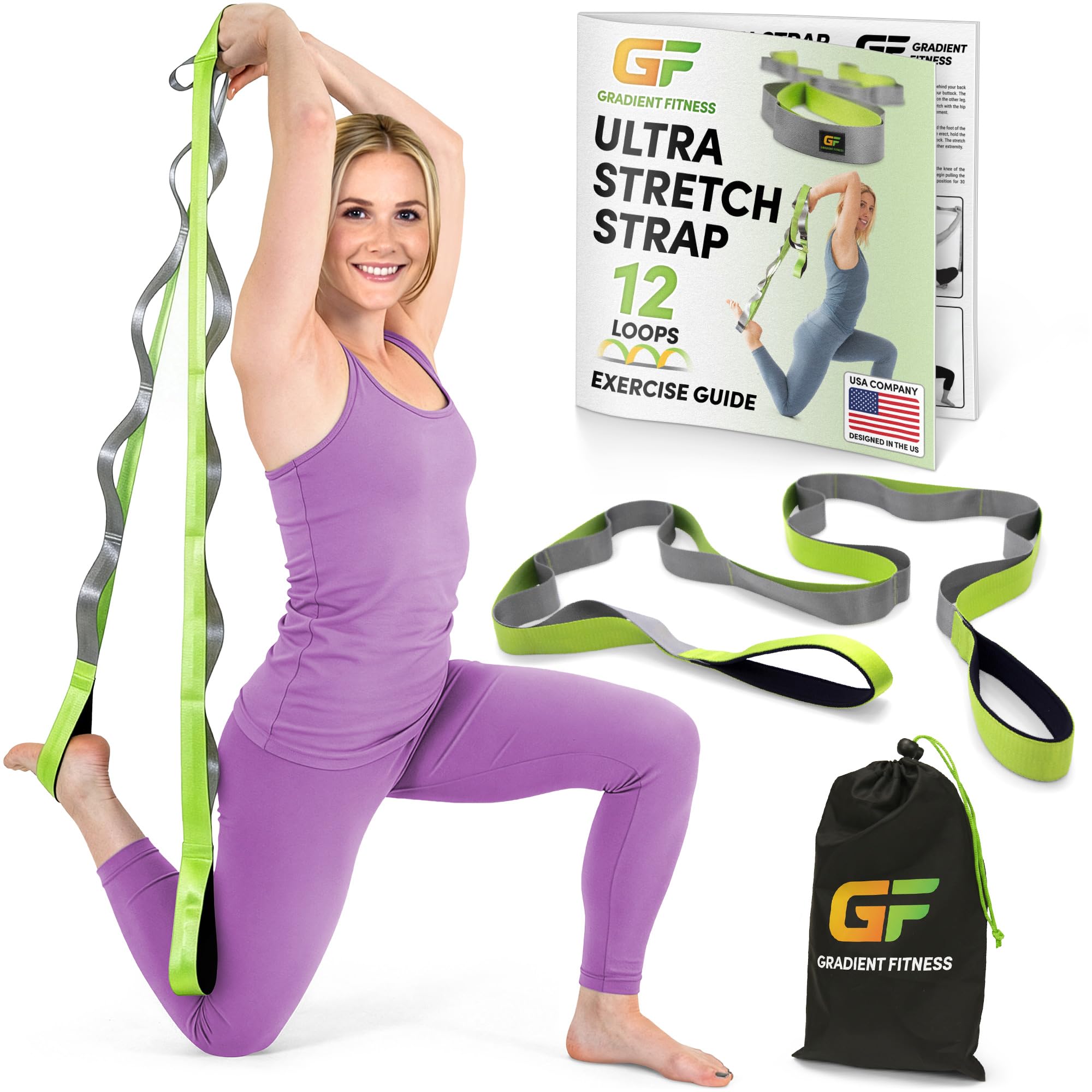
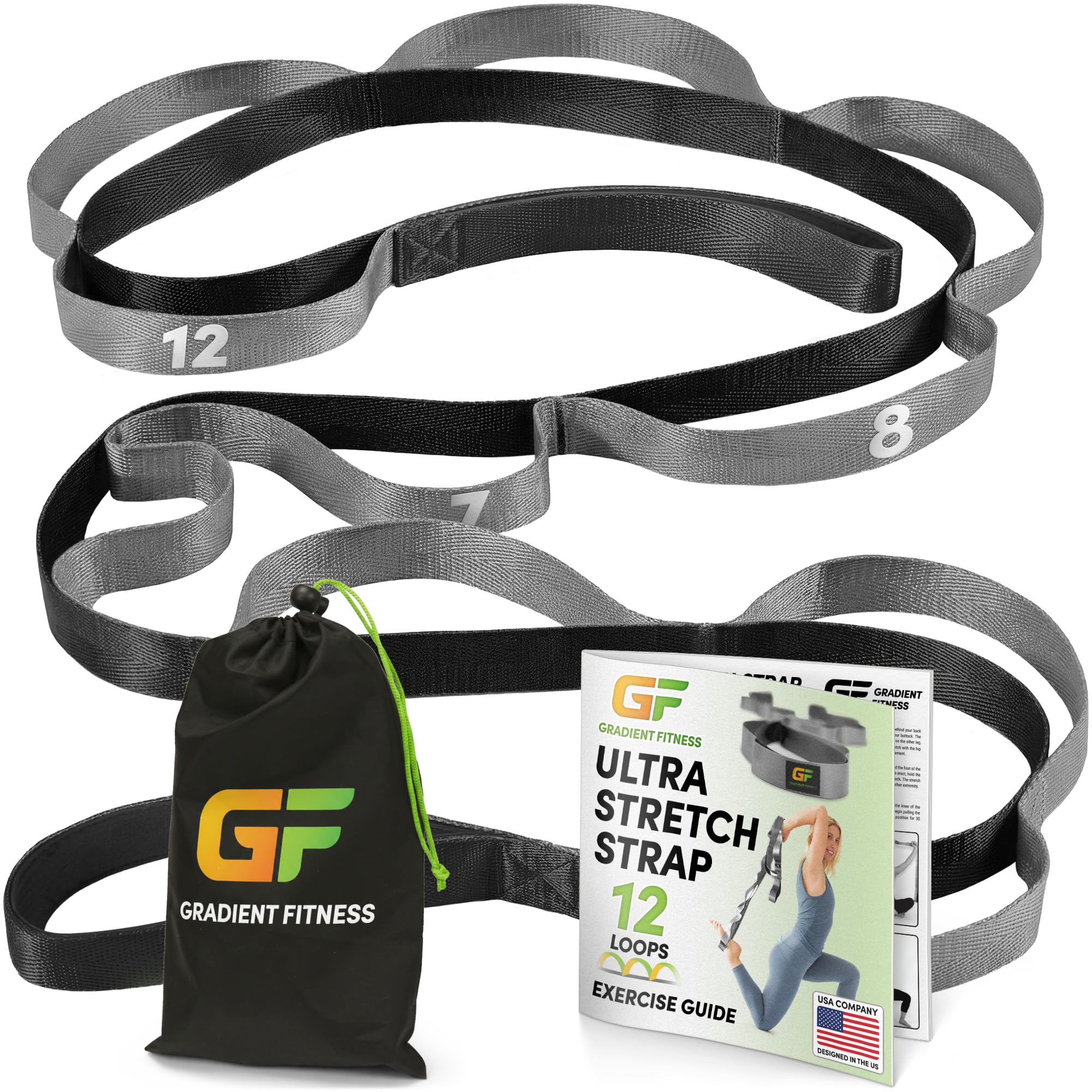
The 1.5-inch nylon webbing and neoprene handles make this the comfort-first multi-loop strap in the lineup. The smooth webbing moves easily through your hands, while the PT-designed poster provides a guided routine for staged stretching. The 8-foot length and 12 loops give plenty of working room for full-body flexibility work.

This is the pick for rehab patients who want padded handles and athletes doing deep stretches who appreciate a cushioned grip. The included storage bag keeps it easy to stash at home or pack. Minimal-D-ring yoga purists should look elsewhere.

💡 Use the end loops for quick positioning and the middle loops for incremental stretch depth.

Pros

  • Thick 1.5-inch webbing and padded neoprene handles keep long stretches comfortable.
  • 12-loop strap with PT-designed poster supports staged flexibility and knee rehab.

Cons

  • The 12-loop layout can feel cluttered for anyone who wants a simple D-ring cinch.
Our verdict

Good for comfort-focused stretchers and rehab users who want padding plus a guided routine.

Check Latest Price
6

Best Soft Cotton/Polycotton Loop Strap

Tumaz 10-Loop Strap

96 /100
Peggy's Score Outstanding

Key details

Length
80 in
Webbing
1.2-inch polycotton
Handles / Bag
Guide / Poster
Check Details on Amazon

The Tumaz's polycotton weave is noticeably softer than nylon loop straps, and the 1.2-inch width keeps its shape under tension. That plush feel makes it the loop strap to choose for bare feet and sensitive hands, whether the session is yoga, Pilates, or PT-style hamstring work.

Ten fixed loops provide clear depth options, so you don't have to fumble with a buckle mid-pose. For PT-style hamstring, hip, and shoulder work, the non-elastic weave is stable enough for controlled stretching. Buyers who want continuous D-ring micro-adjustment or a printed exercise guide should look at a D-ring model or the top pick with a book; this strap keeps the design simple.

Pros

  • Soft polycotton weave stays comfortable on sensitive hands and bare feet.
  • Ten non-elastic loops hold their shape and make stretch depth easy to select.
  • Suits yoga, Pilates, and PT-style stretching without extra hardware.

Cons

  • The 1.2-inch width spreads pressure over a smaller area than 1.5-inch PT straps.
Our verdict

For yoga and PT users who prioritize softness against bare skin, this loop strap is the comfort-first choice in the group.

Check Latest Price
7

Budget Rehab

Abiarst 10-Loop Strap

94 /100
Peggy's Score Outstanding

Key details

Length
75 in
Webbing
1-inch webbing
Handles / Bag
Guide / Poster
Check Details on Amazon

Ten non-elastic loops provide the same basic stretch-and-hold utility as pricier straps, and the stitching holds up during knee pulls and hamstring work. The 1-inch webbing and 75-inch length are entry-level, so taller users or those who want a wider strap should size up. For budget-conscious home rehab, this is a capable basic tool.

Pros

  • Well-sewn construction holds up during knee pulls and post-surgery recovery moves.
  • Ten non-elastic loops deliver core stretching utility at a budget price.

Cons

  • Buyers who need an included exercise guide will have to source routines separately.
Our verdict

If your routine is basic loop-assisted stretching, this budget strap is enough.

Check Latest Price
8

Budget PT

Oak-Sports Loop Strap

94 /100
Peggy's Score Outstanding

Key details

Length
75 in
Webbing
1-inch polyester
Handles / Bag
Guide / Poster
Check Details on Amazon

At a budget price, this 10-loop non-elastic strap delivers plenty of grip positions for basic yoga and PT stretching, and the 1-year warranty adds a useful safeguard. The 1-inch width and 75-inch length are on the slim side, which keeps it a step behind the top budget pick for taller users or anyone needing deep, prolonged stretches.

Pros

  • Quality at a low price makes it an easy pick for budget home PT and basic yoga.
  • The 10 sturdy loops give enough grip positions for knee and hip mobility exercises.

Cons

  • The 75-inch length and 1-inch width can feel limiting for taller users and deep stretching positions.
Our verdict

A reasonable budget buy when your stretching needs stay basic and you don't need extra length or wider webbing.

Check Latest Price
9

PT with Guide

CTRL Sports Loop Strap

93 /100
Peggy's Score Outstanding

Key details

Length
78 in
Webbing
1.5-inch nylon
Handles / Bag
Carry bag
Guide / Poster
Guide
Check Details on Amazon

The CTRL Sports strap gives you 10 widely spaced loops, a 1.5-inch width, and a guide plus carry bag in one package. It suits PT users who want the extras without buying a separate book. The premium price is the main boundary. For PT users who want the bundled guide and carry bag, the convenience is the point.

Pros

  • Easy loop grips make hand and foot positioning simple during stretches.
  • Solid construction with reinforced stitching handles repeated home PT use.

Cons

  • For wide shoes or large feet, the foot loops can feel snug; average-width feet are fine.
Our verdict

For PT users who want the guide and carry bag in one purchase, this strap is the convenient pick.

Check Latest Price
10

Yoga Practice

Gaiam D-Ring Strap

95 /100
Peggy's Score Outstanding

Key details

Length
8 ft
Webbing
1.5-inch polyester blend
Handles / Bag
Guide / Poster
Check Details on Amazon

Gaiam's 8-foot D-ring strap delivers a classic yoga-adjustment feel: solid metal buckle, non-elastic webbing, and room for everyday stretches. This is a stripped-down prop — no loops or padded handles — so it sits in the traditional D-ring camp rather than competing with rehab-style loop straps.

Pros

  • The webbing and metal D-ring feel solid and strong during held stretches.
  • The 8-foot length reaches through typical seated and standing poses.

Cons

  • The 1.5-inch webbing can feel stiff in the hand or around the waist until it breaks in.
Our verdict

Best as a no-frills traditional D-ring strap for everyday flexibility work at home.

Check Latest Price
11

Light Stretching

Slim Panda D-Ring Strap

92 /100
Peggy's Score Outstanding

Key details

Length
8 ft
Webbing
1.5-inch cotton
Handles / Bag
Guide / Poster
Check Details on Amazon

This budget-friendly cotton strap works well for light hamstring stretches and general flexibility work. The weave is soft and the 8-foot length offers plenty of reach. Under heavier tension, the D-ring can slip through the webbing, so it is best kept for gentle stretching rather than deep pressure.

Pros

  • Well-made cotton construction at an entry-level price.
  • Good for hamstring and general flexibility work.

Cons

  • The strap can fold in half during certain stretches, making it feel less substantial than a standard 1.5-inch strap.
Our verdict

Best when your sessions stay light and low-pressure; choose a sturdier option only if you plan to load the strap.

Check Latest Price
12

Budget Loops

Gradient 1-inch Loop Strap

94 /100
Peggy's Score Outstanding

Key details

Length
8 ft
Webbing
1-inch nylon
Handles / Bag
Padded handles, velcro strap
Guide / Poster
Workout poster
Check Details on Amazon

The 12-loop design and included poster deliver the same stretching guidance as the wider Gradient strap, and the slim nylon build packs easily for travel or gym-bag use. It prioritizes portability over the wider profile, which is why budget-minded shoppers get core loop utility at a lower price.

Pros

  • Twelve loops and the included poster provide enough options for stretching and rehab work.
  • Padded handles keep the slim strap comfortable to grip through a full session.

Cons

  • The 1-inch webbing can feel less substantial underfoot during deep, prolonged stretches.
Our verdict

Budget-conscious travelers and gym-bag users get a functional 12-loop strap; width-sensitive shoppers should size up to the wider version.

Check Latest Price
13

Knee Rehab

KneeSled Ultra Strap

93 /100
Peggy's Score Outstanding

Key details

Length
80 in
Webbing
1-inch nylon
Handles / Bag
Guide / Poster
Check Details on Amazon

The 10-loop nylon strap holds up through repeated knee flexion work at home, backed by reinforced stitching. The premium price and missing exercise guide or carry bag make it a narrow fit for general stretching searches. For knee replacement recovery, the loop layout supports home PT; general yoga buyers will be better served by a wider, guided loop strap.

Pros

  • Reinforced stitching and nylon construction survive repeated home PT sessions.
  • Focused loop layout supports knee flexion and extension routines after surgery.

Cons

  • For a general yoga strap, the 1-inch webbing can feel less substantial for deep, prolonged stretches.
Our verdict

Knee replacement recovery remains the right context for this strap; other stretching needs call for a different tool.

Check Latest Price
14

Also Great

The 2.5x stretch neoprene loops give dancers and gymnasts a forgiving assist a rigid strap cannot match, and the numbered loops make tension easy to adjust. The elastic behavior changes static stretch mechanics: for a non-elastic yoga strap used in held stretches and PT, this falls outside that intent. Consider it only when you want bounce or give.

Pros

  • Neoprene loops stretch and spring back through repeated use.
  • Soft neoprene feels comfortable on hands during assisted stretches.

Cons

  • Static yoga holds will have some bounce, so a non-elastic strap is the right tool for fixed-position stretching.
Our verdict

Dancers and gymnasts looking for bounce will get what they want here.

Check Latest Price
15

Budget Travel

Scotamalone 10-Loop Strap

95 /100
Peggy's Score Outstanding

Key details

Length
75 in
Webbing
1-inch polypropylene
Handles / Bag
Guide / Poster
Check Details on Amazon

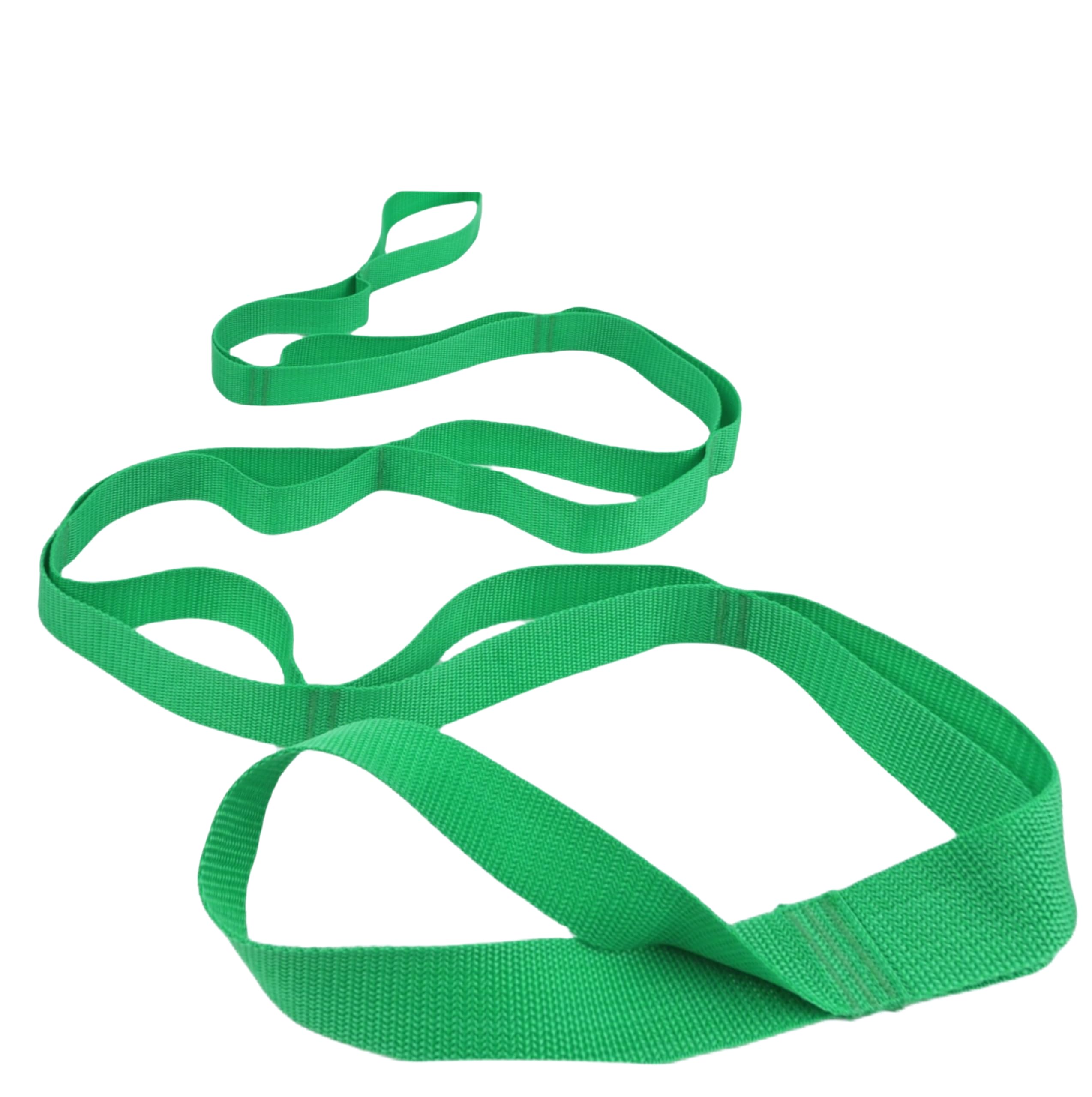
This 10-loop non-elastic strap handles leg extensions and PT-style stretching at a rock-bottom price. The polypropylene webbing is sturdy but stiff around bare feet, and the 75-inch length is shorter than premium picks, so it suits budget buyers and travel backups rather than tall users or comfort-focused stretching.

Pros

  • Delivers the same loop-based stretching utility as PT straps for a fraction of the cost.
  • Sturdy enough for regular stretching sessions without taking up luggage space.

Cons

  • Stiff polypropylene webbing can feel rough against bare feet.
Our verdict

A sensible spare for budget-focused travelers and PT patients who already know their routine, as long as comfort around bare skin is not the priority.

Check Latest Price

How to Choose

Length: Advertised vs. Actual

Advertised length is not the length you stretch with. Holding both ends of a 75-inch strap and looping a foot cuts the working distance roughly in half, so a 75-inch strap behaves closer to 6 feet and a 6-foot strap behaves closer to 3 feet.

For most adults, 8 feet is the safest starting point. Taller users or anyone doing lying hamstring work should look for 8- or 10-foot options; anything shorter limits how far you can extend before the strap runs out.

Webbing Width and Material

Wider webbing spreads tension across a larger contact area, which matters when you pull hard into a deep stretch. A 1.5-inch strap feels noticeably more comfortable around hands and feet than a 1-inch strap, especially during long holds.

Material changes the feel as much as width. Nylon is smooth, durable, and holds its shape; cotton blends are softer against skin but can fold or slip through a D-ring if the weave is thin. Polycotton sits in between: plush enough for bare skin and structured enough to hold.

Loops vs. D-Ring

Multi-loop straps provide fixed rungs, so you progress by moving your hand or foot to the next loop. That makes them easy to use in physical therapy, where a specific loop corresponds to a specific range of motion.

D-ring straps use friction to lock a custom loop, which is useful for precise adjustments in yoga poses. The trade-off is mechanical: thin webbing can slide through the buckle under load, so a D-ring strap needs a substantial weave to feel secure.

Exercise Guide or Poster

A guide or poster changes the strap from a piece of fabric into a routine. Beginners and post-rehab users benefit from seeing which stretch pairs with which loop, rather than guessing on the floor.

Digital alternatives are free, but they require matching a screen to the movement. A printed guide is the difference between having a program in hand and having to assemble one yourself.

Padded Handles and Carry Bag

Padded handles distribute grip pressure across the palms, which matters during longer static holds. Neoprene padding also stays put better than bare webbing when your hands are sweaty or tired.

A carry bag is a convenience feature, not a performance feature. It matters most if the strap moves between home, the gym, and physical therapy appointments.

Frequently Asked Questions