11 Best Balance Trainers of 2026: Picks That Match How You Actually Train

The best balance trainers for yoga, rehab, home gym, and desk use — matched to how you actually train and sit.

Balance training looks dramatic in product photos: athletes teetering on rollers, boards tilting at sharp angles. Most buyers, though, are doing something quieter — physical therapy at home, standing-desk fidgeting, yoga work, or a few core exercises before bed. That gap between marketing and real use is why the category feels hit-or-miss.

The practical fix is matching the surface to the job. A foam pad gives you a forgiving, low-maintenance platform for rehab and yoga. A wobble board adds a useful challenge for core and ankle work. A half-ball trainer opens up hundreds of strength exercises. And if you plan to sit on it at a desk, an inflatable disc is the only one that makes sense.

Buyers who skip that step end up with a board that is too wobbly for their PT program, a pad that is too stable for their sport training, or an inflatable trainer that slowly deflates because they never wanted to babysit air levels. This guide sorts the options by what they actually do — and who should buy them.

1

Best Overall

ProSourceFit Balance Pad

96 /100
Peggy's Score Outstanding

Key details

Type
Foam balance pad
Maintenance
None
Surface Size
15.5 x 12.75 in
Weight Capacity
340 kg
Check Details on Amazon

At 2.25 inches thick and 12 oz, this TPE pad gives enough cushion and friction to hold steady under standing moves. It stays put on a hard floor, which is the immediate advantage of dense foam: no rocking, no rolling, no inflation to babysit. The surface works for a close-stance stand, planks, or single-leg work, and the light weight makes it easy to move between a desk, a yoga mat, and a PT session. The foam responds to weight shifts without bottoming out, so you still get sensory feedback on each rep.

Using it for balance sequences changes the type of effort: your core does the work, while the pad supplies a stable base rather than a dramatic tilt. That suits holding a plank with hands on the pad, standing on one leg, or shifting weight side to side at a standing desk. The 2.25-inch height lifts your feet slightly, which is enough to make a quiet core workout without turning every rep into a fight for balance. For people who like a wobble board's movement, the pad will feel modest; for someone coming back from a layoff or rebuilding strength, that gentleness is the point.

Buy this for home rehab, yoga, and standing-desk balance work where you don't want an inflatable to manage. The foam top is support-first, not pillow-soft, and the pad favors subtle movement over dramatic lean; those boundaries make sense for older adults, beginners, and anyone easing back into training. If you want dynamic board movement or roller-style instability, a multi-mode board is the better fit.

💡 A folded towel on top lets you adjust the feel for knee-supported moves.

Pros

  • No-pump TPE foam removes the inflation maintenance other balance trainers require.
  • Stable underfoot for standing exercises, planks, and core work.
  • Holds up to daily PT and home workout use.
  • Budget-friendly way to try balance training without a big setup.

Cons

  • Firm rather than plush; buyers expecting a soft knee cushion may be surprised.
  • The instability range is modest compared with wobble boards or inflatable half balls.
Our verdict

If the choice is between a foam pad and a wobble board, the pad is the low-maintenance option for steady balance work; the board suits people who want more movement under their feet.
Check Latest Price
2

Best Full-Body Half-Ball Trainer

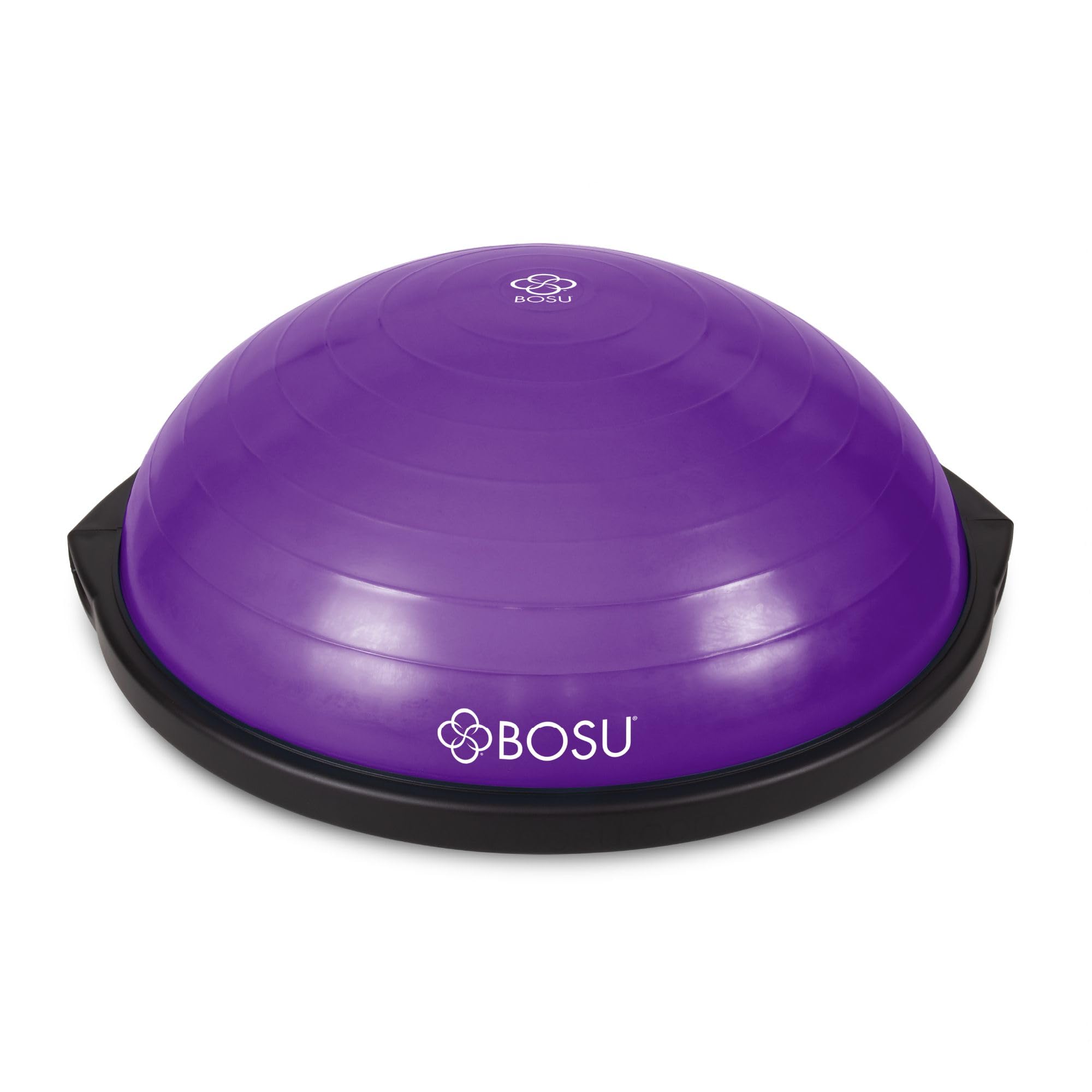
BOSU Balance Ball Trainer

91 /100
Peggy's Score Outstanding

Key details

Type
Inflatable half ball
Maintenance
Occasional re-inflation
Surface Size
25.6 in diameter
Weight Capacity
300 lb
Check Details on Amazon

This 25.6-inch BOSU platform gives home-gym owners a wide half-ball surface for squats, push-ups, planks, and guided exercise routines. The large dome offers a more generous stance than budget half-ball alternatives, and the rubber top grips well for both barefoot and shod training. As a single station for lower-body, upper-body, and core circuits, it covers the main balance-training movements without needing extra attachments, and it can replace several smaller pieces of gear for people following online workout videos.

Air retention can vary between units, so this trainer suits buyers who treat a quick top-off as part of their workout setup. It earns its place in a home gym rather than a travel bag, and the inflatable dome means you trade some convenience for that larger training surface. That makes it a better fit for a dedicated workout area than for a closet-stored accessory. If set-and-forget equipment is the priority, a foam balance pad is the lower-maintenance route.

💡 Press the pump nozzle straight into the valve and hold it there while pumping; releasing it early lets air escape around the seal.

Pros

  • Wide 25.6-inch surface builds balance, core control, and functional fitness.
  • Supports squats, push-ups, planks, and cardio-style exercises in one station.
  • Home gym owners get a full-body training platform for regular workout sessions.

Cons

  • Included pump and valve setup can be awkward, especially when inflating the dome for the first time.
  • Once inflated, the 25.6-inch base needs a clear floor area and does not fold flat for storage.
Our verdict

This BOSU model belongs in a home gym when the routine leans on balance work and the owner wants a broad surface for squats and planks. The foam pad still covers anyone who prefers a no-setup balance tool.

Check Latest Price
3

Best Multi-Mode Board for Sport-Specific Training

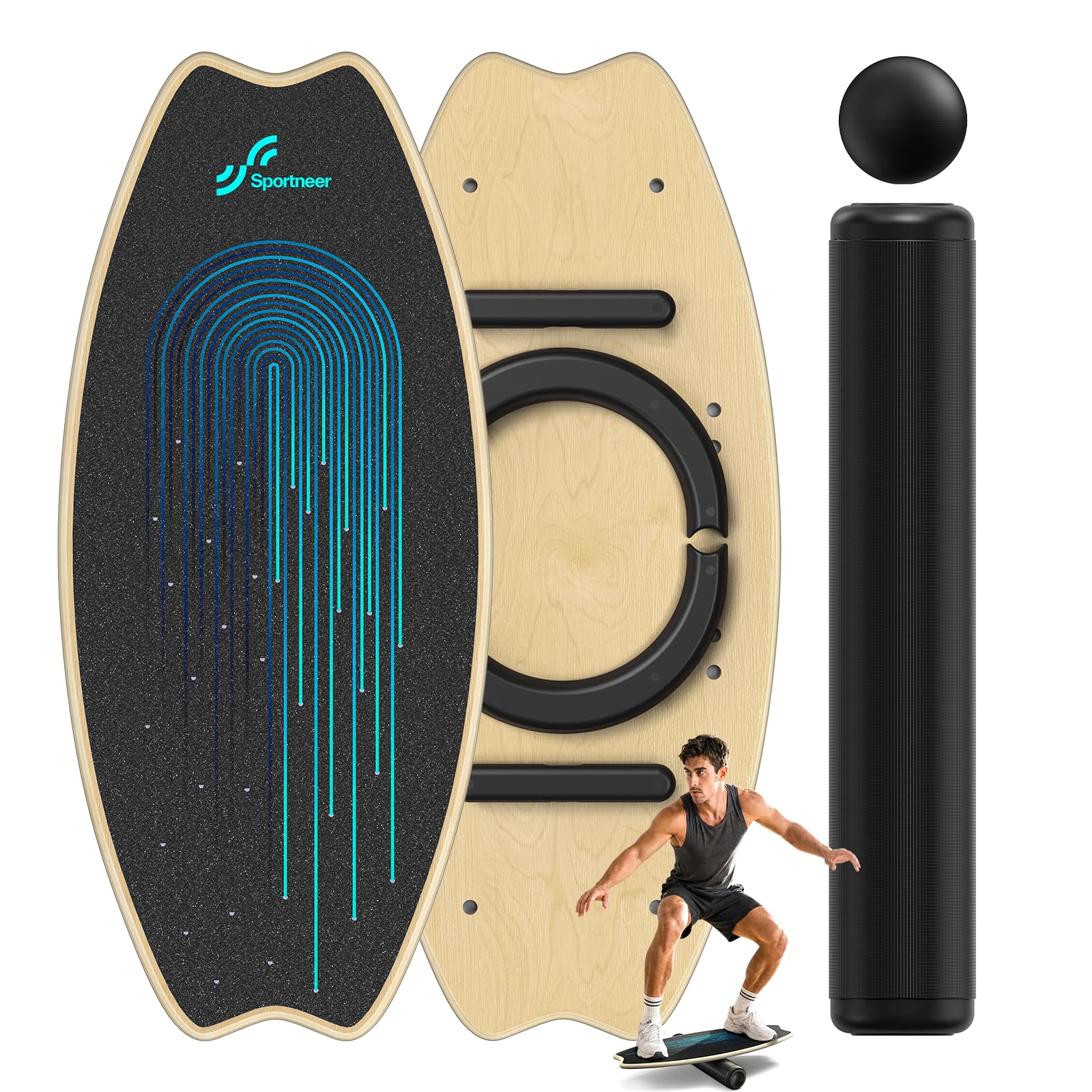
Sportneer 7-Mode Balance Board

94 /100
Peggy's Score Outstanding

Key details

Type
Multi-mode board
Maintenance
None
Surface Size
Birch wood
Weight Capacity
450 lb
Check Details on Amazon

Seven configurations using magnetic stoppers, a roller, and a ball make this the most adjustable balance board in this comparison. The 450 lb weight rating and grippy birch surface support standing balance work, push-up variations, and board-sport drills. Magnetic stoppers let you lock the ball or roller while you shift modes, so the board behaves like a complete balance-training station rather than a single-surface tool.

Surfers, skaters, snowboarders, and families get the most from this setup; one board replaces both a roller-style trainer and a ball-based wobble platform. It is not a static pad for rehab-style support. The laminated wood can show seam separation in a small share of units, and the roller feels slick to novices. At a mid-range price, this is the option that lets one household cover beginner and advanced balance work without extra discs or rollers.

💡 Start with the ball mode and keep the board on carpet until the roller grip feels predictable.

Pros

  • Improves balance, stability, and form across board-sport and gym movements.
  • Grippy birch surface and solid construction hold up under heavier users.
  • Kids and adults both find the multi-mode challenge engaging.

Cons

  • Multi-piece design with stoppers, roller, and ball is more setup than a single fixed board.
  • Not a substitute for a cushioned pad if you want static standing support.
Our verdict

For board-sport athletes and active families, this one board covers the progression range without buying separate equipment.

Check Latest Price
4

Best Budget Wobble Board

Amazon Basics Wobble Board

93 /100
Peggy's Score Outstanding

Key details

Type
Wooden wobble board
Maintenance
None
Surface Size
15.75 x 15.75 in
Weight Capacity
265 lb
Check Details on Amazon

The 15.75-inch birch plywood board uses a low-profile dome, so the wobble is controlled from the first step. It stays steady underfoot while still recruiting the core and ankles during standing desk sessions or short balance circuits. The ride is noticeably calmer than a multi-mode board with an interchangeable roller, which suits someone who wants a simple tool rather than a new skill to master. The flat top offers enough room for light stretching and single-leg stand drills.

Best for standing-desk users, beginners, and budget-focused buyers who want a low-stakes entry into balance work. The base can slide on hardwood or tile, so a mat is part of the setup. Experienced wobble-board users may find the tilt range too gentle, and anyone expecting a high-instability training board should look at the multi-mode option instead.

Pros

  • Sturdy birch plywood holds up to consistent use without feeling hollow or flexy.
  • Low-profile dome gives first-time users a stable surface for balance and core work.
  • Affordable way to add instability work to a desk routine or home workout.

Cons

  • Wood edge can chip in individual boards, so the rim finish is worth checking on arrival.
  • Compact 15.75-inch surface can feel tight for larger feet or wide push-up stances.
Our verdict

A beginner's mindset is the only prerequisite; this board covers the basics without the maintenance of an inflatable trainer.

Check Latest Price
5

Best High-Capacity Half Ball

LifePro Horizon Half Ball

93 /100
Peggy's Score Outstanding

Key details

Type
Inflatable half ball
Maintenance
Occasional re-inflation
Surface Size
23.6 in diameter
Weight Capacity
440 lb
Check Details on Amazon

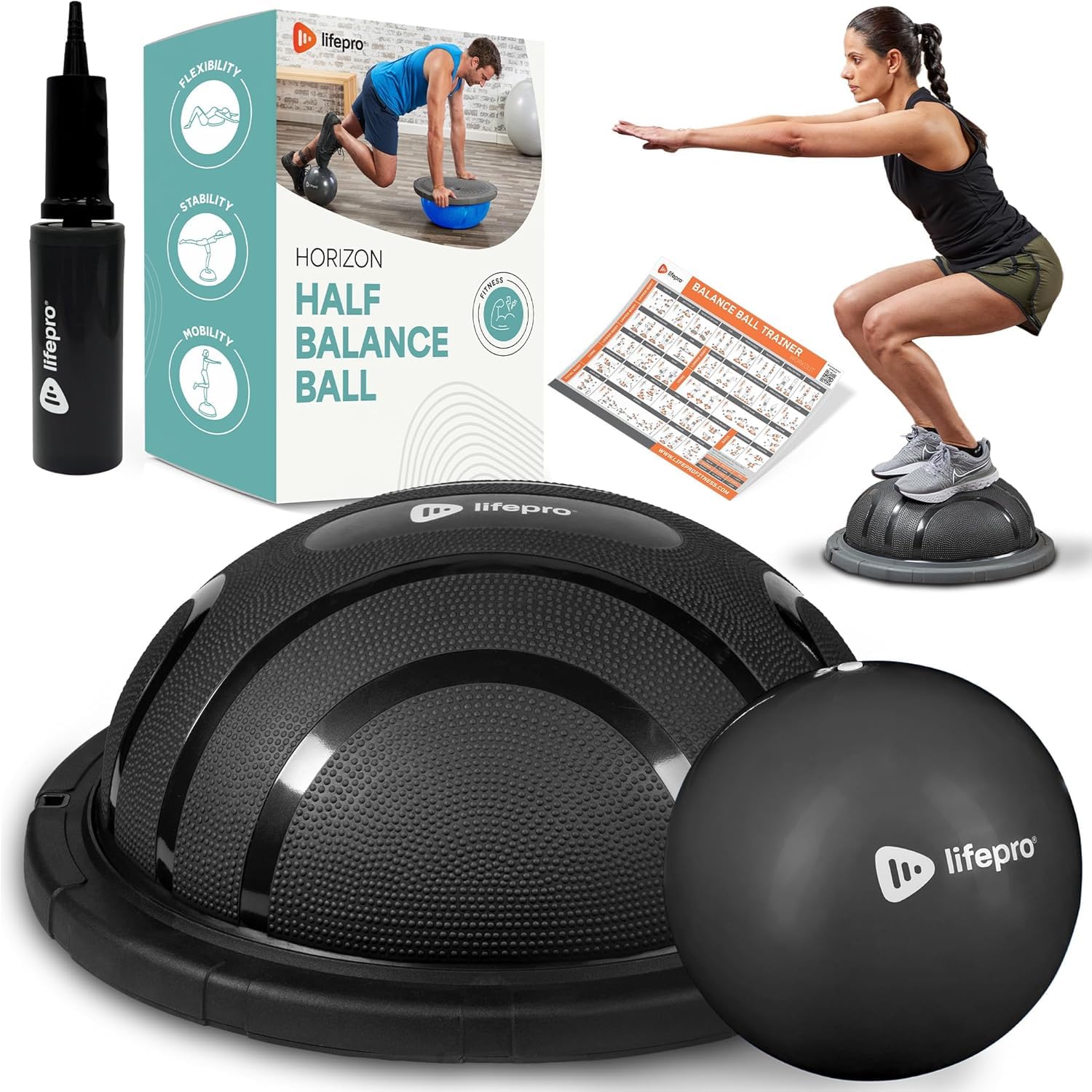
The LifePro Horizon is a 440 lb-rated half ball with a sturdy PP/TPE base that holds up alongside BOSU-style trainers at a lower price. Its 23.6-inch platform fits most home gym work, and the included pump, Pilates ball, and exercise chart round out the package.

Home gym users who want BOSU-style training without the original brand premium will get the most from this half ball. Heavier lifters and seniors looking for a stable half-dome for posture and balance benefit from the 440 lb rating and sturdy base. If the original BOSU name is a must-have, the flagship model is the better destination.

The dome returns to shape after repeated squats, planks, and push-ups, and the platform surface gives enough grip for barefoot balance work. The higher weight rating leaves room for loaded movements, while the included chart gives a beginner a structured place to start.

Pros

  • Stable PP/TPE base handles regular balance work and loaded movements without wobble underfoot.
  • Build quality matches BOSU-style trainers at a mid-range price point.
  • Covers balance, stretching, and light rehab-style exercises with a 440 lb rating.

Cons

  • Pump and valve friction can make first inflation finicky until the valve seats properly.
  • Large-foot users may find the 23.6-inch platform snug compared with 25-inch half-ball trainers.
Our verdict

Heavier users and home gym owners get a stable, high-capacity half ball at a mid-range price.

Check Latest Price
6

Best Budget Disc for Desk & Classroom

Trideer Wobble Cushion

92 /100
Peggy's Score Outstanding

Key details

Type
Inflatable wobble cushion
Maintenance
Occasional re-inflation
Surface Size
13.4 in diameter
Weight Capacity
1000 lb
Check Details on Amazon

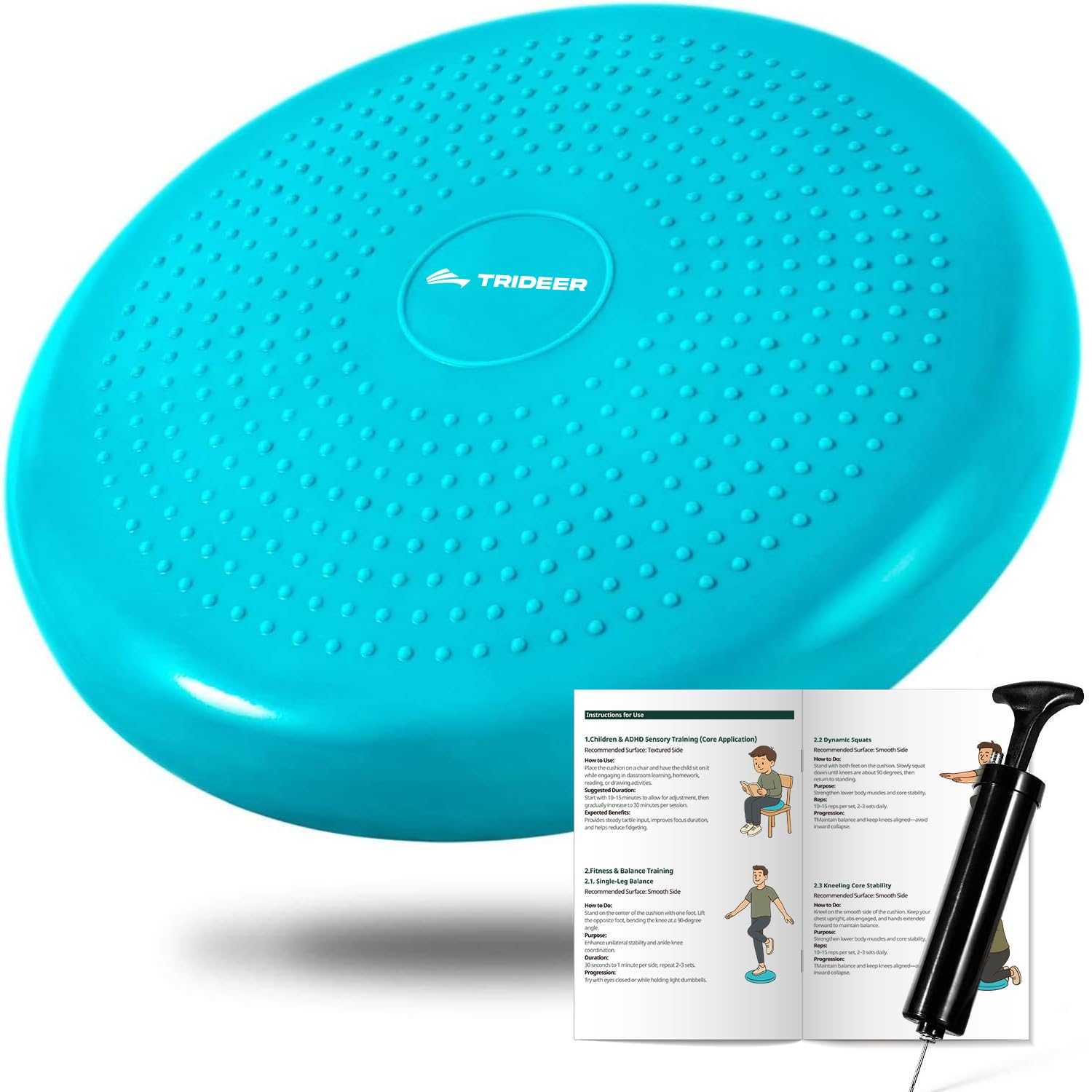
The Trideer Wobble Cushion is a 13.4-inch inflatable disc that brings active sitting to classroom chairs and standing desks without the footprint or price of a full balance trainer. Unlike the similar budget disc that expects you to supply your own pump, this one bundles one, and its compact size fits standard seats and allows easy stowage. It is priced well below full-size trainers, making it an easy entry point for home or classroom use. The wobble is gentle enough for sensory breaks but not demanding enough for large-surface athletic drills.

The right buyer is a teacher, parent, or desk worker who wants a small movement aid for posture changes and sensory input. The firm surface will be noticeable over long sitting stretches, and the bundled pump is basic, so the cushion suits short active blocks more than full-day cushioned seating. Anyone expecting a soft seat or a dynamic athletic trainer should look elsewhere.

💡 If the bundled pump feels slow, use any standard valve pump to speed up inflation.

Pros

  • Adds gentle instability to classroom and desk chairs, supporting posture and active sitting through small movement.
  • Fits sensory seating, classroom chairs, and physical therapy setups without taking over extra room.
  • Includes a pump and arrives ready to inflate, saving a separate purchase for first-time users.

Cons

  • The bundled pump can be finicky; a stronger pump with a standard valve makes inflation smoother.
  • On a static chair, the firm PVC surface may feel tiring by the end of a long workday.
Our verdict

For short sensory breaks and desk posture work, the Trideer delivers a useful wobble at a budget-friendly price.

Check Latest Price
7

Board Sports Athletes

Revbalance 101 v2

95 /100
Peggy's Score Outstanding

Key details

Type
Roller-style board
Maintenance
None
Surface Size
Plastic platform
Weight Capacity
400 lb
Check Details on Amazon

The magnetic stops on this American-made roller board create a precise, adjustable challenge that rewards skate, snowboard, and surf athletes training outside their season. Build quality feels substantial enough for family use and the 400 lb rating covers adult riders. The premium price and roller-specific complexity are reasonable only if you actually want roller-board work; first-time balance buyers or people needing a stable surface will be better served by a foam pad or wobble board. Experienced riders may also hit a difficulty ceiling and want a more advanced model.

Pros

  • Roller-style movement builds core, stabilizer, and hip-flexor strength through a continuous balance challenge.
  • Sturdy construction and 400 lb rating let multiple adult riders share the same board.

Cons

  • Premium price sits well above budget boards that pack in more training modes.
  • Experienced riders can outgrow the difficulty range and want a more advanced roller board.
Our verdict

For balance-sport athletes who know they want roller-board training, the 101 v2 is a long-term tool. Casual general-purpose core training is better handled by a simpler, lower-cost board or pad.

Check Latest Price
8

Active Sitting

ProSourceFit Balance Disc

89 /100
Peggy's Score Excellent

Key details

Type
Inflatable balance disc
Maintenance
Occasional re-inflation
Surface Size
14 in diameter
Weight Capacity
300 lb
Check Details on Amazon

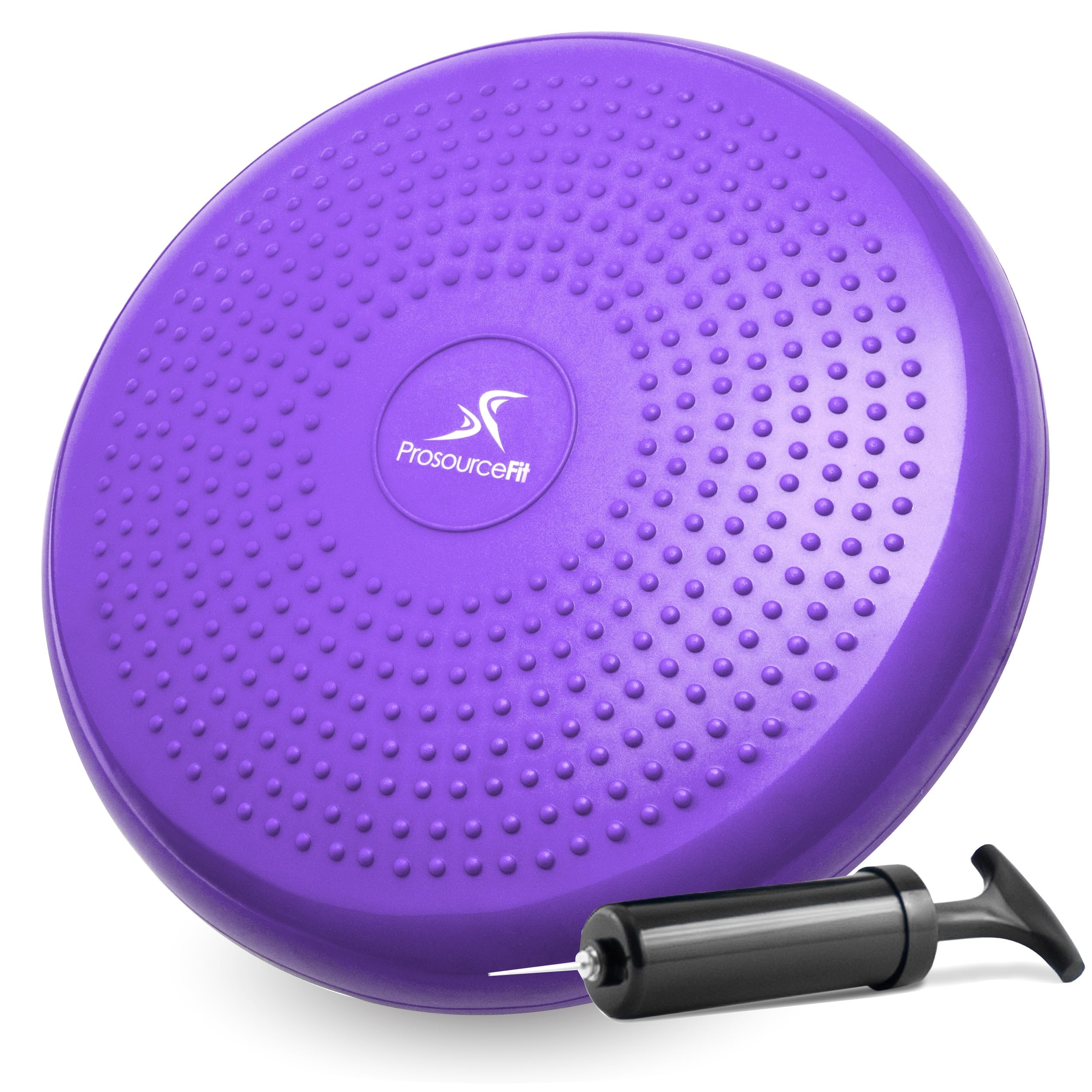
The 14-inch disc adds useful instability to a desk chair or workout floor and holds up well for light PT and posture work. The valve and pump assembly is the main weakness, and slow air loss can occur. That keeps it below the no-inflation foam pad for buyers who want zero air maintenance, but if you already own a pump, this is a cost-effective way to add balance work to a workday.

Pros

  • Holds up well for desk-chair active sitting, light PT, and posture work at a budget price.
  • Regular use can improve balance, posture, and core engagement during seated or floor exercises.

Cons

  • Included pump needle and valve assembly can be delicate; careful alignment is needed during inflation.
Our verdict

Best for desk workers and budget exercisers who already own a pump and want a low-cost way to add seated balance work.

Check Latest Price
9

PT and Foot Massage

Black Mountain Balance Disc

89 /100
Peggy's Score Excellent

Key details

Type
Inflatable balance disc
Maintenance
Occasional re-inflation
Surface Size
13 in diameter
Weight Capacity
350 lb
Check Details on Amazon

The textured surface adds massage-style foot stimulation to balance, PT, and core work without demanding much floor space. Adjustable air pressure lets you dial in the challenge for posture and stability exercises, and the price fits a budget. Air retention can vary between units, and the compact footprint limits stance width compared with larger trainers, so it suits rehab and foot-massage use better than wide-surface athletic training.

Pros

  • Textured bumps add foot stimulation while you work on balance and core stability.
  • Good quality at a budget price for posture and stability training.

Cons

  • Pump needle or valve hardware can be damaged during inflation.
Our verdict

Choose it for home rehab sessions that pair foot massage with balance training.

Check Latest Price
10

Ankle Rehab

Yes4All Wobble Board

89 /100
Peggy's Score Excellent

Key details

Type
Plastic wobble board
Maintenance
None
Surface Size
15.75 in diameter
Weight Capacity
300 lb
Check Details on Amazon

The Yes4All Wobble Board gives ankle rehab and desk-break balance work a compact, carry-friendly tool with cut-out handles and a 15-degree tilt. It handles quick standing sessions and PT moves where you don't need a wide base. The limitation is a top surface that can feel slippery for barefoot or sock users, and a platform that suits narrower stances better than wide workouts. That leaves it as a specialized pick for ankle and lower-leg strength rather than a general-purpose balance station.

Pros

  • Builds balance and core strength during short standing sessions.
  • Sturdy plastic build holds up to regular wobble work at a budget-friendly price.

Cons

  • Top can feel slick for barefoot or sock users; wearing shoes restores grip.
  • Platform is small for larger feet and wide stances.
Our verdict

For ankle-strengthening sessions and desk-break balance work with footwear on, this compact board covers the basics without taking up floor space.

Check Latest Price
11

Heavy-Duty Budget Training

ZELUS Balance Ball

89 /100
Peggy's Score Excellent

Key details

Type
Inflatable half ball
Maintenance
Occasional re-inflation
Surface Size
23 in diameter
Weight Capacity
660 lb
Check Details on Amazon

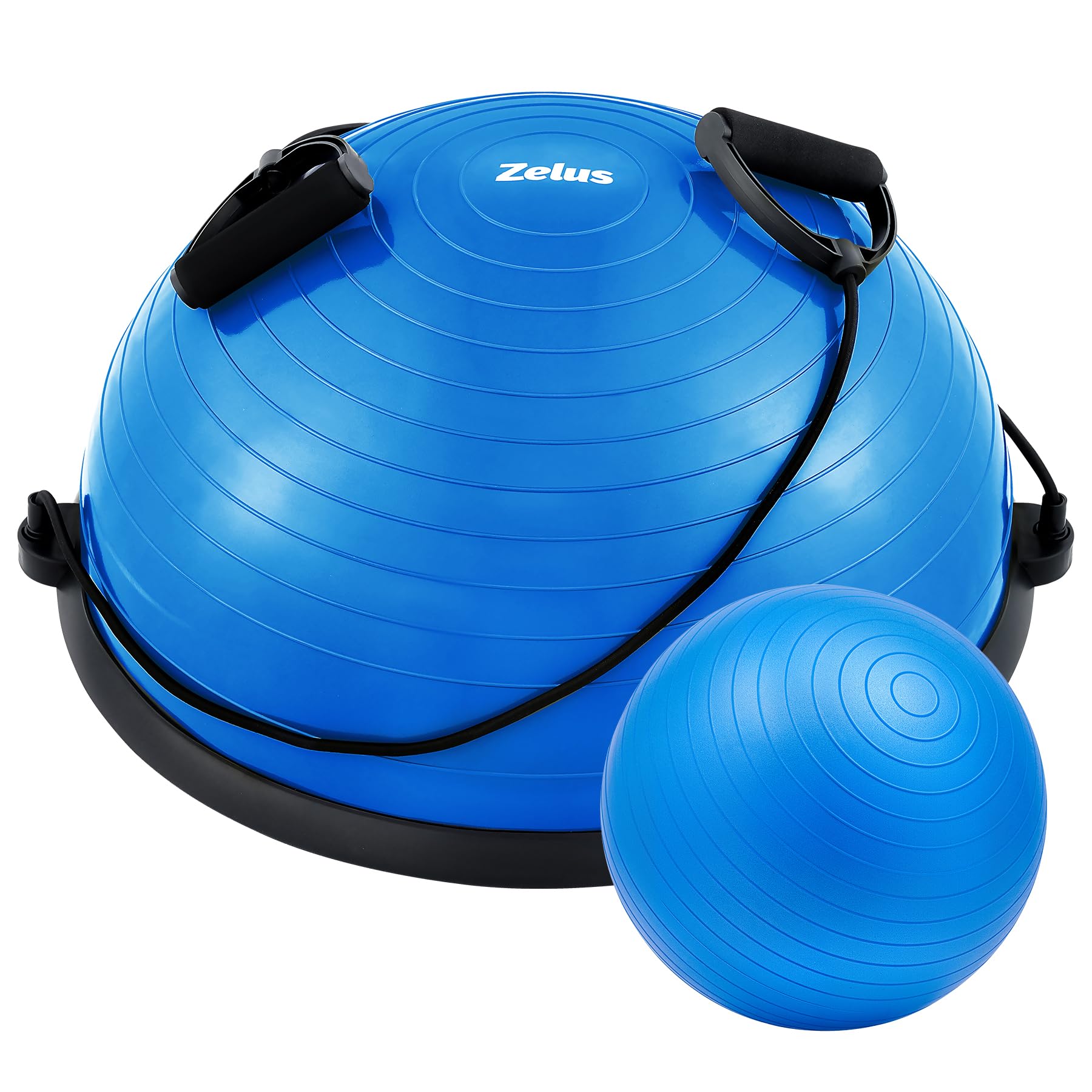
The ZELUS is a budget-friendly half ball that gives heavier home-gym users a 660 lb-rated surface for squats, planks, and general core balance work. Air retention can vary between units, and the included pump and bands read as add-ons rather than upgrades — those are the reasons it sits below premium-priced half balls. The weight capacity and 23-inch wobble platform keep it useful for strength-focused balance training at home.

Pros

  • Build quality is good for the price, with a sturdy feel during squats and planks.
  • Balance and core strength benefit is clear in squats, planks, and PT-style exercises.

Cons

  • 23-inch platform is more compact than full-size 25-inch half balls, so taller lifters have less room to adjust their stance.
Our verdict

Heavier lifters on a budget who want a half-ball surface for squats and planks will get good use from this one.

Check Latest Price

How to Choose

Surface Type

Foam pads are forgiving and stable. They compress underfoot, forcing small stabilizer muscles to work, but they never create a sudden loss of balance. That makes them the right choice for physical therapy, yoga, and anyone returning from an injury.

Wobble boards tilt around a fixed center point. They train ankle stability and core reactions with a clear range of motion. Roller-style boards move front-to-back and side-to-side, which is closer to the demands of surfing, skating, and snowboarding but requires more coordination.

Half-ball trainers combine a rigid platform with a domed inflatable base. The dome absorbs some movement while the platform gives you a stable place to stand for squats, push-ups, and planks. If you want one tool for full-body strength work, this is the surface.

Weight Capacity

Weight limits are not just a safety number. A board that is rated well above your body weight feels firmer and more controlled; a board you are near the limit of feels mushy and unstable under load.

Half balls and wobble boards behave differently at the edges of their ratings. At 300 lb on a 350 lb-rated trainer, the dome compresses noticeably during squats. At 200 lb on a 440 lb-rated trainer, the same movement feels crisp. Buy with margin, especially if you plan to hold weights.

Footprint Size

Surface area matters more than the marketing photos suggest. A 15-inch board can feel fine for standing balance, then become cramped in a push-up position or for a user with large feet.

The reviews are blunt: narrow boards get complaints from bigger athletes and from anyone doing plank variations with hands on the board. If your workouts include floor work or you wear above a US men's 10, choose a wider platform or a half ball with a large dome.

Inflation and Air Retention

Inflatable balance trainers all lose some air over time. The difference between a good one and a frustrating one is how often you have to reach for the pump. Some units hold pressure for weeks; others need a top-up every few days.

The included pump is the weakest part of almost every inflatable product in this category. It is often small, awkward, and the first thing to fail. If you already own a better pump, use it. If not, budget for one.

A foam pad or wooden wobble board removes this entire issue. That is a real advantage for buyers who want a set-and-forget trainer.

Adjustability and Progression

Adjustable difficulty separates a trainer you outgrow from one you keep. Magnetic stops on wobble boards limit the tilt range, which helps beginners build confidence before unlocking full movement.

Roller boards progress naturally: start with a wide stance, narrow it as you improve, or switch to the ball for multidirectional work. Half balls can be used dome-up for easier exercises and dome-down for more challenging instability. Consider whether the product lets you raise the bar without buying a second board.

Frequently Asked Questions