13 Best Balance Pad of 2026: Match Firmness to Your Training

Find the best balance pad for your rehab, yoga, or desk routine — without guessing at firmness, stance room, or foam versus inflatable trade-offs.

Most balance pads look interchangeable until you stand on one. The first surprise is firmness: too soft and the surface bottoms out with no real challenge; too hard and it feels like a step stool, not an instability trainer. The second surprise is the size. Labels like 'extra large' often describe a pad that still can't fit a full heel-to-toe stance.

Buying the right pad means matching three things: foam density, stance room, and whether you want a zero-maintenance pad or an inflatable disc. A firmer pad suits single-leg and ankle rehab, while a slightly softer one helps with yoga floor work and standing-desk comfort. Inflatable cushions handle active sitting and sensory needs, but foam pads generally hold up better under repeated standing exercises.

1

Best Overall

ProsourceFit Balance Pad

96 /100
Peggy's Score Outstanding

Key details

Material
TPE
Max Load
340 kg claimed
Pad Type
Foam
Thickness
2.25 in
Check Details on Amazon

Sweat-resistant TPE surface and a 340 kg claimed load rating give the ProsourceFit pad a stable platform for single-leg balance, core work, and home PT moves. The 15.5 x 12.75-inch surface fits most foot positions, and the 2.25-inch height adds enough instability to challenge balance without feeling unsteady.

The pad holds up through repeated rehab sessions and kneeling work without losing its shape. The closed-cell texture resists sweat and keeps feet planted during warm sessions, and the non-slip surface means you can move from standing balance to floor stretches without repositioning. Sweat and water wipe off without soaking in, and the pad stays put on hard floors. At 12 ounces, it is light enough to stow under a desk or beside a couch.

Best for home PT programs, yoga balance poses, standing-desk use, and knee padding during floor stretches. The surface is firm by design, so it will not feel plush under knees or as a seat cushion. That firmness supports controlled balance work, which is what this pad is for.

Pros

  • Improves balance and ankle stability during single-leg and core exercises.
  • Holds up through repeated PT sessions and kneeling work without losing shape.
  • Cost-effective alternative to clinic pads for budget-conscious home rehab.

Cons

  • Compact footprint leaves little room for wide heel-to-toe stances.
  • No adjustable air firmness or active-seating wobble; this is a static foam pad, not an inflatable disc.
Our verdict

The ProsourceFit pad holds its own as a home balance tool without extra accessories or maintenance.

Check Latest Price
2

Pro-Grade / PT Gold Standard

AIREX Balance Pad

95 /100
Peggy's Score Outstanding

Key details

Material
Closed-cell foam
Max Load
600 lb
Pad Type
Foam
Thickness
2.36 in
Check Details on Amazon

The Airex pairs a 19.7 x 16.1-inch closed-cell foam surface with a 600 lb load rating, putting it squarely in clinical-grade territory. The tear-resistant, waterproof surface stays grippy through standing balance, single-leg drills, and core work.

This premium-priced pad is for clinics, therapists, and home users who need a surface that stays in service. Firmness consistency can vary between units, so a new pad may feel different from a clinic floor model. Budget buyers and anyone wanting a small travel cushion should skip it.

Pros

  • Physical therapists specifically recommend Airex for rehab and conditioning work.
  • Provides a stable but challenging surface for balance and strengthening work.
  • Dense closed-cell foam holds its shape through years of high-traffic clinic use.

Cons

  • A softer unit may feel less challenging for advanced single-leg balance work.
Our verdict

The Airex is the durable choice for rehab environments that see constant use.

Check Latest Price
3

Best for Rehab & Seniors

Vive Balance Pad

93 /100
Peggy's Score Outstanding

Key details

Material
TPE foam
Max Load
300 lb
Pad Type
Foam
Thickness
2.4 in
Check Details on Amazon

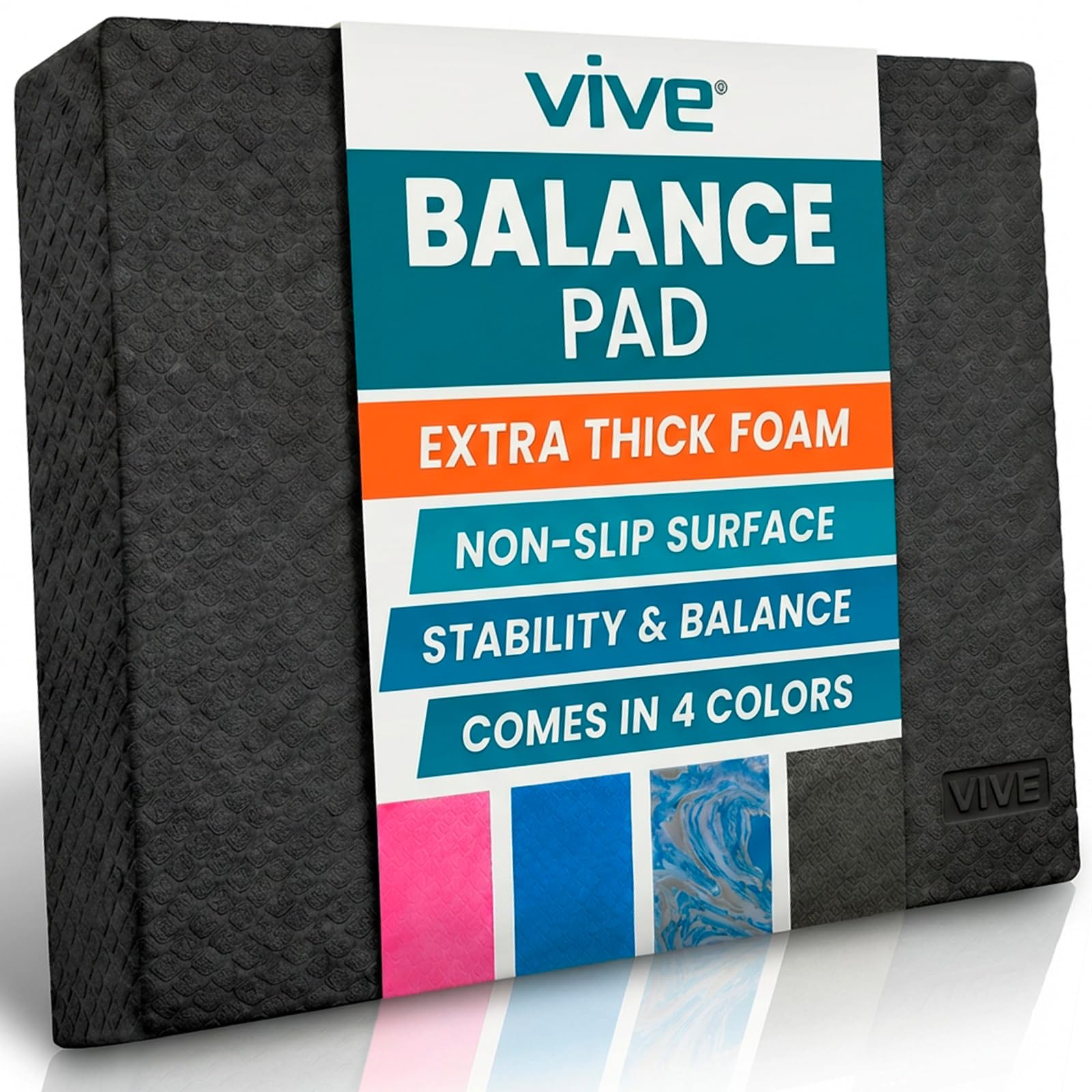
This pad pairs a textured, non-slip TPE surface with a 300 lb capacity, giving seniors and post-surgery patients a stable base for balance and leg-strengthening exercises. The top and base grip hard floors without sticking to bare feet, and the 2.4-inch height adds a gentle challenge.

Home knee and ankle rehab is the clearest use, with standing-desk cushioning a close second. Heavy daily training can leave the foam slower to rebound, so moderate routines are the sweet spot for this pad. It stores easily under a bed or in a closet, which keeps daily sessions simple to maintain.

Pros

  • Gives a stable base for balance, knee stability, and leg strengthening.
  • Supports home physical therapy and post-surgery rehab routines.
  • The 60-day unconditional guarantee reduces purchase risk.

Cons

  • The 'extra large' footprint still feels tight for heel-to-toe stance.
Our verdict

For seniors and post-surgery users, this premium-priced pad delivers clinic-style stability without requiring a gym-specific setup.

Check Latest Price
4

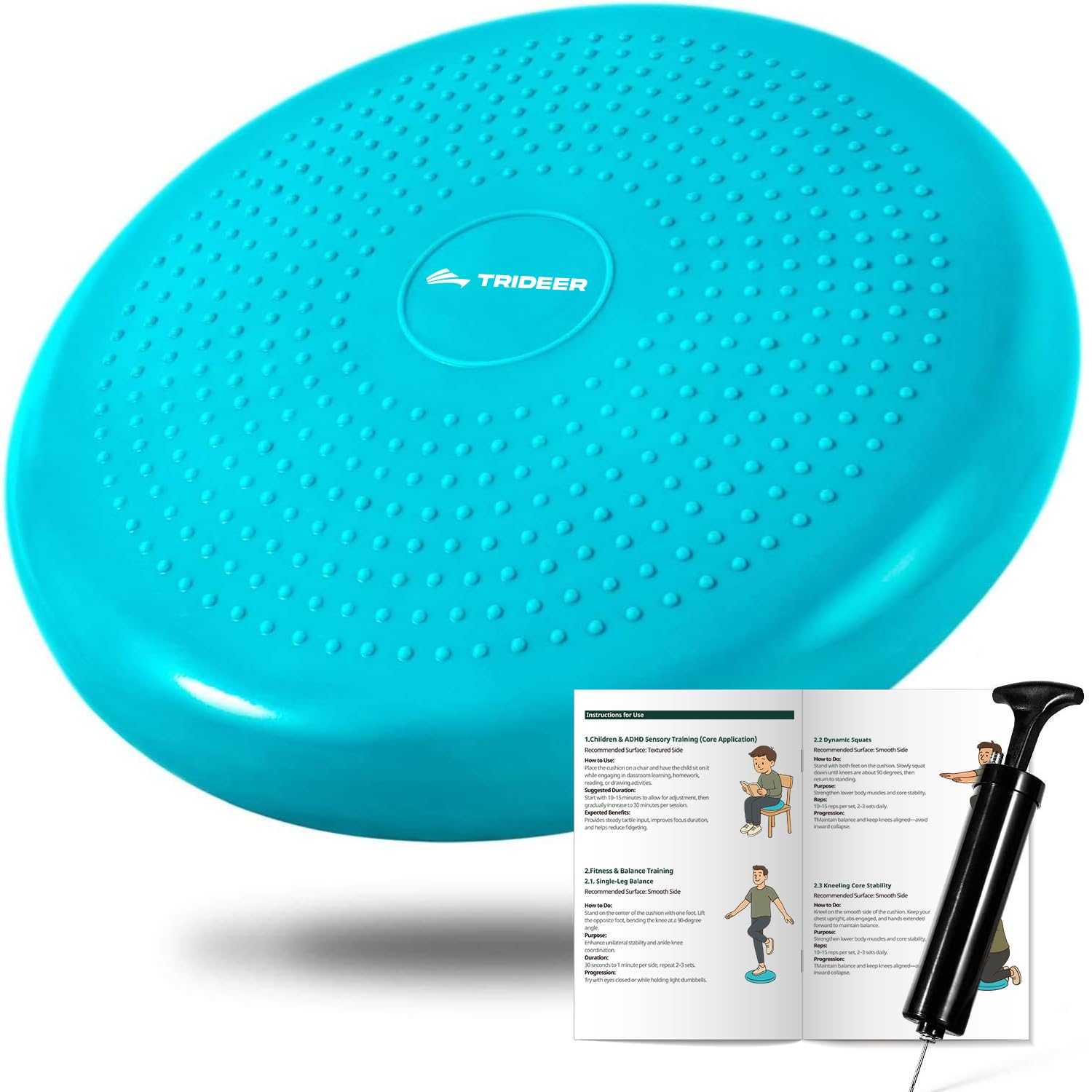
Best Wobble Cushion / Active Seating

Trideer Wobble Cushion

92 /100
Peggy's Score Outstanding

Key details

Material
PVC
Max Load
1000 lb
Pad Type
Inflatable
Thickness
2 in adjustable
Check Details on Amazon

The Trideer Wobble Cushion is a 2-inch PVC air disc with an included pump and a 1000 lb claimed load rating, built for active seating and sensory input. It brings a fidget-friendly wobble to classroom chairs and office seats, and the inflation system is simple to set up. Unlike foam balance pads, firmness adjusts with air pressure, which gives the disc a more responsive feel.

The best match is a child with ADHD or sensory needs, a classroom looking for flexible seating, or an adult who wants an active chair cushion. Air retention depends on valve care and inflation level; over-inflating makes the surface hard. It is not a substitute for a large firm foam pad.

Pros

  • Helps children with ADHD or sensory needs channel extra movement into seated focus.
  • Included pump and two needles make first-time inflation quick and simple.
  • Works on classroom chairs, office desk seats, rehab routines, and dog training.

Cons

No notable drawbacks to flag.

Our verdict

Classrooms and sensory-focused households that want adjustable seated movement get a pump-equipped cushion at a budget price.

Check Latest Price
5

Best Budget TPE Pad

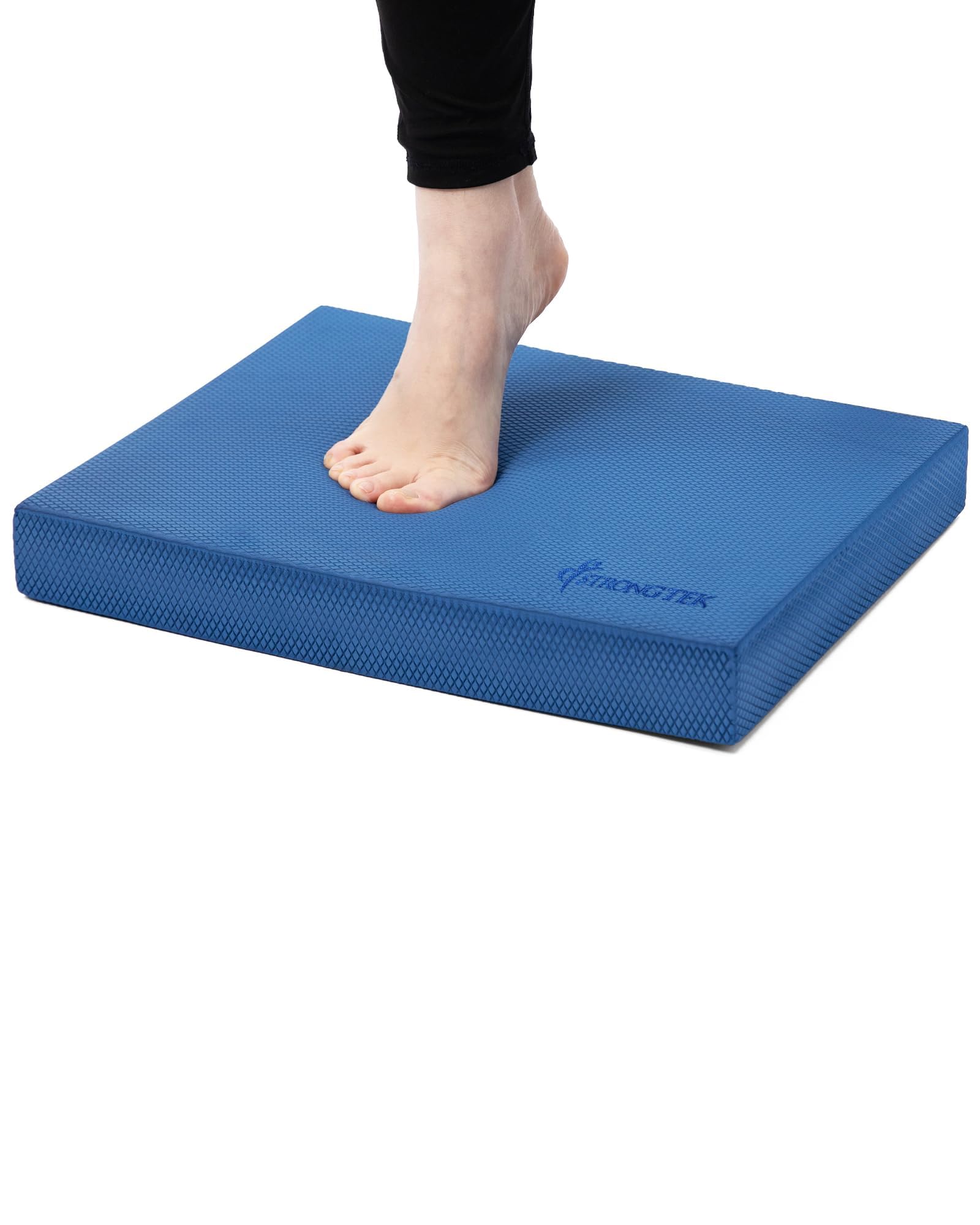
StrongTek Foam Balance Pad

93 /100
Peggy's Score Outstanding

Key details

Material
High-density TPE
Max Load
Pad Type
Foam
Thickness
2 in
Check Details on Amazon

The StrongTek pad keeps things simple: a water-resistant high-density TPE surface at a price that undercuts comparable balance pads. Compared to the modular two-pad system, this single-piece design focuses on single-leg stability and yoga floor work without extra attachment points. It's a practical pick for budget-minded home PT and balance training—the firm foam provides a stable platform for drills, kneeling support, and light floor exercise. Dense TPE means the surface is not plush for seated comfort; it's a balance pad, not a cushion. Isolated cases of surface cracking have been noted, but the water-resistant build resists sweat. Best suited to buyers who value no-fuss durability over modular kneeling versatility.

💡 Pairing the pad with a thin gel cushion during seated meditation or prolonged kneeling can offset the firmness without compromising stability during balance work.

Pros

  • High-density TPE construction feels comparable to pads used in clinics.
  • Stable support for single-leg balance and kneeling exercises, with a textured non-slip surface.
  • Mid-range price for a water-resistant pad that holds up to regular use.

Cons

  • The 2-inch dense foam is firm for stability; those seeking plush seated comfort may find it too hard.
  • Isolated cases of surface cracking or durability variance have been reported under heavy use.
Our verdict

If you want a no-fuss, water-resistant TPE balance pad at a budget-friendly price—and can accept a firm surface that prioritizes stability over cushioning—this StrongTek pad delivers.

Check Latest Price
6

Best All-Round Foam Pad with Extras

Pete's Choice XL Pad

93 /100
Peggy's Score Outstanding

Key details

Material
Foam
Max Load
Pad Type
Foam
Thickness
2 in
Check Details on Amazon

A 16 x 13.5-inch foam pad with a tear-resistant, waterproof surface sets this apart from the top pick's simpler format, and the included stretch strap and exercise eBook make it a self-contained home rehab kit.

Home rehab after knee or foot injury, yoga, core training, and light balance work are the right settings. Foam may soften slightly with sustained use, but function holds up. The strap supports controlled calf and ankle stretches, and the eBook gives a starting point for exercises if you are new to PT-style training. That combination makes it a practical pick for a dedicated home workout area.

Pros

  • Solid foam surface holds up through home rehab sessions.
  • Supports ankle, knee, and post-stroke balance work at home.
  • Bundled stretch strap and eBook add structure for home exercise.

Cons

  • Buyers wanting a recognized clinical brand name will find this a generalist pick.
  • The 16 x 13.5-inch foam pad is a fixed home fixture, not a compact travel accessory.
Our verdict

For home rehab and yoga, this pad plus strap and eBook is a complete package; the top pick is broader, but this one covers most home-use cases.

Check Latest Price
7

Knee-Friendly Floor Work

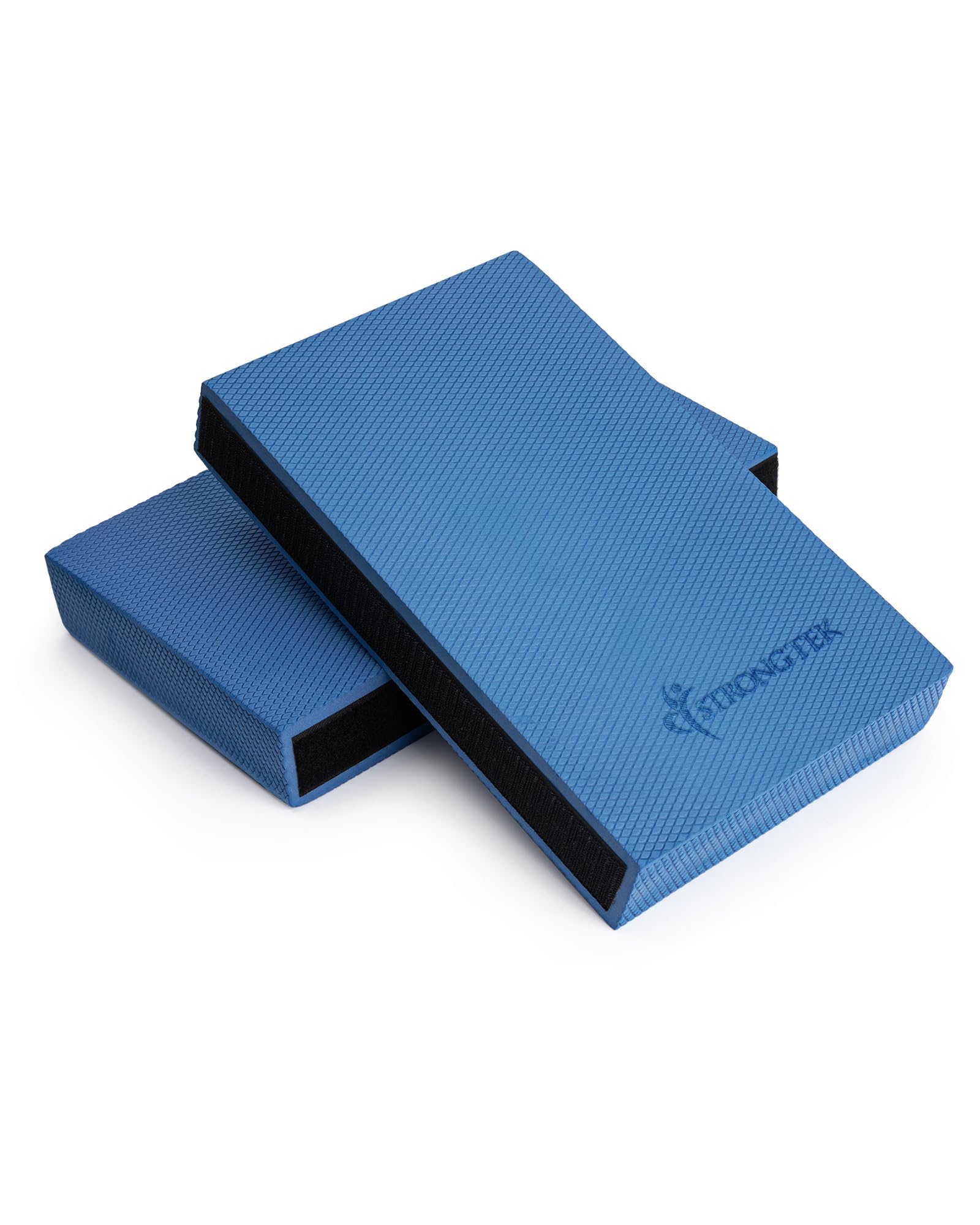
StrongTek 2-in-1 Pad

89 /100
Peggy's Score Excellent

Key details

Material
Foam
Max Load
350 lb
Pad Type
Foam
Thickness
2 in each
Check Details on Amazon

Two 16 x 13.5 x 2-inch pads work separately for knee and elbow support or join into a wider balance surface. That modular layout suits yoga, Pilates, and floor strength work. The tradeoff is that the Velcro strips can lift at the edges and the foam may soften under daily heavy use, so moderate sessions fit this pad best.

Pros

  • Foam surface cushions knees and elbows during floor-based yoga and Pilates poses.
  • Offers a stable, slightly forgiving surface for single-leg balance and core drills.

Cons

  • Buyers needing a single clinical-grade pad may find the two-piece layout more than they need.
Our verdict

This fits when you want two separate cushioned pads for knee-heavy floor work and paired balance exercises.

Check Latest Price
8

Budget Balance Training

Yes4All Balance Pad

91 /100
Peggy's Score Outstanding

Key details

Material
TPE foam
Max Load
500 kg claimed
Pad Type
Foam
Thickness
2 in
Check Details on Amazon

This dense TPE pad provides a stable, firm base for balance and physical therapy routines, with L/XL/XXL sizing to fit different stances. The surface is very firm — suitable for ankle and core work, not for plush kneeling or seated comfort — and edge durability can vary under repeated heavy use. It covers general balance training without specializing in any one routine.

Pros

  • Dense TPE surface holds firm under single-leg work to build ankle and foot strength and stability.
  • L/XL/XXL size choices make it easy to fit a narrow or wide stance without added accessories.

Cons

  • Dense surface provides less wobble than some users expect, so it may feel too easy for advanced balance work.
Our verdict

For home balance and PT routines, the L/XL/XXL sizing and dense TPE base make it a sensible mid-range pick when you want footprint options without the extras bundled on the all-rounder.

Check Latest Price
9

Active Sitting, Posture

ProsourceFit Balance Disc

89 /100
Peggy's Score Excellent

Key details

Material
PVC
Max Load
300 lb
Pad Type
Inflatable
Thickness
3 in inflated
Check Details on Amazon

The ProsourceFit Balance Disc brings a 14-inch dual-textured PVC surface and included pump to active sitting and light core work. The inflation system is the weak point and keeps it from a top recommendation. That makes it a better fit for posture breaks than for high-pressure standing balance work.

Pros

  • Adjustable air pressure lets you tune the disc for posture work, core exercises, and active sitting.
  • Compact 14-inch size and included pump make it easy to move between desk, home workouts, and travel.

Cons

  • Setting up at a desk involves a finicky pump-needle fit and valve seal; air retention depends on careful inflation.
Our verdict

Pick it for office posture and seated core work if you are comfortable with a little inflation upkeep.

Check Latest Price
10

Budget PT, Dance

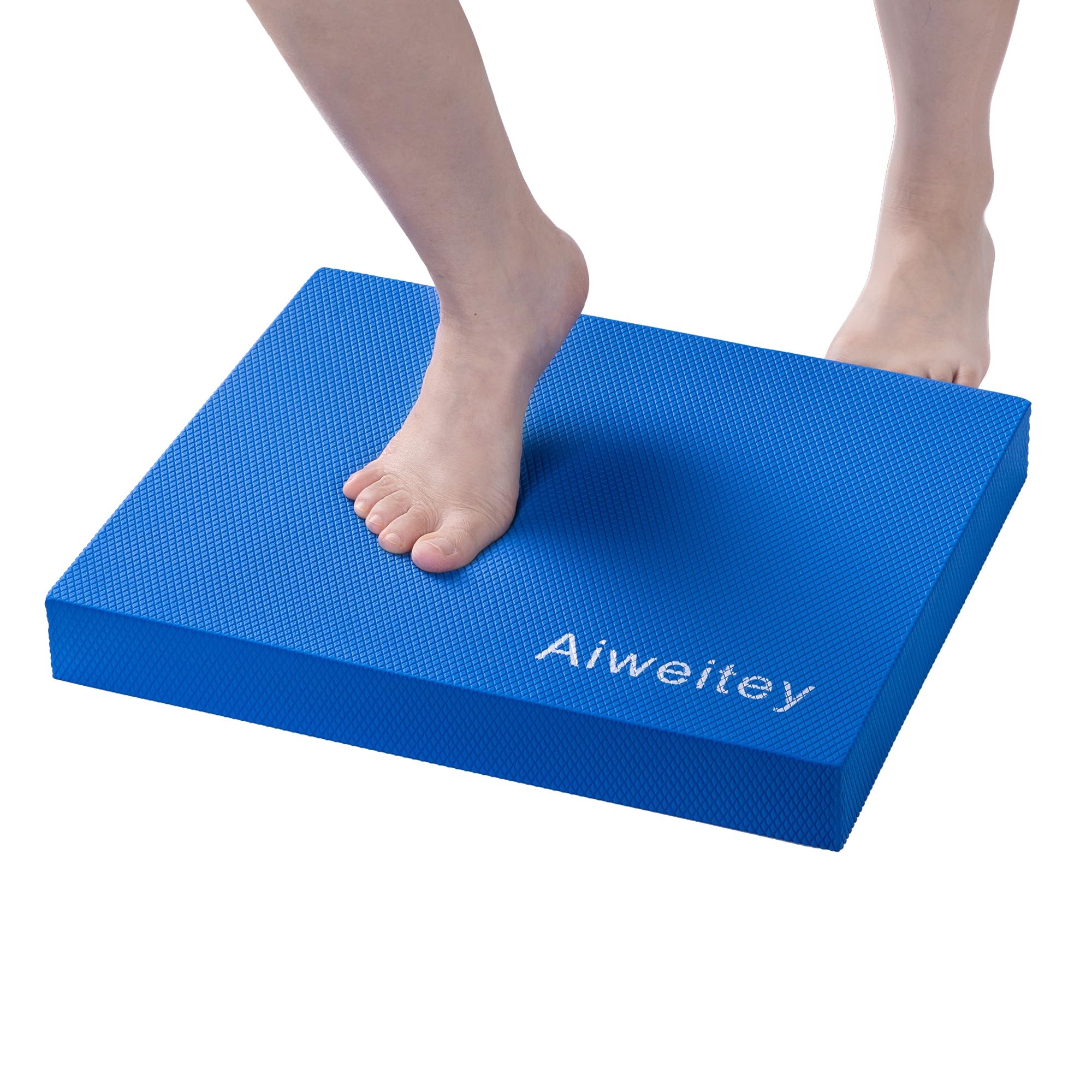
Aiweitey Stability Pad

92 /100
Peggy's Score Outstanding

Key details

Material
TPE
Max Load
300 lb
Pad Type
Foam
Thickness
2 in
Check Details on Amazon

The Aiweitey Stability Pad is a water-resistant TPE cushion that handles single-leg rehab, core engagement, and dance conditioning at a budget price. Its compact 15.7 x 13-inch surface can feel tight for larger users seeking a wider stance. Lacks feature differentiators beyond its cost, but it holds up for targeted PT.

Pros

  • Works for ankle rehab, balance training, and core work.
  • Budget-friendly without major functional compromises.

Cons

  • The 15.7 x 13-inch surface may feel narrow for users with larger shoe sizes.
Our verdict

Best for ankle rehab and dance conditioning on a tight budget, provided the compact footprint isn't a dealbreaker.

Check Latest Price
11

Single-Leg Rehab

THERABAND Stability Pad

92 /100
Peggy's Score Outstanding

Key details

Material
Foam
Max Load
300 lb
Pad Type
Foam
Thickness
2.3 in
Check Details on Amazon

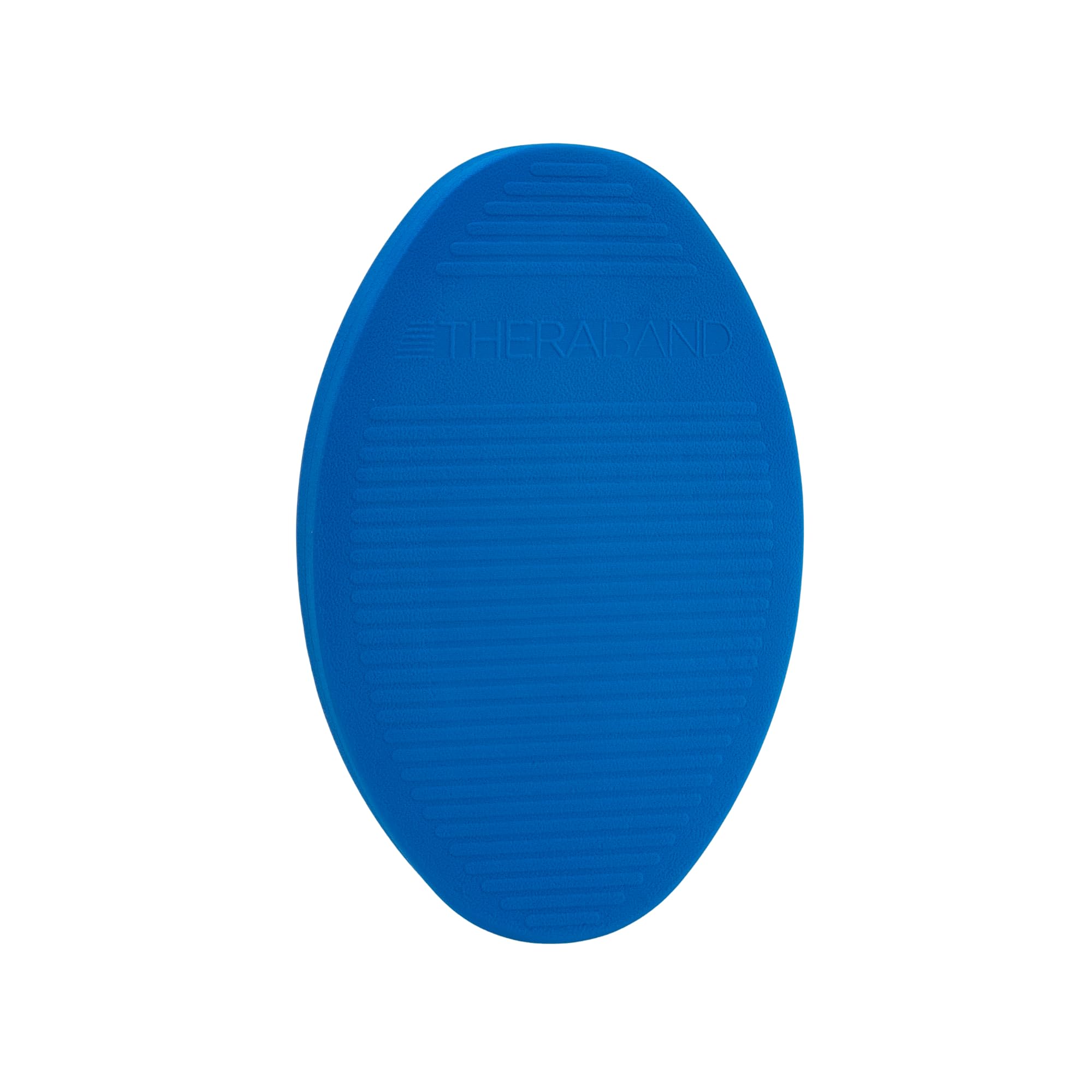
The 16.35 x 10.25-inch non-slip foam surface supports single-leg balance and ACL rehab, and its 300 lb capacity fits home routines. The narrower width is not meant for wide two-foot heel-to-toe stances, and the premium price makes it a specialized tool rather than a budget all-rounder.

Pros

  • Targets single-leg balance work with a compact, non-slip surface.
  • Durable foam holds up through repeated PT-style workouts.

Cons

  • Narrow footprint leaves little room for wide two-foot stance work.
Our verdict

Use it for single-leg PT, ACL recovery, or travel-friendly balance work.

Check Latest Price
12

Budget Home PT

HAPBEAR Exercise Pad

91 /100
Peggy's Score Outstanding

Key details

Material
TPE
Max Load
Pad Type
Foam
Thickness
2.4 in
Check Details on Amazon

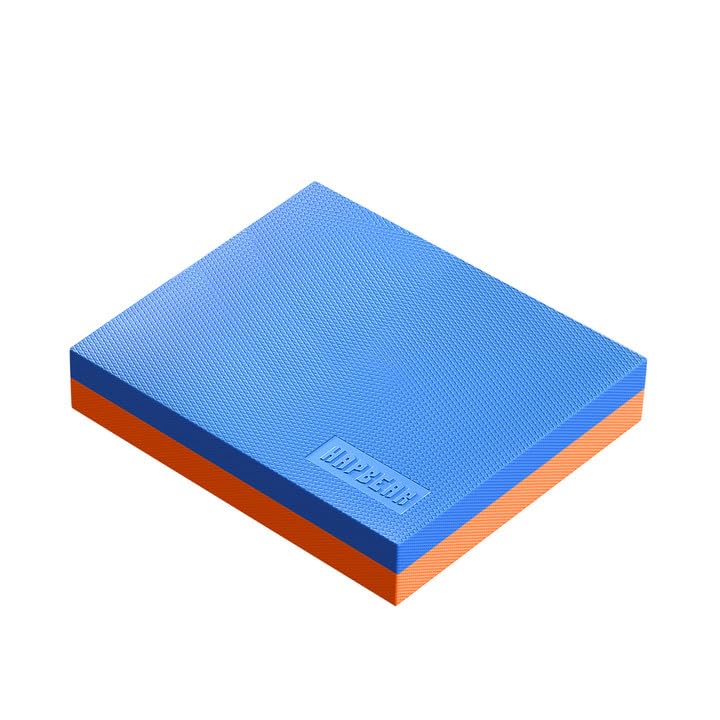
The thick 2.4-inch TPE pad with a diamond-grid non-slip surface is a stable, budget-friendly base for ankle and knee rehab. Its dense foam absorbs wobble without feeling mushy, making it a good first pad for home PT. That focused rehab profile, rather than an all-rounder stance, keeps it a step below the top-tier pick.

Pros

  • Dense TPE foam provides a stable, cushioned base for balance and PT work.
  • Budget-friendly price and thick cushioning make it a low-cost entry to home balance training.

Cons

  • The 2.4-inch height is cushioned but not deeply soft; expectations of a plush surface may exceed what foam provides.
Our verdict

For budget-conscious ankle and knee rehab, this thick TPE pad fits the need without the premium price.

Check Latest Price
13

Home PT Balance

ANVICTOX Balance Pad

90 /100
Peggy's Score Outstanding

Key details

Material
TPE
Max Load
350 lb
Pad Type
Foam
Thickness
2 in
Check Details on Amazon

For home PT, the ANVICTOX does the job — firm TPE underfoot, non-slip base, and enough stability for balance and neuropathy work. The 2-inch profile keeps it portable enough to move between rooms. The standard footprint suits typical home PT setups. Durability can vary between units, which keeps it below the top tier.

Pros

  • Works like the PT-clinic pad for balance, neuropathy, and daily exercise.
  • Firmness and size suit home PT routines at a fair price.

Cons

  • The 15.8 x 13.2-inch surface handles single-leg balance but gives less room for wide two-foot stances.
Our verdict

A sensible buy for home PT when the standard 2-inch profile fits your routine.

Check Latest Price

How to Choose

Surface Size and Stance

Most balance pads fall in a 13-16 inch band, so 'extra large' rarely means a wide tandem-stance platform. If you plan heel-to-toe work, your feet need room to stand one in front of the other without hanging off the edge. Measure your stance before buying.

A 15-inch pad handles standard stance work. A 19-20 inch surface is better for split-stance exercises and larger shoe sizes.

Thickness and Firmness

Thicker foam is not automatically softer. A 2-inch high-density TPE pad can feel harder than a 2.4-inch low-density pad because firmness comes from cell structure, not depth. For ankle rehab you want controlled give without bottoming out; for kneeling and yoga, extra cushion helps.

Match firmness to the exercise. Firm pads challenge stabilizers; softer pads are comfortable for floor work but train balance less aggressively.

Foam Material

TPE is the standard foam material because it resists sweat, cleans easily, and gives predictable firmness. Closed-cell foam blocks water and tears better, which is why clinical pads use it for long-term rehab. PVC appears mainly on inflatable cushions, where the material must stretch and hold air.

Choose TPE or closed-cell foam for a low-maintenance pad. Choose PVC inflatable only if you want adjustable firmness for active seating.

Foam vs. Inflatable

Foam pads are set-and-forget: no pump, no valve, and the instability comes from the pad's own compression. Inflatable discs let you adjust firmness by adding or releasing air, but they add more parts that can leak or bend.

Foam suits standing balance work and floor exercises because the surface stays predictable. Inflatables suit office chairs, classroom seating, and travel.

Weight Capacity and Durability

Rated capacity matters less than foam recovery. A dense foam pad returns to shape after repeated standing sessions; a softer one can develop dents even at the same body weight. Closed-cell pads hold structure longest.

Consider standing frequency, not just body weight. Daily standing-desk use creates constant compression, so a clinical-grade pad is worth the higher price if it lives under your desk all day.

Frequently Asked Questions