9 Best Chest Strap Heart Rate Monitor of 2026: Match Your Setup

From budget gym straps to Garmin running-dynamics models, match a chest strap heart rate monitor to your watch, app, and workout style.

Chest strap monitors look similar at a glance, but they split into different tools: ECG chest straps, optical armbands, and bra-clip designs. That distinction matters because each form factor pairs with different devices and delivers different data. The right chest strap heart rate monitor is the one that talks to your watch, app, or bike computer without repeated pairing battles.

The main trade-off is between universal compatibility and ecosystem-specific features. A strap with Bluetooth, ANT+, and legacy 5kHz connects to almost anything, while a platform-native strap can add running dynamics or offline sync only inside its own world. Choose based on where you train, not just which sensor is the most accurate.

Durability and battery chemistry also separate the options. Replaceable coin cells keep a dead sensor fixable, while rechargeable models trade that for convenience until the battery ages. Wetting the electrodes before each session and pairing through your training app prevents most issues that get blamed on the monitor.

1

Best Overall

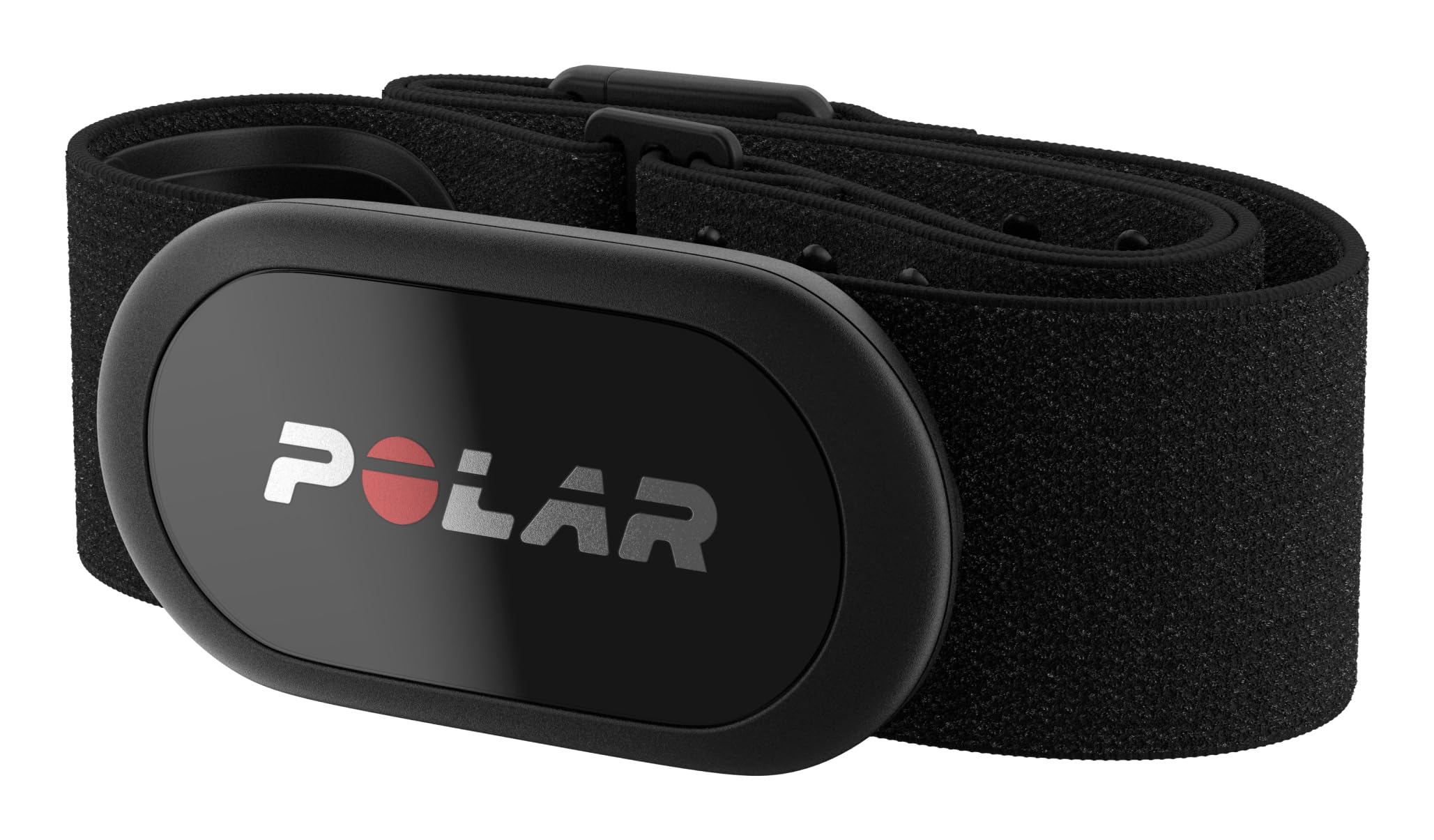
Polar H10 Chest Strap

86 /100
Peggy's Score Excellent

Key details

Battery
CR2025, 400h
Sensor Type
ECG chest strap
Connectivity
Bluetooth, ANT+, 5kHz
Compatibility
All major apps/devices
Check Details on Amazon

The Polar H10 reads heart rate through a chest-mounted ECG electrode and broadcasts the signal over Bluetooth, ANT+, and 5kHz, with two Bluetooth streams available at the same time. That lets a Garmin watch, a phone, and a bike computer all receive the same heart rate during a single workout. The dual-Bluetooth allowance also means one stream can stay with your primary device while a second goes to Zwift or a fitness app. The 5kHz mode reaches gym consoles and older Polar equipment, so the same strap moves from outdoor intervals to an indoor class without changing devices.

Chest placement captures each heartbeat directly from the cardiac signal, avoiding the lag and cadence-locking that optical wrist and armband sensors can show in intervals or high-cadence cycling. Zone and lap tracking line up with effort across threshold runs and hard bike efforts. The Polar Pro strap fits M-XXL, and the fully waterproof sensor pod clips off for washing, so daily care stays simple even when you train every day.

Setup is fast: wet the electrode pads, pull the strap on, and open the Polar app. The app walks through the connection and displays live heart rate from the strap, with no separate bridge or hub needed.

This is the strap for runners and cyclists who train across multiple devices, apps, or indoor equipment and want one sensor that works with all of them. If you broadcast to a watch, phone, and bike computer at the same time, the H10 is the shared connection point in this category. Connectivity can be finicky and unit longevity varies; some users need troubleshooting before pairing settles down. That boundary matters more to people who expect zero maintenance, not to athletes who already manage multiple devices. It is not aimed at strict budget buyers; the H9 is the less expensive Polar entry if dual-Bluetooth and 5kHz are not required.

The H10's value sits in ECG-grade data and the broadest device compatibility in this group. Polar users get the top chest strap in the lineup, while athletes mixing Garmin, Zwift, and gym equipment get one sensor that removes the need for a separate strap in each environment.

Pros

  • Reference-grade chest accuracy: ECG readings stay true during intervals, high-cadence cycling, and hard tempo efforts.
  • Quick setup: wet the electrodes, pull the strap on, and the Polar app handles the rest.
  • Consistent workout tracking: heart rate, zones, and lap data align with actual effort.
  • Broad wireless compatibility: Bluetooth, ANT+, 5kHz, and dual-Bluetooth broadcast reach watches, phones, and bike computers.

Cons

  • Battery drain can run ahead of the rated 400 hours, so a CR2025 may need replacement sooner than expected.
  • No Garmin running-dynamics metrics; Garmin users who want vertical oscillation or ground-contact time need a Garmin-native strap.
Our verdict

One chest strap that can feed every device in your rotation; that is the H10's role.

Check Latest Price
2

Best for Garmin Ecosystem / Running Dynamics

Garmin HRM 600

91 /100
Peggy's Score Outstanding

Key details

Battery
Rechargeable, 2 months
Sensor Type
ECG chest strap
Connectivity
Bluetooth + ANT+
Compatibility
Garmin ecosystem
Check Details on Amazon

The HRM 600 combines chest-strap heart rate with running-form metrics beyond just beats per minute: stride length, vertical oscillation, and ground contact time. On a compatible Garmin watch or Edge computer, those numbers appear in real time alongside heart rate, and the rechargeable sensor stores workout data offline for later sync to Garmin Connect. That puts a complete form-capture loop on your chest rather than on your wrist.

This is the Garmin-centric choice. The advanced metrics display only on compatible Garmin devices, so buyers using non-Garmin phones, bike computers, or watches won't see the extra data; a basic heart-rate strap would cover that use case for less. Mid-workout dropouts have been noted, but Bluetooth and ANT+ broadcast plus offline recording mean the session still has a path back to your training log.

The premium price makes sense for athletes who already live in Garmin Connect. For them, the HRM 600 replaces a basic HR strap and adds the feedback that usually requires a foot pod or a more advanced watch. If you only need a number on a screen, the added cost for running dynamics and offline capture won't show up in your daily workouts; the value is in data depth, not baseline accuracy alone.

Pros

  • Combines real-time heart rate with stride length, vertical oscillation, and ground contact time in one chest strap.
  • Pairs cleanly with Garmin watches, Edge computers, and Garmin Connect, with offline sync as a backup.
  • Machine-washable strap in XS-S through XL fits a wide range of chest sizes.

Cons

  • Rechargeable battery life varies with use; a coin-cell strap can go longer between charges.
  • Unit-to-unit durability can vary; an early replacement is possible.
Our verdict

Garmin watch and Edge owners who want running form and offline session capture get the full loop here. Outside Garmin's ecosystem, the premium price buys little.

Check Latest Price
3

Best Polar Value

Polar H9 Heart Rate Sensor

84 /100
Peggy's Score Excellent

Key details

Battery
CR2025, 400h
Sensor Type
ECG chest strap
Connectivity
Bluetooth + ANT+
Compatibility
Polar app ecosystem
Check Details on Amazon

The H9 is Polar's soft-strap value entry to chest-strap accuracy. It combines the comfortable Polar strap with Bluetooth and ANT+ broadcasting at a lower price than the reference-grade H10, so first-time buyers get electrode-style measurement without the H10's higher entry cost. That makes the H9 the natural choice for buyers who do not need the H10's extras.

Heart-rate readings hold up well for cycling and general training. The strap stays in place without digging in, the signal follows effort changes during intervals, and the waterproof pod handles heavy sweat and wet-weather rides. The pod is light enough to ignore once the workout starts. Because the reading comes from the chest, it avoids the optical lag that wrist sensors can introduce. Available in XS-S/M-XXL, it fits a range of chest sizes.

This is best for first-time chest-strap buyers and Polar app users who always have a phone or watch nearby. There is no internal memory; anyone who needs offline recording or simultaneous dual-device output should move up to the H10. Pairing is pickier than the H10's, so expect an occasional retry when switching devices. For buyers who fit that profile, the H9 is a focused entry point: no cable charging and a strap that stays out of the way once it is on.

Pros

  • Soft strap stays comfortable on long rides.
  • Heart-rate readings stay steady for cycling and general training.
  • Waterproof pod handles heavy sweat and wet-weather rides.

Cons

  • Battery life can fall short of the 400-hour estimate, so a spare CR2025 is worth carrying.
  • An occasional unit can lose accuracy after a few months, so durability is a variable.
Our verdict

It answers the first chest-strap question with a comfortable, electrode-based sensor that stays in the background of the workout.

Check Latest Price
4

Best Rechargeable / Wahoo-Zwift Choice

Wahoo TRACKR HR Monitor

85 /100
Peggy's Score Excellent

Key details

Battery
Rechargeable, 200h
Sensor Type
ECG chest strap
Connectivity
Bluetooth + ANT+
Compatibility
Wahoo, Zwift apps
Check Details on Amazon

The Wahoo TRACKR is a USB-rechargeable chest strap with a slim, soft band and native pairing with Wahoo's app, Kickr, and Zwift. Its 200-hour active battery removes the coin-cell errand, and Bluetooth plus ANT+ means it also talks to gym equipment and other training apps. That combination makes it the no-battery-door option for indoor cyclists who already lean on Wahoo hardware.

During sustained workouts, the strap's readings generally track effort well for steady-state rides. Less consistent moments appear mainly at the edges: a display can briefly show an improbable high or low number during an interval, and a Bluetooth link can drop mid-ride, requiring a reconnect on the phone or tablet. These are boundary conditions rather than deal-breakers for a rider whose primary screen is a Kickr or Zwift.

This is the strap for Wahoo app and Kickr owners, Zwift indoor cyclists, and anyone who would rather plug in a USB cable than swap a coin-cell battery. The integrated design has no battery door, so a small share of straps can develop charging or connection issues over time, and heart-rate accuracy is not uniformly praised. Riders who want Garmin running dynamics or a simple replaceable battery should skip it in favor of a Garmin-native strap.

💡 Use the LED indicator to check connection and battery status, and recharge after a few rides to keep the strap ready for indoor sessions.

Pros

  • Long 200-hour rechargeable battery removes the coin-cell replacement routine.
  • Native pairing with the Wahoo app, Kickr, and Zwift means little setup friction for Wahoo riders.
  • Slim, soft strap keeps the sensor secure during indoor sessions.
  • Bluetooth and ANT+ broadcast to gym equipment and third-party apps beyond Wahoo.

Cons

  • An interval screen can occasionally show an improbable high or low heart rate before catching up.
  • A Bluetooth link can drop mid-ride, interrupting a Zwift session until you reconnect.
  • For a multi-year owner, the integrated rechargeable battery can stop holding a charge with no user-replaceable option.
Our verdict

The TRACKR is the rechargeable chest strap for Wahoo and Zwift riders who want the convenience of USB charging; those who need Garmin running dynamics or a replaceable battery should stay with a Garmin-native strap.

Check Latest Price
5

Best Budget All-Rounder

POWR LABS HR Chest Strap

81 /100
Peggy's Score Excellent

Key details

Battery
Replaceable, 400h+
Sensor Type
ECG chest strap
Connectivity
ANT+ + Bluetooth
Compatibility
Garmin, Peloton, apps
Check Details on Amazon

POWR LABS puts ANT+ and Bluetooth pairing into a budget strap without sacrificing chest-strap accuracy. Garmin watches, Wahoo computers, Peloton bikes, and phone apps all connect to the same transmitter, which is uncommon at this price. It covers the dual-protocol basics that the top pick handles at a higher cost.

It works correctly out of the box for daily training, and the soft, seamless band stays comfortable through longer sessions. Readings track closely with more expensive chest straps, so there is no accuracy gap that you might expect from a budget sensor.

This strap suits budget-focused gym-goers, Garmin and Peloton owners who want a capable secondary strap, and anyone looking for a comfortable backup. Swimmers should skip it despite the IPX67 rating. Battery life can be inconsistent from unit to unit, and occasional straps stop transmitting within weeks, so this is a capable daily tool rather than a long-term instrument.

Pros

  • Dual-protocol pairing covers Garmin, Wahoo, Peloton, and phone apps from one strap.
  • Reads heart rate accurately enough for daily training at a budget price.
  • Soft, seamless band stays comfortable across longer sessions.
  • Works out of the box with no complicated setup.

Cons

  • Battery life can be inconsistent, with some units needing a fresh battery sooner than expected.
  • Unit-to-unit consistency can vary; a strap that works today may stop transmitting within weeks.
Our verdict

If your training spans a watch, a bike computer, and an app, this is the budget strap that keeps up with all of them.

Check Latest Price
6

Best Budget for Peloton / Zwift / DDP Yoga

COOSPO H808S Chest Strap

83 /100
Peggy's Score Excellent

Key details

Battery
CR2032, 300h
Sensor Type
ECG chest strap
Connectivity
Bluetooth + ANT+
Compatibility
Peloton, Zwift, DDP
Check Details on Amazon

The COOSPO H808S pairs quickly with Peloton, Zwift, Garmin, and DDP Yoga at a budget-friendly price, which is what a complete chest strap needs for app-based indoor training. It broadcasts over Bluetooth and ANT+, so the same strap can connect to an iPad app or a cycling computer without needing a different transmitter. Setup takes about a minute, and the soft band and compact sensor sit comfortably through spin intervals and floor sessions.

Heart-rate readings track the output of more expensive chest straps during steady and interval effort, and the signal holds for the full duration of a class. The adjustable band is soft enough for regular indoor sessions, while the replaceable CR2032 battery lets you revive the unit with a coin-cell swap instead of binning the whole strap.

This is the right fit for Peloton riders, Zwift cyclists, and DDP Yoga practitioners who want dual-protocol heart-rate data without paying a premium. It is not a swim trainer, and long-term durability is the compromise: the sensor can stop broadcasting after a few months of steady use, so the low price is part of the value calculation.

Pros

  • Pairs immediately with Peloton, Garmin, Zwift, and DDP Yoga over Bluetooth and ANT+.
  • Keeps a steady heart-rate signal through full spin classes and long training sessions.
  • Readings stay consistent with more expensive chest straps during sustained effort.
  • Simple pairing process lets you move from box to workout in minutes.

Cons

  • Mid-ride, battery can run down early, and a fresh CR2032 may not always restore output.
  • On first pairing, a new sensor can arrive with no broadcast at all.
Our verdict

For Peloton, Zwift, and DDP Yoga users, the H808S is the low-cost way to get chest-strap heart-rate accuracy without a premium-priced flagship.

Check Latest Price
7

Garmin Basics

Garmin HRM 200

84 /100
Peggy's Score Excellent

Key details

Battery
CR2032, 1 year
Sensor Type
ECG chest strap
Connectivity
Bluetooth / ANT+
Compatibility
Garmin devices
Check Details on Amazon

The HRM 200 is a complete chest strap powered by a user-replaceable CR2032 battery that can last up to a year, which suits indoor cyclists and fitness-class users who want to avoid weekly charging. It transmits over Bluetooth and ANT+ to Garmin watches, Edge computers, and phones. Strap fit runs small for larger chests, and occasional units can begin reporting inaccurate heart rate after months of use. It is outclassed for Garmin power users but a strong basic option for anyone who wants chest-strap accuracy without a wristwatch.

Pros

  • Pairs quickly with Fenix, Edge, Epix, and phones over Bluetooth and ANT+.
  • Chest-strap heart rate tracks more accurately than wrist optical during intervals and steady rides.
  • Solid build with a comfortable, machine-washable strap.

Cons

  • When running-dynamics metrics or USB recharging matter, this strap leaves both to the higher-tier Garmin model.
  • During a connected workout, Garmin Connect or Edge links can drop in some cases.
Our verdict

Fits Garmin watch owners and indoor cyclists who want a mid-range chest strap with long battery life, as long as they are already in the Garmin ecosystem.

Check Latest Price
8

Budget Cyclists

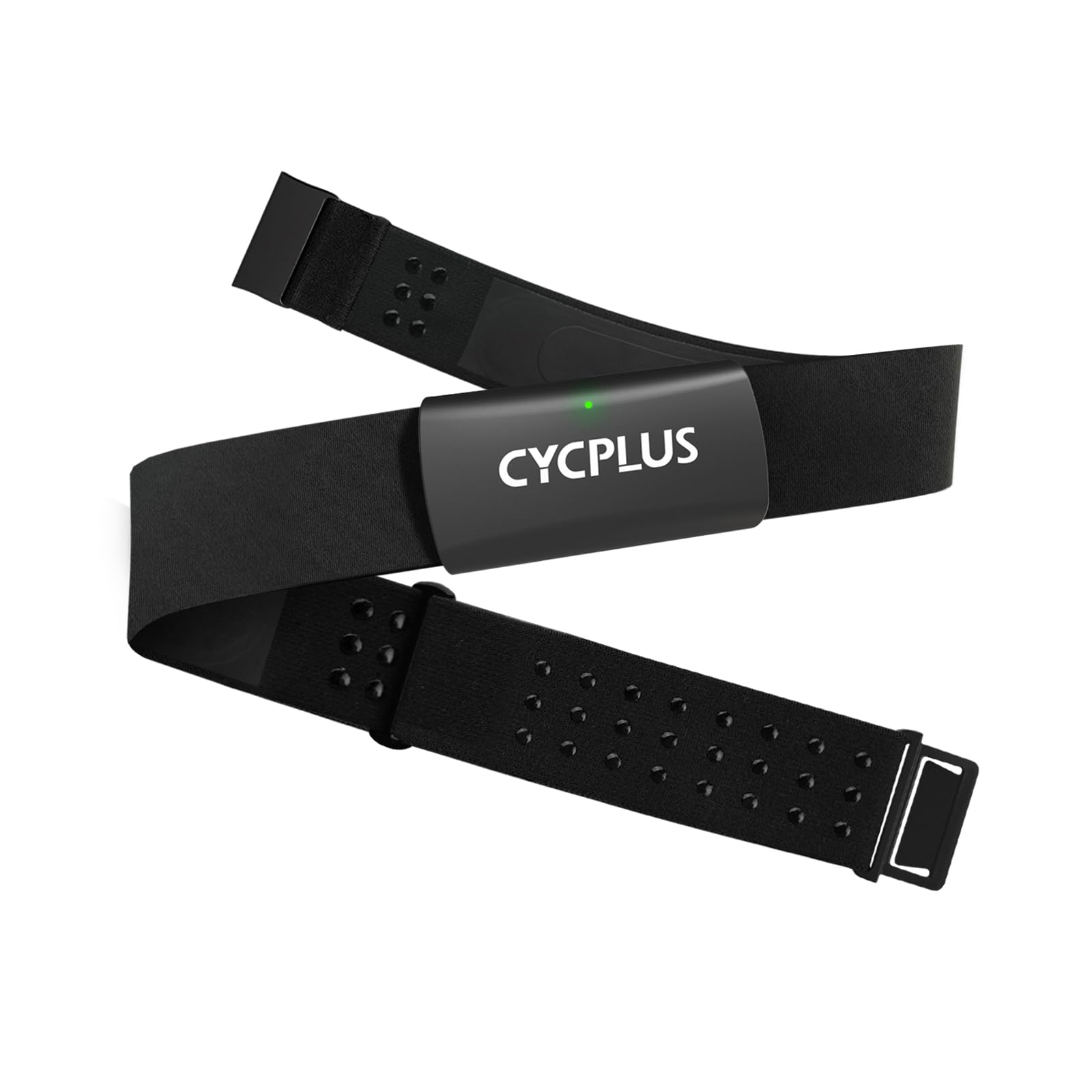
CYCPLUS H2Pro Chest Strap

78 /100
Peggy's Score Very Good

Key details

Battery
CR2032, 500h
Sensor Type
ECG + HRV
Connectivity
Bluetooth + ANT+
Compatibility
Garmin, Zwift apps
Check Details on Amazon

The CYCPLUS H2Pro delivers ECG-derived HRV and heart rate data at a budget-friendly price, with both ANT+ and Bluetooth to pair with most bike computers, watches, and training apps. How it holds up over many months remains an open question, and the pairing process can be tricky — some riders need a few attempts or a battery re-seat to get a stable connection. For cyclists who want recovery metrics without spending premium money and don't mind the occasional connection hiccup, it's a capable companion.

Pros

  • Pairs consistently with Garmin watches, bike computers, and apps like Zwift using ANT+ and Bluetooth.
  • ECG-derived heart rate readings are more responsive than wrist-based optical sensors for cycling and climbing.
  • Provides HRV data to track recovery, a feature usually found in pricier straps.

Cons

  • Battery drain accelerates if the sensor stays clipped to the strap after workouts.
  • Pairing can be inconsistent; occasional units may fail to connect despite troubleshooting.
Our verdict

A sensible pick for budget-conscious cyclists seeking HRV insight who can accept some pairing trial-and-error and remember to detach the sensor after each session.

Check Latest Price
9

Armband Seekers

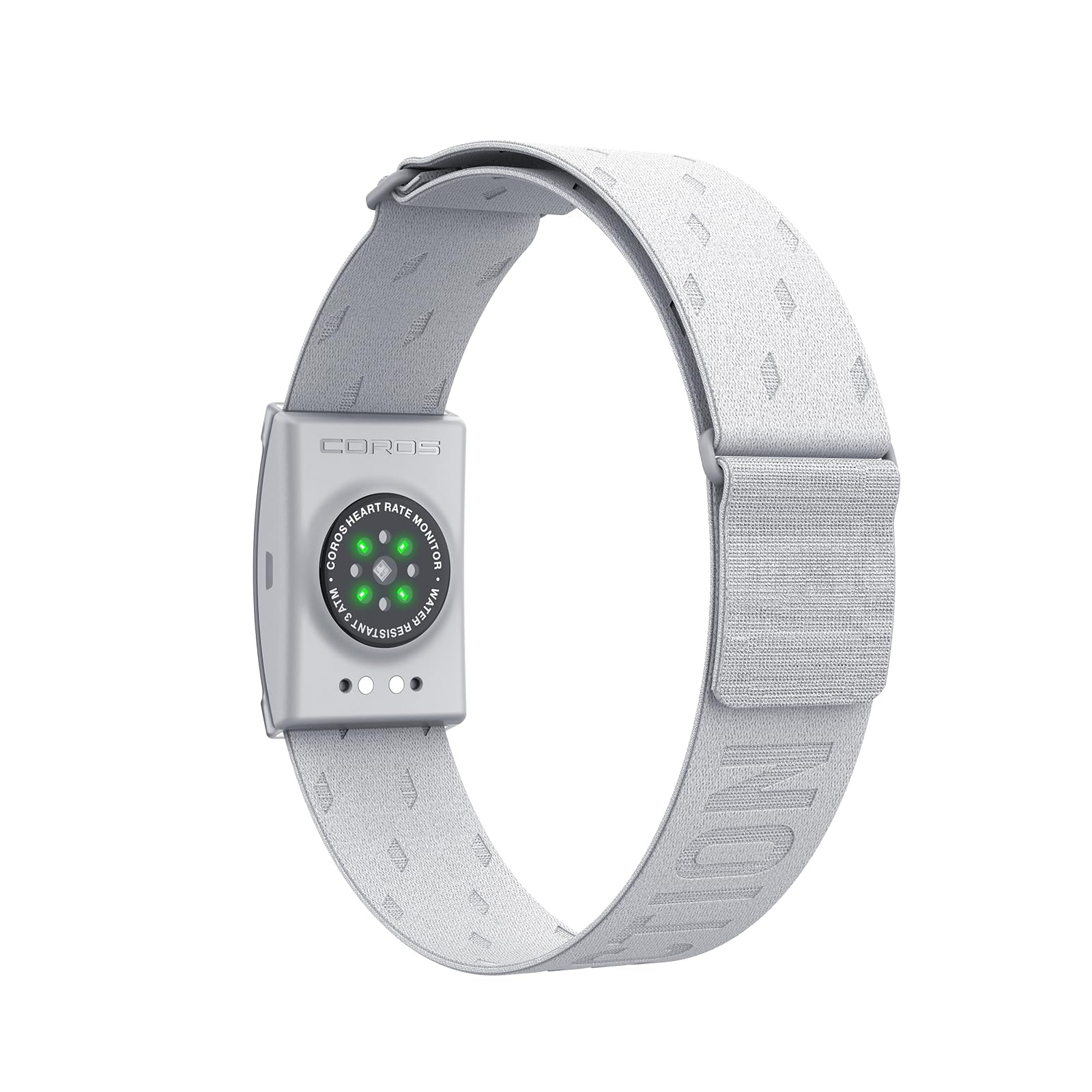
COROS Heart Rate Armband

85 /100
Peggy's Score Excellent

Key details

Battery
Rechargeable, 38h
Sensor Type
Optical armband
Connectivity
Bluetooth only
Compatibility
COROS, Garmin Edge
Check Details on Amazon

The COROS armband uses optical heart-rate sensing and broadcasts over Bluetooth to up to three devices, so it pairs with COROS watches, Garmin Edge cycling computers, and apps like Nike Run Club. The soft fabric band is quicker to put on than a chest strap, and the rechargeable battery covers weeks of training.

The boundary is format: this is an optical armband, not an ECG chest strap, so it cannot measure electrical heart activity from the chest. Bluetooth-only connectivity also limits ANT+ gear. For runners who simply dislike chest straps and want arm-worn monitoring with broad Bluetooth reach, this is a viable alternative — but it does not replace a chest strap for those specifically seeking ECG accuracy.

Pros

  • Optical HR closely matches chest-strap readings without the chest band.
  • Soft breathable band is quick to put on and comfortable for long sessions.
  • Broad Bluetooth pairing with COROS watches, Garmin Edge computers, and running apps.

Cons

  • Pairing can be intermittent with some devices, so expect a retry or two.
  • Heart rate broadcasts only during started activities, so casual wear stays idle.
Our verdict

COROS watch owners who want arm-worn HR and train with Bluetooth-compatible gear will find this a practical choice.

Check Latest Price

How to Choose

Sensor Type: ECG vs Optical

A true chest strap measures the heart's electrical signal through electrode pads against the skin, not light through the wrist. Optical armbands use LED light and can lag during interval or strength work. If you want beat-by-beat response, an ECG chest strap is the right form factor.

Connectivity Protocols

Bluetooth talks to phones and tablets; ANT+ talks to Garmin watches, cycling computers, and many gym machines; legacy 5kHz locks you into Polar receivers. A dual-protocol strap covers the two modern worlds, and 5kHz adds gym-equipment pairing.

The catch is simultaneous broadcast: some straps support only one Bluetooth stream, so adding a second app means re-pairing. If you train with a phone and a bike computer at the same time, look for a strap that broadcasts to two devices at once.

Battery Type

Replaceable coin cells (CR2025/CR2032) make a dead sensor fixable with a cheap battery, but drain can be fast when the sensor stays attached to the strap. Rechargeable models remove battery swaps and are convenient week to week, but the sealed cell becomes the limiting part as it ages.

Match the battery to how long you expect the sensor to last. For a primary training tool, a replaceable cell is usually the safer long-term choice.

Water Resistance

IP67 means sweat and rain are fine, but swimming is not always safe; 'waterproof' on a Polar strap refers to 5kHz transmission underwater, not Bluetooth range. Check the rating before treating any strap as a swim tool.

For gym and yoga work, most ratings are more than enough. You do not need a swim-rated sensor to survive a hot yoga session.

Ecosystem Compatibility

Garmin straps add running dynamics like ground contact time, but those metrics only appear on compatible Garmin watches. Wahoo-focused straps pair cleanly with Kickr bikes and Zwift, while Polar's H10 and H9 work across most apps.

The smartest purchase is the one whose deepest feature set overlaps with the devices you actually use. A universal strap is a safer bet for multi-sport athletes; an ecosystem strap returns richer data when you stay inside that world.

Frequently Asked Questions