9 Best Heart Rate Monitor of 2026: Picks That Stay Connected

Find a heart rate monitor for yoga and gym that pairs reliably with your watch or app — chest-strap accuracy or armband comfort, without dropouts.

Every serious yoga or gym session gets better when you know your heart rate is real. But the monitor that claims to work with everything often drops the signal mid-flow, and the strap that fits around your ribs may not fit the workout you actually do.

The practical split is simple: chest straps give faster, more stable readings; armbands trade a little precision for comfort. Connection reliability and long-term durability vary from unit to unit, so the first buying step is deciding which trade-off matters more.

The right monitor depends on the devices you already own, whether you want advanced metrics, and whether you can tolerate a strap across your chest. Nail those boundaries first, and you end up with a sensor you forget is there — not one you fight.

1

Best Overall

Polar H10

84 /100
Peggy's Score Excellent

Key details

Battery
CR2025, 400 hours
Form Factor
Chest strap (M-XXL)
Connectivity
Bluetooth, ANT+, 5kHz
Water Resistance
Waterproof
Check Details on Amazon

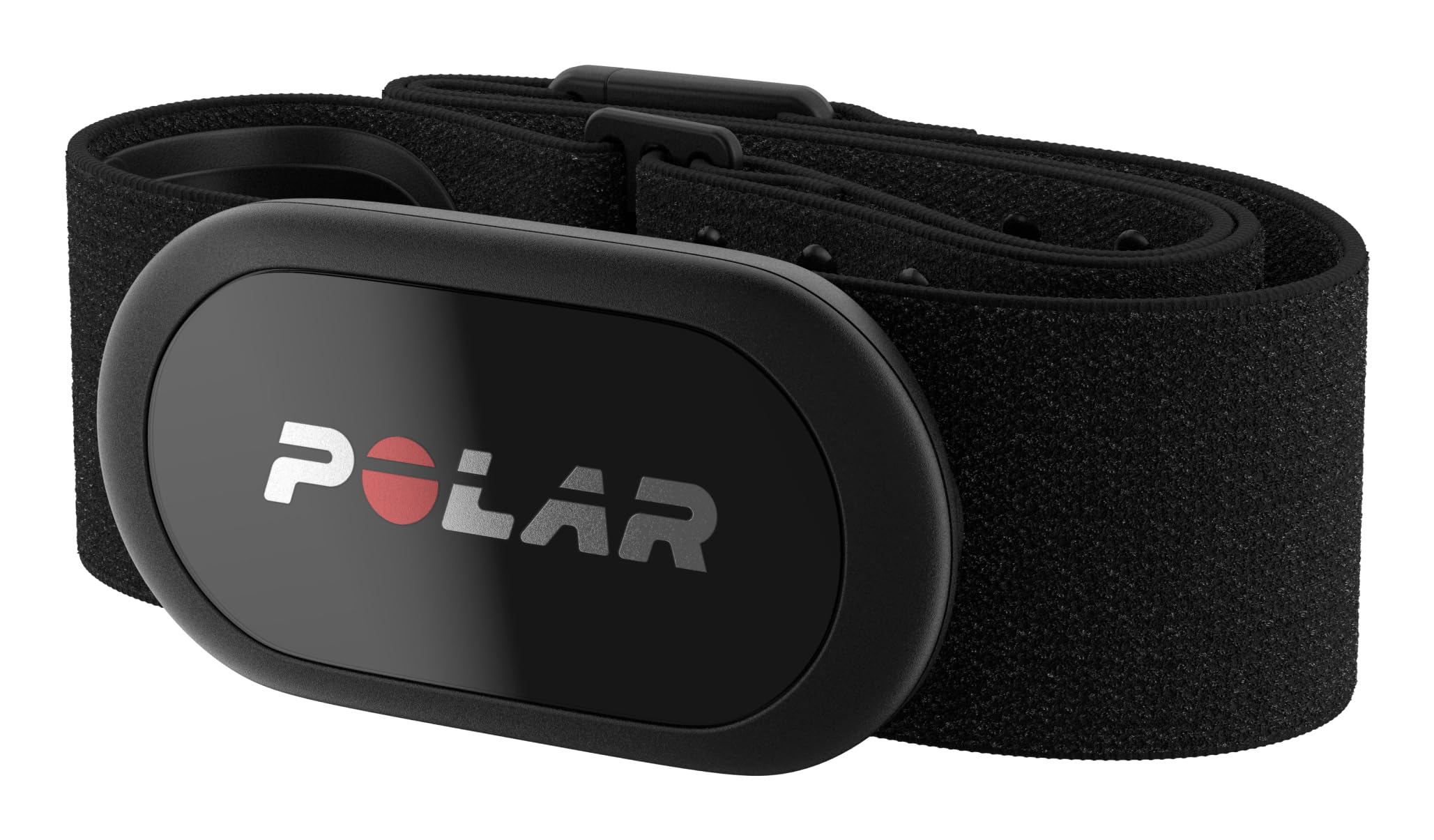
The Polar H10 is a chest strap built around measurement: it logs consistent heart-rate data through intervals and steady-state sessions, and it speaks to gym consoles, bike computers, and phones over Bluetooth, ANT+, 5kHz, and two simultaneous BLE links. It is not an optical armband; the electrode reads directly from the chest, so rapid changes in effort show up without the smoothed lag you get from some armband sensors. That combination makes it the reference point for serious athletes who want one sensor to cover every training tool they own.

Setup is low-friction: wet the electrodes, snap the pod, pair once. The companion app converts the signal into zone summaries, showing how long you spent in each heart-rate band and how your pace lined up with effort. For HR-zone trainers this is the feedback loop that keeps intervals honest.

Multi-device use is where the H10 separates itself from cheaper alternatives. A cyclist can push ANT+ to a bike computer while a phone records the same ride over Bluetooth; a rower can use the 5kHz output on gym equipment that lacks both. Offline recording covers sessions where neither device is present. For anyone moving between gym, bike, and rower, this removes the need to swap sensors.

This is the pick for serious gym and HR-zone trainers, cyclists, rowers, and anyone juggling more than one device during a session. The H10 is not the budget Polar option—that role belongs to the H9—but it is the one with the full communication suite. Connection stability and long-term sensor/strap durability can vary between units, so treat the strap as a replaceable training tool rather than a lifetime purchase. It also assumes you are comfortable with chest-strap maintenance; casual users who want no upkeep or prefer an armband should look elsewhere.

Power comes from a replaceable CR2025 rated around 400 hours, and the sensor is fully waterproof. The battery door is accessible without tools, which matters when you train daily. Built-in memory stores a workout until it can sync, so a swim or a run without a phone is still logged in full.

💡 If a connection drops mid-session, the H10 keeps recording offline, so sync the workout after and re-pair from the device menu.

Pros

  • Readings stay consistent and precise through intervals and steady-state sessions.
  • Set-up and pairing are quick once the strap is snapped on.
  • Zone-based workout summaries make structured heart-rate training easier to follow.
  • Onboard recording stores a full workout without a phone or watch nearby.
  • Two simultaneous BLE connections allow a watch and phone to log the same session.

Cons

  • Battery life can fall short of expectations with heavy training blocks.
  • Bluetooth/ANT+ pairing can drop with certain devices.
Our verdict

For athletes who want one chest strap that talks to every device in their setup, the H10 offers the broadest compatibility and the tightest heart-rate response in this group.

Check Latest Price
2

Best for Garmin Runners

Garmin HRM 600

91 /100
Peggy's Score Outstanding

Key details

Battery
Rechargeable, 2 months
Form Factor
Chest strap (M-XL)
Connectivity
Bluetooth and ANT+
Water Resistance
Swim-friendly
Check Details on Amazon

The HRM 600 is the Garmin-first chest strap: it pairs directly with Garmin watches and Edge computers while measuring stride length, vertical oscillation, and ground contact time from a rechargeable chest-worn sensor.

Setup with a Garmin device is quick, and HR/HRV readings react fast and hold steady through interval work. The rechargeable battery lasts at least a month between charges, removing the coin-cell swap routine. The strap connects over Bluetooth and ANT+, so a Garmin watch or Edge computer sees it as soon as it is worn.

This strap is for Garmin watch and Edge owners who train with running dynamics and want that feedback without extra accessories. The sensor pod can be difficult to detach for washing, and occasional connection drops can interrupt a session — tradeoffs that land better when you are already inside Garmin's ecosystem.

Compared with the top pick, this strap trades broader device compatibility for deeper Garmin metrics. That exchange suits runners who want form data beside their pace and heart rate; it adds friction for anyone splitting training between a phone, gym console, and watch.

Pros

  • Measures stride length, vertical oscillation, and ground contact time from the chest.
  • HR and HRV readings react fast and stay consistent through interval work.
  • Rechargeable battery holds up for about a month of regular training.
  • Setup with Garmin watches is quick and automatic.

Cons

  • Running dynamics require a Garmin watch or Edge; other apps receive basic HR only.
  • Bluetooth and ANT+ only; gym consoles relying on 5kHz analog transmission won't pair.
Our verdict

For Garmin athletes focused on form, the HRM 600 is the cohesive pick; outside that ecosystem, a more universal strap makes more sense.

Check Latest Price
3

Best Armband for Comfort

Scosche Rhythm+ 2.0

84 /100
Peggy's Score Excellent

Key details

Battery
Rechargeable, 24 hours
Form Factor
Optical armband
Connectivity
Bluetooth and ANT+
Water Resistance
IP68
Check Details on Amazon

The Rhythm+ 2.0 is the armband option for athletes who want HRV/RR streaming and broad Bluetooth/ANT+ compatibility without a chest strap. Its optical sensor tracks heart rate closely enough to mirror chest-strap readings during steady-state cardio, and the dual-band output lets phones, watches, and gym equipment use the same signal. The HRV/RR streaming is the feature that sets it apart from other armbands: recovery apps can pull interval data that other armbands do not offer.

Connectivity is a clear strength: pairing with Peloton and fitness apps is quick, and the ANT+ channel keeps older gym equipment in the loop. The armband sits comfortably on the forearm and stays put through HIIT, cycling, and strength work. The IP68 rating means sweat, rain, and post-workout rinsing are not a concern.

This is the right pick for a runner, cyclist, or gym goer who wants recovery data without a chest strap. It streams HRV/RR intervals to HRV4Training and similar apps. Battery and charging consistency can vary between units, so this suits athletes who charge between sessions rather than expecting a week of autonomy.

💡 Power the sensor down manually after workouts to preserve the 24-hour battery estimate.

Pros

  • Tracks heart rate closely enough to mirror a chest strap during steady-state cardio and cycling.
  • Pairs quickly with Peloton and fitness apps over both Bluetooth and ANT+.
  • Comfortable armband that stays put during HIIT, cycling, and strength work.
  • Works with phones, watches, and training apps without a dedicated hub.

Cons

  • During very quick interval surges, the optical reading can lag behind a chest-strap sensor.
  • Auto-on behavior can shorten battery life if the sensor stays active after a workout.
Our verdict

This is the armband for athletes who value HRV/RR streaming and want the freedom of an optical sensor over a chest strap.

Check Latest Price
4

Best Budget Chest Strap

COOSPO H6

85 /100
Peggy's Score Excellent

Key details

Battery
CR2032, 300 hours
Form Factor
Chest strap
Connectivity
Bluetooth and ANT+
Water Resistance
IP67
Check Details on Amazon

The H6 is a dual-mode chest strap that pairs over Bluetooth and ANT+ from a budget-friendly position, covering Peloton bikes, gym consoles, and sports watches. Setup with Peloton and Garmin gear is quick, and the strap skips offline recording and running dynamics found on pricier models — extras that matter less for indoor cycling and gym sessions.

During steady-state workouts, HR readings line up with the display on treadmills, ellipticals, and bike consoles, and the soft strap stays comfortable enough to forget across a full session. The replaceable CR2032 battery is rated for around 300 hours, so battery maintenance is a rare event.

This is the pick for indoor cyclists, Peloton owners, and gym-goers who want dual-mode pairing without a premium outlay. It isn't for swimmers or for buyers expecting a multi-year sensor; some units lose connectivity or go unresponsive after a few months, so treat the H6 as a replaceable training tool.

💡 If a device won't pair on the first attempt, replace the battery and re-sync.

Pros

  • Budget price includes both Bluetooth and ANT+ instead of forcing a choice.
  • Readings stay consistent during workouts and match the display on gym machines.
  • Quick pairing with Peloton and Garmin devices.
  • Soft strap stays comfortable across longer sessions.

Cons

  • Certain devices may pair slowly, and the signal can drop mid-workout.
  • Some units go quiet after a few months of regular use; QC varies.
Our verdict

The H6 is the value-minded choice for Peloton riders and gym users who want Bluetooth and ANT+ without a premium price. Treat it as a replaceable sensor and the budget math works.

Check Latest Price
5

Best Budget Polar

Polar H9

84 /100
Peggy's Score Excellent

Key details

Battery
CR2025, 400 hours
Form Factor
Chest strap (M-XXL)
Connectivity
Bluetooth and ANT+
Water Resistance
Waterproof
Check Details on Amazon

The H9 is Polar's budget chest strap, pairing Bluetooth and ANT+ with a comfortable strap and core HR accuracy. It skips the H10's advanced extras, which is why the cost stays down.

This is for entry-level Polar buyers who want chest-strap accuracy for phone-based running apps, a comfortable band for daily wear, and a budget-friendly price. It pairs with one primary watch or app and handles steady-state sessions without fuss. Connectivity can be inconsistent and sensor longevity varies between units, so the H9 is best treated as a value-priced training tool rather than a permanent investment.

The soft strap is comfortable enough for everyday use, and HR readings respond to effort changes more quickly than wrist-based optical sensors. That accuracy is the main reason to choose the H9 over a generic budget strap. The sensor is waterproof, so sweat and rain won't interrupt a session.

The strap stays in place during runs and cycling sessions, and the sensor reads accurately enough for zone-based training. For most entry-level buyers, that is the full job description.

Pros

  • Polar chest-strap accuracy without the H10 price
  • Soft strap is comfortable for daily wear
  • Bluetooth and ANT+ cover phones, watches, and gym equipment

Cons

  • Battery drain can be faster than the 400-hour rating suggests
  • No onboard recording, so a phone or watch must stay nearby for session data
Our verdict

For budget-focused buyers who want Polar's core HR accuracy and a comfortable strap, the H9 delivers the essential chest-strap experience at a lower entry cost.

Check Latest Price
6

Best for COROS Athletes

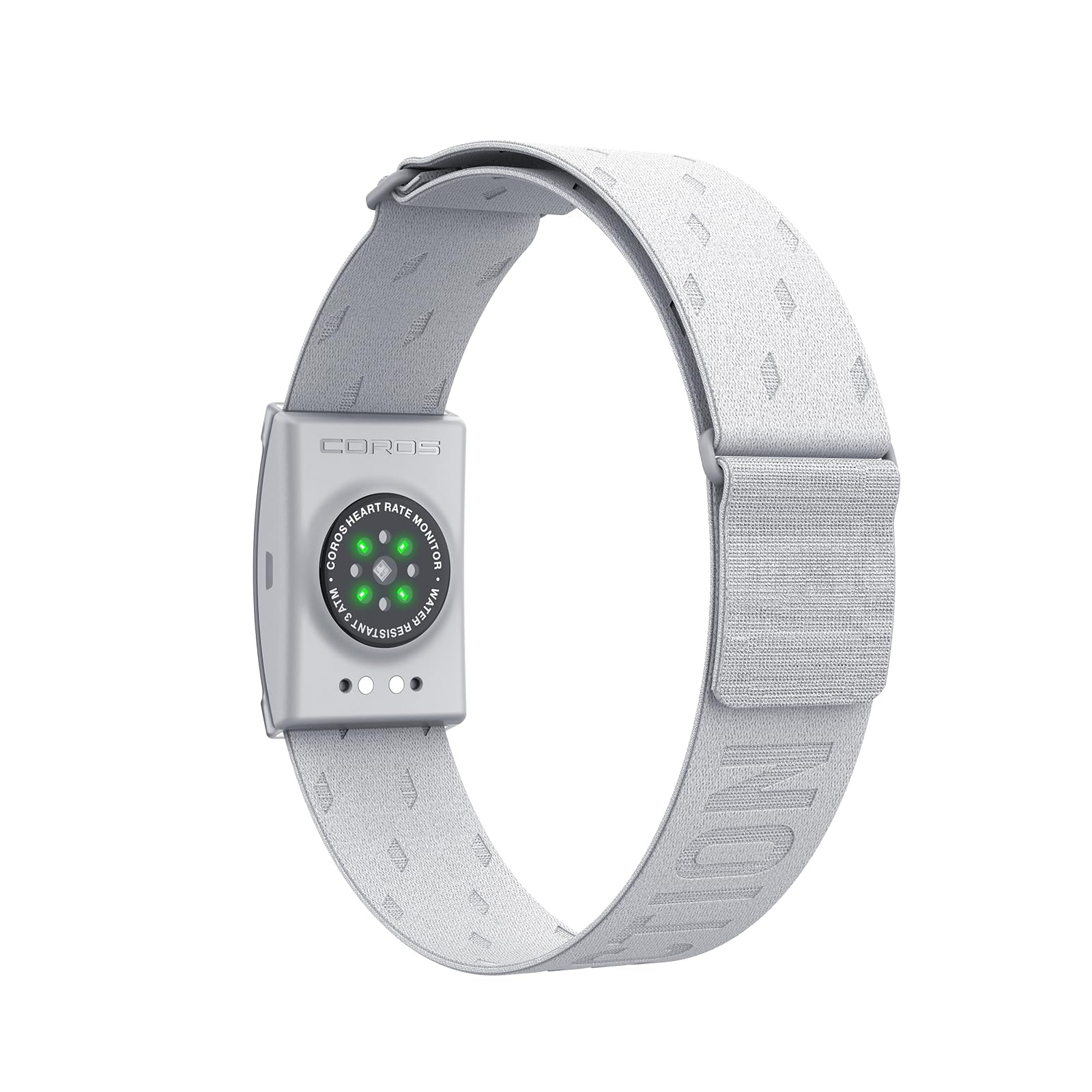
COROS HRM Armband

85 /100
Peggy's Score Excellent

Key details

Battery
Rechargeable, 38 hours
Form Factor
Optical armband
Connectivity
Bluetooth only
Water Resistance
Sweat resistant
Check Details on Amazon

This armband's 38-hour rechargeable battery and native COROS pairing make it the convenient Bluetooth-only option among the armband picks in this roundup. The other armband in this set adds ANT+ and HRV/RR streaming; this COROS unit keeps the experience focused on Bluetooth and uses a comfortable slip-on band that fits arms measuring 9.4 to 16.9 inches.

Optical readings track close to chest-strap numbers during steady runs and interval training, and the band is easy to forget once it's on. Battery life stretches for weeks with regular training, while auto-wear detection preserves standby time between sessions. The optical sensor needs no chest-strap electrode gel, which cuts one more pre-run step. For runners who dislike the buckle-and-strap routine, the slip-on fit removes the usual pre-workout fuss.

This is the armband for COROS watch owners and Bluetooth-first athletes who want the convenience of an optical sensor without a chest strap. It doesn't output ANT+, so ANT+ gym equipment and older ANT+ sensors are outside its reach. The Bluetooth side covers COROS watches, Garmin Edge devices, and common fitness apps; inside the COROS app, the connection remains stable. The tradeoff is a narrower compatibility net, but it's a reasonable one for the right buyer.

💡 Charge it every few weeks and store it off-wrist; auto-wear detection handles standby on its own.

Pros

  • Optical readings track close to chest-strap accuracy during runs and training.
  • Pairs natively with COROS watches and other Bluetooth fitness devices.
  • Slip-on armband is easier to get into than a chest strap.
  • Rechargeable battery lasts weeks between charges with regular training.

Cons

  • Heart-rate data streams only while an activity is recording; there is no all-day casual wear display.
  • Pairing can require a retry in some Bluetooth apps, with data not arriving until the sensor is re-paired.
Our verdict

For COROS-first athletes who want a rechargeable armband instead of a chest strap, this is the fit.

Check Latest Price
7

Sports-Bra Users

Garmin HRM-Fit

82 /100
Peggy's Score Excellent

Key details

Battery
Replaceable, 1 year
Form Factor
Sports-bra clip
Connectivity
Bluetooth and ANT+
Water Resistance
Check Details on Amazon

The Garmin HRM-Fit clips onto a sports bra, removing the need for a chest strap for women who want a Garmin-connected heart rate monitor during runs and HIIT. It holds position through hard efforts, and HR data supports zone training and lactate threshold work. Running dynamics are included, which is uncommon in a clip-on design. Chafing can occur where the clip sits, and lying on the stomach can press the sensor into the chest. It also only fits medium/high-support sports bras, narrowing the audience to Garmin owners who want a clip-on instead of a chest band.

Pros

  • Pairs quickly with Garmin watches for immediate heart rate readings.
  • Stays secure on supportive bras during runs and HIIT.
  • HR data tracks well for zone training and lactate threshold tests.

Cons

  • Premium price for a niche clip-on accessory.
  • A unit may arrive with a dead battery or not register data on alternate bras.
Our verdict

Worth considering if you're a Garmin runner who wants running dynamics without the chest strap; this clip-on serves that specific need.

Check Latest Price
8

Budget Cyclists

CYCPLUS H1

80 /100
Peggy's Score Excellent

Key details

Battery
Rechargeable, 110 hours
Form Factor
Optical armband
Connectivity
Bluetooth and ANT+
Water Resistance
IP67
Check Details on Amazon

The CYCPLUS H1 pairs a 110-hour rechargeable battery with USB-C charging, Bluetooth 5.1, and ANT+ in a budget armband. That mix makes it attractive for cyclists and rowers who want a watch-free heart-rate feed on their bike computer or rowing screen, and the LED zone indicator adds quick feedback without needing a phone.

The H1's best home is steady-state endurance sessions rather than high-intensity interval training. For someone who wants the convenience of an armband and doesn't need chest-strap-style response at sprint loads, the H1 offers a cost-effective way to get continuous HR data with a long time between charges.

Pros

  • Rechargeable 110-hour battery with USB-C charging lasts through long training weeks.
  • Dual-mode Bluetooth 5.1 and ANT+ connects cleanly with Garmin, Wahoo, and rowing machines.
  • Budget-friendly price for a rechargeable armband with dual wireless and LED zone feedback.

Cons

  • Velcro closure may loosen during mountain biking or vigorous arm movement.
  • Optical HR signal can pause for a moment during hard intervals.
Our verdict

For a budget cyclist or rower doing steady endurance work and wanting USB-C, ANT+, and a long-lasting armband, the H1 is a practical buy.

Check Latest Price
9

Budget Garmin

POWR LABS HRM

81 /100
Peggy's Score Excellent

Key details

Battery
Replaceable, 400 hours
Form Factor
Chest strap
Connectivity
Bluetooth and ANT+
Water Resistance
IPX67
Check Details on Amazon

After the initial handshake, the strap holds its connection across Garmin, Peloton, and Wahoo apps over Bluetooth and ANT+, and the soft band stays comfortable on longer sessions without the chafing that cheaper straps can cause. Accuracy tracks close enough to pricier monitors for steady-state training. Battery life can come up short in some units, and the coin-cell door can be stubborn; the 'zero connection headaches' claim also overstates an experience that includes occasional pairing hiccups. That leaves it as a practical spare for Garmin watch owners who want a comfortable second strap without the premium price.

Pros

  • Soft strap stays comfortable on long rides without chafing.
  • Bluetooth and ANT+ pairing works with Garmin, Peloton, and Wahoo apps.
  • Readings track closely enough to pricier straps for steady-state sessions.

Cons

  • Heart rate can occasionally read low or jump during interval changes.
  • Swimmers should choose a fully waterproof strap; this model is rated for sweat, not pool sessions.
Our verdict

This works best as a secondary strap for Garmin or Peloton users who want a soft band for indoor rides and gym sessions.

Check Latest Price

How to Choose

Connectivity Protocols

Chest straps and armbands transmit heart rate over Bluetooth, ANT+, or both. Bluetooth is what most phones and apps use, while ANT+ is common on Garmin watches, bike computers, and gym equipment. A monitor with both protocols covers the widest range of devices.

The catch is that pairing through the phone's Bluetooth settings instead of the fitness app creates dropouts. Always pair inside the app you train with, and check whether your device needs ANT+ before choosing a Bluetooth-only armband.

Chest Strap vs Armband

Chest straps place electrodes against the skin around the ribs, so they read the heart's electrical signal directly. That makes them faster and more stable when heart rate changes quickly during intervals or zone training. Armbands use optical sensors that measure blood flow, which is comfortable but can lag a few seconds during rapid effort changes.

For yoga and steady gym work, an armband is enough for casual tracking. If you train by heart-rate zones, do interval sessions, or want running dynamics from a Garmin watch, the chest strap is the safer tool.

Battery Type and Life

Coin-cell straps like the Polar H10 and COOSPO H6 run for roughly 300-400 hours before you swap a CR2025 or CR2032. Rechargeable models need charging every few weeks or days, depending on use.

The practical trade-off is habit: rechargeable monitors avoid battery purchases but add another charging routine. For a daily-use gym monitor, rechargeable is convenient; for a backup that sits in a gym bag, a coin-cell strap's longer shelf life is more practical.

Water and Sweat Resistance

Sweat is the bigger enemy for indoor trainers because salt and moisture degrade sensor contacts over time. Look for at least IP67 for gym work. IP68 adds immersion protection for most armbands.

For swimming, choose a chest strap that is explicitly waterproof. Most optical armbands are not built for pool use.

Strap Fit and Cleaning

Chest straps need firm skin contact, so a loose fit causes erratic readings or dropouts. Textile straps are comfortable but should be rinsed after use because dried sweat reduces conductivity.

Armbands are easy to position but can slide during dynamic movement or interfere with floor poses. Cleaning matters too: hand-wash a textile strap after heavy sessions, and wipe optical bands down after each workout.

Frequently Asked Questions