9 Best Exercise Equipment Mat in 2026: Thick Mats That Protect

Find the best exercise equipment mat for treadmills, bikes, and rowers — and learn which thickness and material protects floors without tearing or odor.

Home gym buyers often discover after setup that 'heavy-duty' equipment mats vary widely in what they deliver. Some are thick enough to absorb treadmill vibration; others are little more than a printed floor protector. The meaningful difference comes down to material and thickness, not the label on the box.

A bike-specific 30x60 mat fits a spin bike cleanly but leaves the front and rear of a full-size treadmill exposed. A longer 72-to-90-inch mat covers more gear but takes up more floor space. Choosing between compact coverage and full footprint matters more than any brand badge.

This guide sorts out those trade-offs by matching mats to real equipment types, with an emphasis on 6mm-or-thicker construction and materials that hold up to years of sweat, weight, and movement.

1

Best Overall

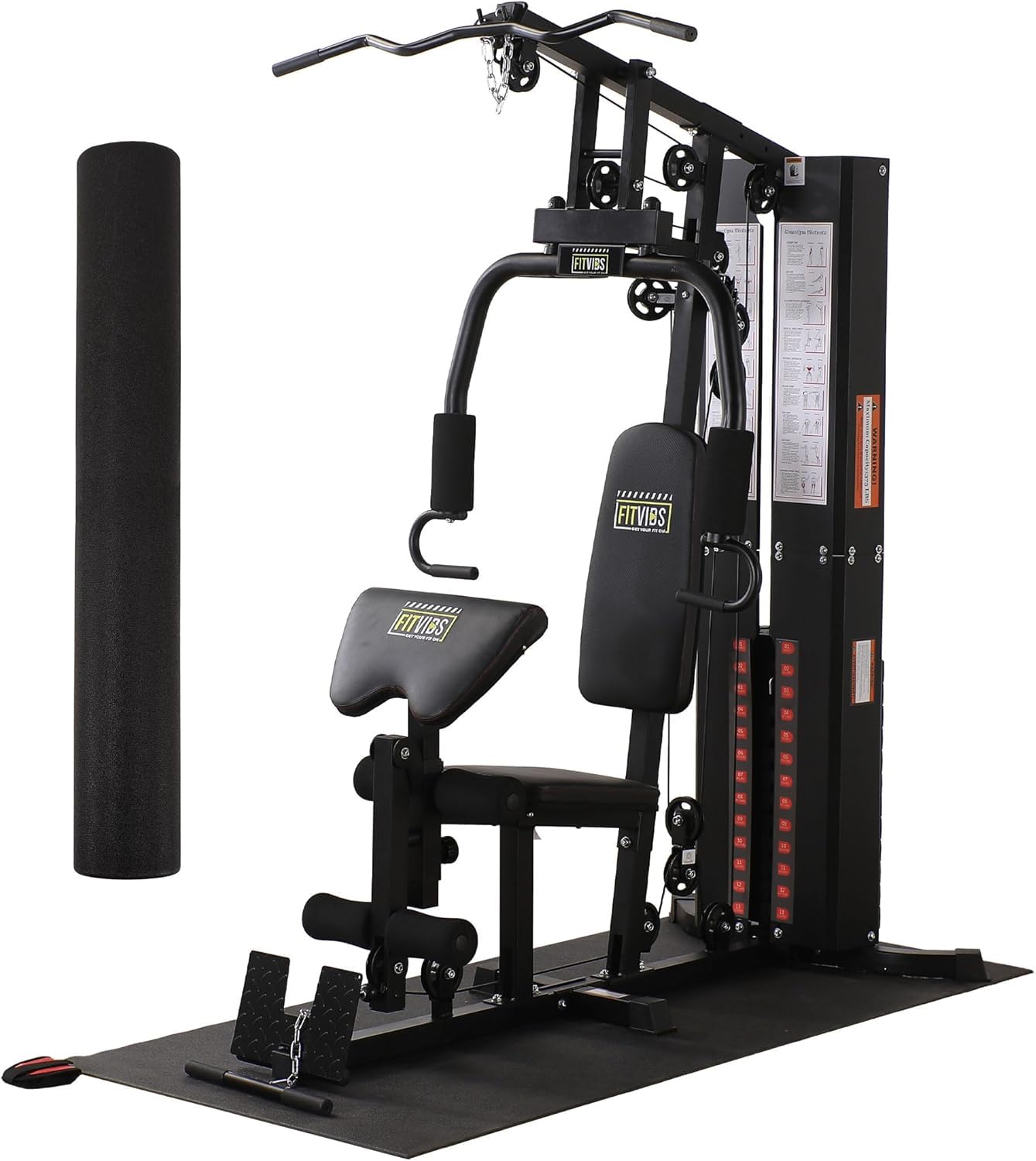
Fitvids 1/4" Equipment Mat

95 /100
Peggy's Score Outstanding

Key details

Material
Rubber, PVC-free
Footprint
36 x 78 in
Mat Thickness
0.25 in
Non-Slip Stability
Slip-resistant surface
Check Details on Amazon

The Fitvids mat uses a PVC-free rubber surface that stays flat under standard treadmills, exercise bikes, and ellipticals. The 36x78-inch footprint gives enough coverage for a mixed home gym without excess overhang. High-density rubber absorbs equipment vibration and protects wood, tile, or carpet from damage.

This mat is the right fit for owners of standard treadmills and exercise bikes who want one mat for a multi-equipment room. The 0.25-inch rubber handles these machines comfortably; it is not a replacement for a thicker pad under industrial-strength equipment. Buyers with a compact bike-only space may find the 78-inch length larger than needed.

Pros

  • Covers standard treadmills and bikes without overhang; one mat handles a multi-equipment setup.
  • High-density rubber absorbs vibration and holds up under typical home equipment.
  • Protects wood, tile, and carpet from equipment damage and sweat stains.

Cons

  • The 1/4-inch density can be less forgiving for extremely heavy machines, with less cushioning than thicker mats.
Our verdict

For a standard home gym, this mat covers the essentials: broad equipment fit, PVC-free rubber, and floor protection at a fair price.

Check Latest Price
2

Best for Spin Bikes & Trainers

CyclingDeal Bike Trainer Mat

96 /100
Peggy's Score Outstanding

Key details

Material
Soft PVC
Footprint
30 x 60 in
Mat Thickness
7 mm / 0.27 in
Non-Slip Stability
Anti-slip texture both sides
Check Details on Amazon

The CyclingDeal Bike Trainer Mat uses a 30x60-inch, 7mm waterproof PVC surface to keep spin bikes and smart trainers stable. It sits flat on hardwood, tile, and low-pile carpet, and its anti-slip texture holds the bike base in place while protecting the floor from sweat and vibration. The compact footprint lets bike owners skip the overhang of a room-sized mat.

This is the mat for Peloton-style bike and smart trainer owners in small home gyms. It will not cover a full-size treadmill deck, so shoppers with treadmill coverage in mind should choose the wider all-equipment mat. Buyers extremely sensitive to PVC chemical smells may prefer a PVC-free option.

Pros

  • Holds up well under spin bikes and trainers.
  • Stays stable on carpet and hard floors.
  • Thick enough to protect wood floors without adding bulk.

Cons

  • New PVC smell can be noticeable for the first few days.
Our verdict

For spin bike and smart trainer owners, this compact mat is a cost-effective floor shield.

Check Latest Price
3

Best Extra-Length Coverage for Large Machines

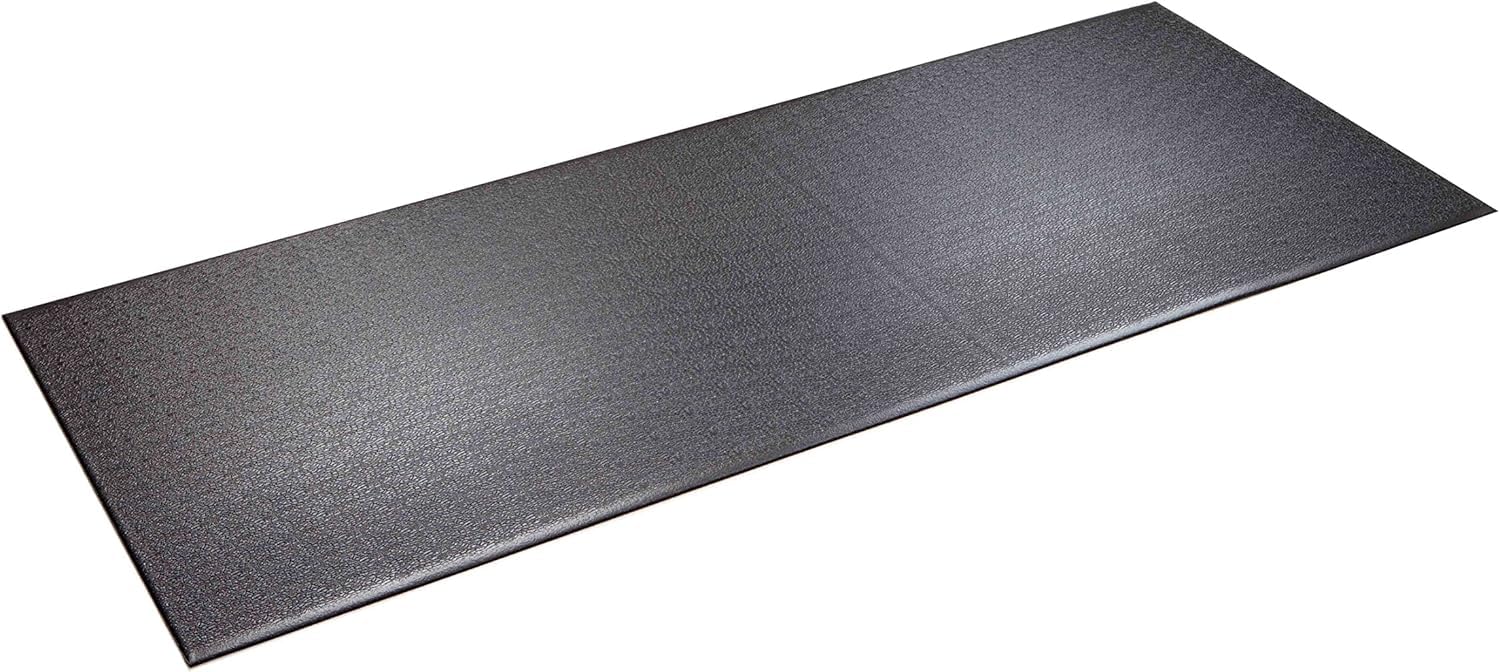
SuperMats 12GS 36x90 Mat

95 /100
Peggy's Score Outstanding

Key details

Material
Vinyl composite
Footprint
36 x 90 in
Mat Thickness
0.25 in
Non-Slip Stability
Textured non-slip surface
Check Details on Amazon

A made-in-USA 36x90-inch vinyl mat extends past long equipment decks, so full-size treadmills, ellipticals, and rowers get floor protection without overhang. The textured non-slip surface keeps machines stable, while the 0.25-inch profile stays light enough to move for cleaning.

This is the pick for buyers with long-deck machines on hardwood or tile who want sweat and scratch protection. The vinyl surface can tear when dragged or contacted by pets and sharp objects, so keep the mat under stationary equipment and clear of claws. It is not a thick rubber gym tile substitute, but for stationary placement the long coverage is worth the tradeoff.

Pros

  • The 36x90 footprint covers full-size treadmills, ellipticals, and rowers without overhang.
  • Protects hardwood and tile from workout sweat, scratches, and everyday wear.
  • Delivers large-format floor protection at a cost-effective price for the coverage.

Cons

  • The 0.25-inch profile is thinner than the 'heavy-duty' label implies.
Our verdict

For full-size treadmill, elliptical, or rower owners, the 36x90 footprint covers floor space that shorter equipment mats leave exposed.

Check Latest Price
4

Premium Peloton-Specific Mat

Crostice 6mm Peloton Mat

95 /100
Peggy's Score Outstanding

Key details

Material
ECO PVC
Footprint
30 x 60 in
Mat Thickness
6 mm
Non-Slip Stability
Textured non-slip both sides
Check Details on Amazon

This mat is the tailored bike-first option in the set: 6mm eco-PVC, 30x60 inches, with textured non-slip surfaces that hold position on low-pile carpet and hard floors. The finish looks and feels more polished than the standard 30x60 bike mat, and the dimensions match Peloton-style frames with room to spare.

It suits Peloton owners who want a precise, stable footprint and a premium eco-PVC surface. The 30x60 size is bike-optimized, so it will not fully cover a full-size treadmill; buyers with mixed equipment should look at a broader 36x78 mat.

Pros

  • Well-made 6mm eco-PVC surface with a premium finish.
  • Precise 30x60 dimensions match Peloton-style frames with room to spare.
  • Textured both sides keeps it stable on carpet and hard floors.

Cons

  • Premium pricing overshoots shoppers who only need basic floor protection.
Our verdict

This is the tailored option for Peloton owners who want a stable, polished mat with a precise fit.

Check Latest Price
5

Budget Pick for Standard Equipment

Marcy Fitness Equipment Mat

93 /100
Peggy's Score Outstanding

Key details

Material
EVA foam
Footprint
60 x 36 in
Mat Thickness
0.25 in
Non-Slip Stability
Non-slip surface
Check Details on Amazon

The Marcy mat's 60x36-inch EVA surface covers the footprint of standard treadmills and exercise bikes while absorbing a good share of vibration. The 0.25-inch foam is light enough to roll up for cleaning, and the non-slip top keeps equipment planted during workouts. This mat suits home gyms on hardwood or tile where equipment is positioned once and stays put. EVA foam is softer than PVC or rubber, so dragging a treadmill or bike across the surface can tear it — lift machines to reposition. The budget price and easy-to-clean surface make it a sensible pick for standard home machines.

Pros

  • Good value for money.
  • Works well under treadmills and exercise bikes.
  • Protects floors from scratches and dents.

Cons

  • Cycling cleats can gouge the EVA surface, making the mat a real boundary for riders who wear cleats.
Our verdict

For standard machines that stay parked on hard floors, this mat covers the floor-protection job without the rubber-category price.

Check Latest Price
6

Best Value for Rowers & Standard Machines

Amazon Basics Treadmill Mat

94 /100
Peggy's Score Outstanding

Key details

Material
High-density PVC
Footprint
72 x 30 in
Mat Thickness
0.3 in
Non-Slip Stability
Non-slip, wipe-clean surface
Check Details on Amazon

With 0.3-inch thickness and a 72x30 footprint, this mat gives rowers a long, narrow target that extends past the rails while still protecting hardwood under compact treadmills. Compared with the top pick's wider 36x78 rubber sheet, this one narrows the focus to rowing rails and smaller treadmill decks. The high-density PVC surface stays put during workouts and wipes clean.

Best for rower owners who want length without extra width, and for compact-to-standard treadmills in a value-focused home gym. People highly sensitive to PVC odor should let a new mat air out before first use.

Pros

  • Well-constructed for the price, with a thick 0.3-inch profile that cushions equipment and floors.
  • 72-inch length extends past rower rails and standard treadmill decks.
  • Stays put on hardwood and wipes clean between workouts.

Cons

  • A mat can tear while unrolling or during the first weeks of use.
Our verdict

For rowers and compact treadmills, this is a cost-effective way to protect hardwood while keeping a narrow footprint.

Check Latest Price
7

Light Treadmills, Bikes

Sunny Health & Fitness Mat

93 /100
Peggy's Score Outstanding

Key details

Material
PVC foam
Footprint
79 x 36 in
Mat Thickness
4.2 mm / 0.16 in
Non-Slip Stability
Slip-resistant textured surface
Check Details on Amazon

Multiple size options make it easy to cover compact walking pads, bikes, and small home gym footprints. The 4.2mm foam is thinner than comparable mats, so it suits light equipment rather than heavy full-size treadmills. For those machines, it protects hard floors and absorbs vibration.

Pros

  • Multiple size options cover compact walking pads, bikes, and tight home gym corners.
  • Fits under small treadmills and bikes with minimal overhang.

Cons

  • On smooth hard floors, the mat can slide when mounting or dismounting exercise bikes.
Our verdict

Works for under-desk treadmills and exercise bikes on hard floors, provided you keep it away from heavy full-size treadmills.

Check Latest Price
8

Large Treadmills, Bikes

MOTIONTEX Fitness Equipment Mat

95 /100
Peggy's Score Outstanding

Key details

Material
Recycled PVC
Footprint
84 x 36 in
Mat Thickness
0.11 in
Non-Slip Stability
Non-directional slip-resistant texture
Check Details on Amazon

This low-profile mat delivers broad coverage for bikes, ellipticals, and compact treadmills, and its non-slip texture stays put on carpet or hard floors. At 0.11 inches, it is the thinnest in this set, so heavy treadmills needing real cushioning should move up a tier. Budget gyms that prioritize floor protection over shock absorption get a large mat for little money.

Pros

  • Broad 84x36-inch footprint protects floors under treadmills and bikes without adding height.
  • Fits Peloton and other bikes well.

Cons

  • Very heavy treadmills may need a thicker pad than the 0.11-inch profile provides.
Our verdict

For a carpeted gym where a no-height floor shield is the priority, the low price and wide coverage are the draw.

Check Latest Price
9

Bikes, Small Treadmills

Cycleclub 6mm Bike Mat

94 /100
Peggy's Score Outstanding

Key details

Material
PVC
Footprint
60 x 30 in
Mat Thickness
6 mm / 0.23 in
Non-Slip Stability
Anti-slip texture both sides
Check Details on Amazon

Compact 6mm PVC mat with a clean 30x60 fit for Peloton-style bikes and small walking treadmills. Anti-slip texture holds position and protects floors from sweat and scratches. Full-size treadmill owners should choose a longer rubber mat; under trainers or cleats, the PVC can rip. That durability gap leaves the dedicated spin bike mat in this guide the better call for heavy trainer use.

Pros

  • The 6mm profile creates a stable, non-slip base under bikes and compact treadmills.
  • A 30x60 footprint fits Peloton-style bikes with little excess in small rooms.

Cons

  • The PVC surface can rip under trainer use or cycling cleats, so heavy-duty rubber suits aggressive workouts better.
Our verdict

Works best as a low-cost floor layer under a spin bike or compact walking treadmill for renters and small-space setups.

Check Latest Price

How to Choose

Mat Thickness

Thickness is the first spec most shoppers check, but numbers can mislead. A 4.2mm mat looks close to a 6mm mat on paper; under a heavy treadmill, the thinner foam compresses, transfers impact to the floor, and can leave permanent dents in wood or tile.

The practical threshold is 6mm. At that thickness, high-density PVC or rubber absorbs vibration and distributes the machine's weight instead of pressing through to the floor. If you have a compact walking pad, a 4mm mat can work; for full-size equipment, choose 6-7mm.

Footprint and Dimensions

Bike-specific mats are usually 30x60 inches, while treadmill mats run 36x78 inches or longer. Choose the footprint based on the machine's actual contact points, not the brand name.

A bike mat that ends at the midpoint of a treadmill deck leaves the front and rear feet exposed, which defeats the purpose. A 36x90 mat covers long decks and rower rails, but it takes up more floor space and can be heavier to move. Measure the equipment's full length and add at least two inches on each side.

Material

The material controls durability, odor, and how the mat handles sweat. PVC is the most common because it is waterproof, inexpensive, and easy to wipe down; the tradeoff is that some PVC mats release a chemical smell for the first week.

Rubber and PVC-free mats avoid most of that odor but often cost more. EVA foam is softer and lighter, which makes it easier to move, yet it tears more easily if equipment is dragged or stepped on with cleats. Vinyl sits in between: it resists sweat but can be punctured by sharp objects.

Non-Slip Stability

A mat needs to stay put when you mount a bike or step onto a treadmill. The key is how the underside interacts with the floor: textured surfaces grip hard floors, while smooth bottoms can slide on tile or laminate.

On carpet, a heavier mat with a non-slip texture on both sides stays more stable than a thin sheet. Look for anti-slip treatment on the underside, and avoid placing a slippery mat on top of another smooth surface.

Odor and Off-Gassing

New PVC mats often smell because of residual plasticizers and manufacturing compounds. The odor is strongest in the first few days and usually fades with air circulation.

If you are sensitive, choose a rubber or PVC-free mat from the start. You can also unroll the mat in a garage or well-ventilated room for two to three days before putting equipment on it.

Frequently Asked Questions