14 Best Gym Floor Mats of 2026: Stay Put and Protect Floors

Confused by 'non-slip' claims and separating puzzle seams? Find gym floor mats that protect floors, cushion workouts, and stay stable.

Most gym floor mats promise heavy-duty protection and non-slip grip, but the first few workouts often tell a different story. Puzzle seams pull apart during lateral moves, thin equipment mats let a hard floor through, and 'non-slip' can describe the top surface without saying anything about the tiles staying locked.

The category splits into two different tools: mats that cover a room and mats that go under machines. Puzzle tiles create a cushioned workout floor but depend on seam locks; a dedicated equipment mat protects one footprint and skips the seam problem entirely. Knowing which job you need done changes every other spec.

Measure the space, then decide where the pressure actually lands. A dropped dumbbell needs thick rubber-top support, a treadmill needs a dense waterproof slab, and repeated lateral movement needs seams that stay locked or no seams at all. Match the mat to that pressure point and the listing hype becomes background noise.

1

Best Overall

BalanceFrom 1/2-in 12-Tile Mat

93 /100
Peggy's Score Outstanding

Key details

Coverage
48 sq ft
Material
High-density EVA
Thickness
0.5 in
Dimensions
24 x 24-in tiles
Check Details on Amazon

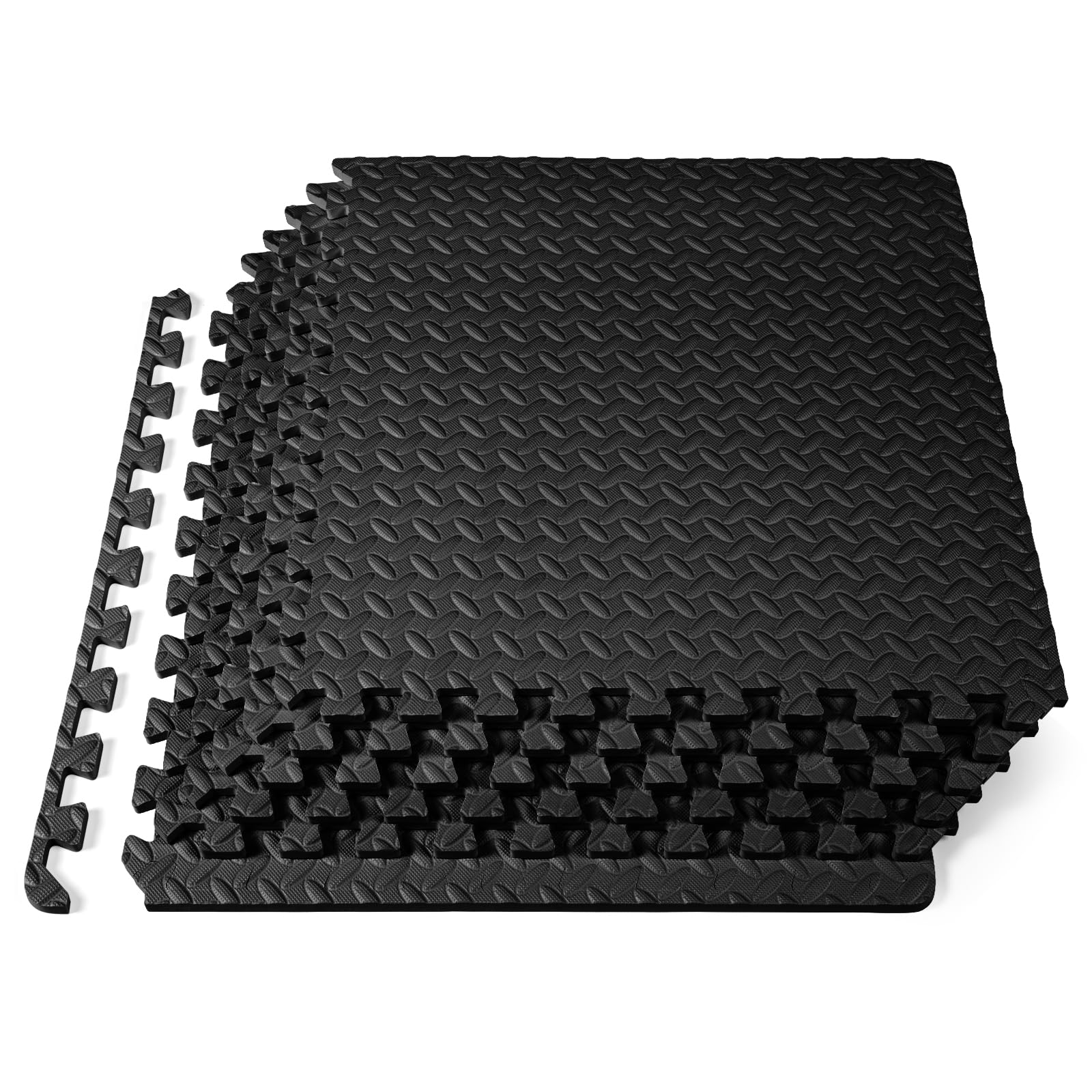
At 48 square feet, the BalanceFrom tile set covers a full workout zone in one box, and the 1/2-inch high-density EVA keeps hard concrete from coming through during floor exercises. During bodyweight circuits, stretching, and kneeling work, the padding noticeably reduces pressure on joints. The double-sided non-slip texture lets you use either face, while tool-free edges make the layout easy to pull apart and reconfigure when your gear changes. That coverage-to-cushioning balance is difficult to match at a budget-friendly price.

This is the right whole-room floor for value-focused home gym owners covering garage or basement floors with a medium-size workout area. The 12-tile, 48-square-foot format suits a small free-weight zone or circuit space, but a separate equipment mat is better when the machine's footprint is the whole point. Interlocking seams can separate during intense lateral movement, and the EVA can compress under heavy machines, so this suits bodyweight, dumbbells, and moderate training rather than a power rack or dropped Olympic weights. If your setup centres on a treadmill or bike, a dedicated equipment mat is the denser option; if you need a seamless, non-interlocking surface, a roll-out mat addresses that need.

๐Ÿ’ก Taping the underside of the puzzle seams or adding border pieces keeps the floor locked during lateral movements.

Pros

  • Cushions feet and knees during floor work and bodyweight training
  • Tool-free assembly and reconfiguration make layout changes quick
  • 48 square feet of coverage at a budget-friendly price

Cons

  • Under a heavy stationary machine, the EVA foam can develop indentations.
  • During lateral drills, the interlocking tiles can shift or come apart at the seams.
Our verdict

A full 48 square feet of cushioned home-gym floor at a budget-friendly price, with the caveat that it fits moderate training rather than heavy equipment.

Check Latest Price
2

Best Under Equipment

Fitvids 1/4-in Equip Mat

95 /100
Peggy's Score Outstanding

Key details

Coverage
32 sq ft
Material
PVC
Thickness
0.25 in
Dimensions
96 x 48-in mat
Check Details on Amazon

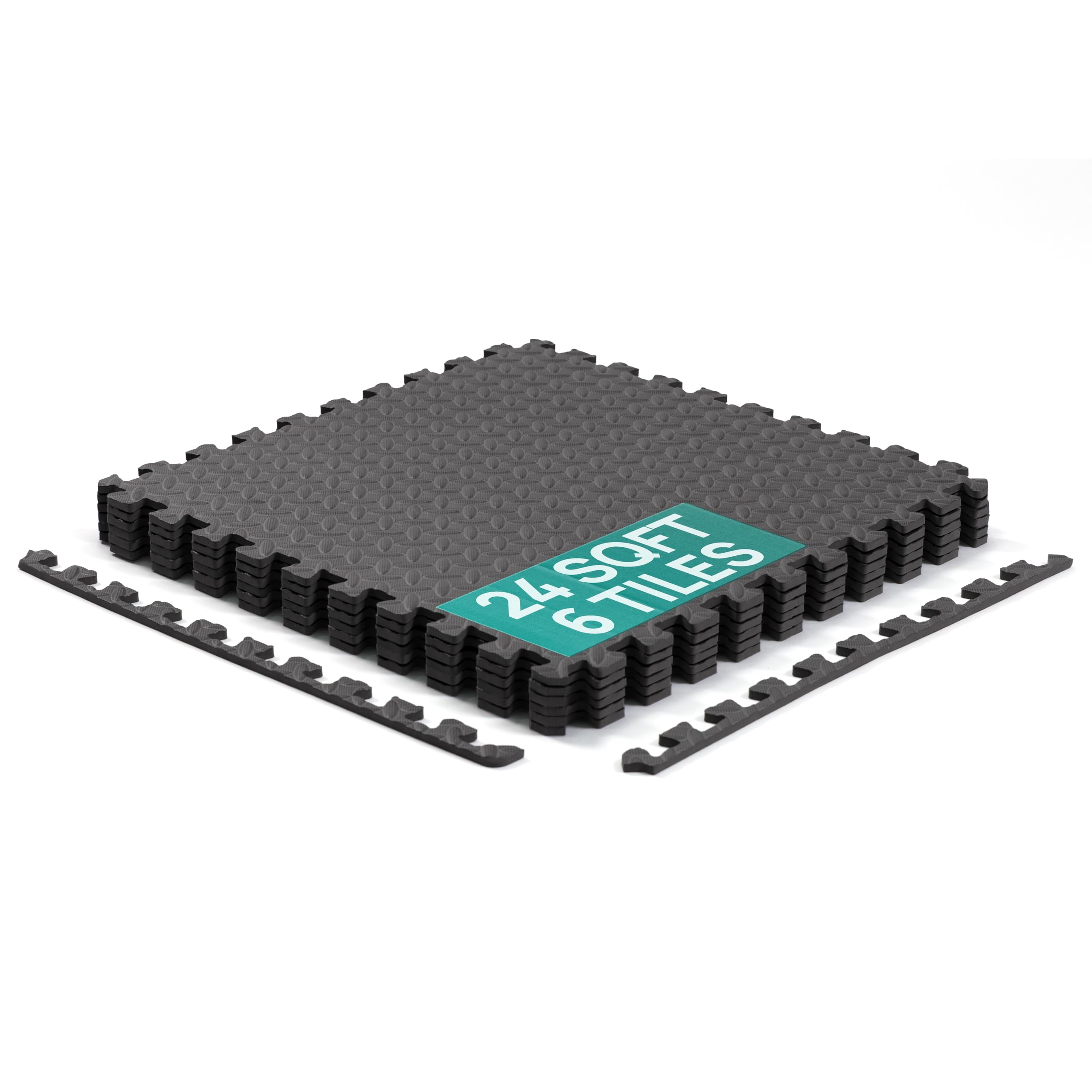
The Fitvids 1/4-in mat provides a dense, waterproof barrier that stays put under treadmills, ellipticals, and bikes. The 8 x 4 ft footprint covers a treadmill and a bike at once. Unlike a full-room EVA tile floor, this is a single seamless sheet, so there are no puzzle seams to shift or compress under heavy equipment. Its PVC surface wipes down quickly after sessions.

This mat suits anyone anchoring a machine or two on carpet, wood, or tile. The 1/4-inch profile is floor protection, not impact cushioning, so it's not a substitute for a padded workout floor. Keep it under equipment, not under a dropping barbell.

Pros

  • Broad 8 x 4 ft coverage puts one solid layer under a treadmill and a bike.
  • Non-slip base keeps equipment planted on carpet and hard floors.
  • Waterproof PVC surface wipes clean after sweaty sessions.

Cons

  • Leaves surrounding floor bare; this is a machine mat, not a full-room floor.
Our verdict

For a machine-focused home gym, the Fitvids is the floor protector to slide under the equipment and keep in place.

Check Latest Price
3

Best Seam-Free Workout Mat

Gorilla Mats 6x4 Mat

94 /100
Peggy's Score Outstanding

Key details

Coverage
24 sq ft
Material
ProFoam
Thickness
0.25 in
Dimensions
72 x 48-in mat
Check Details on Amazon

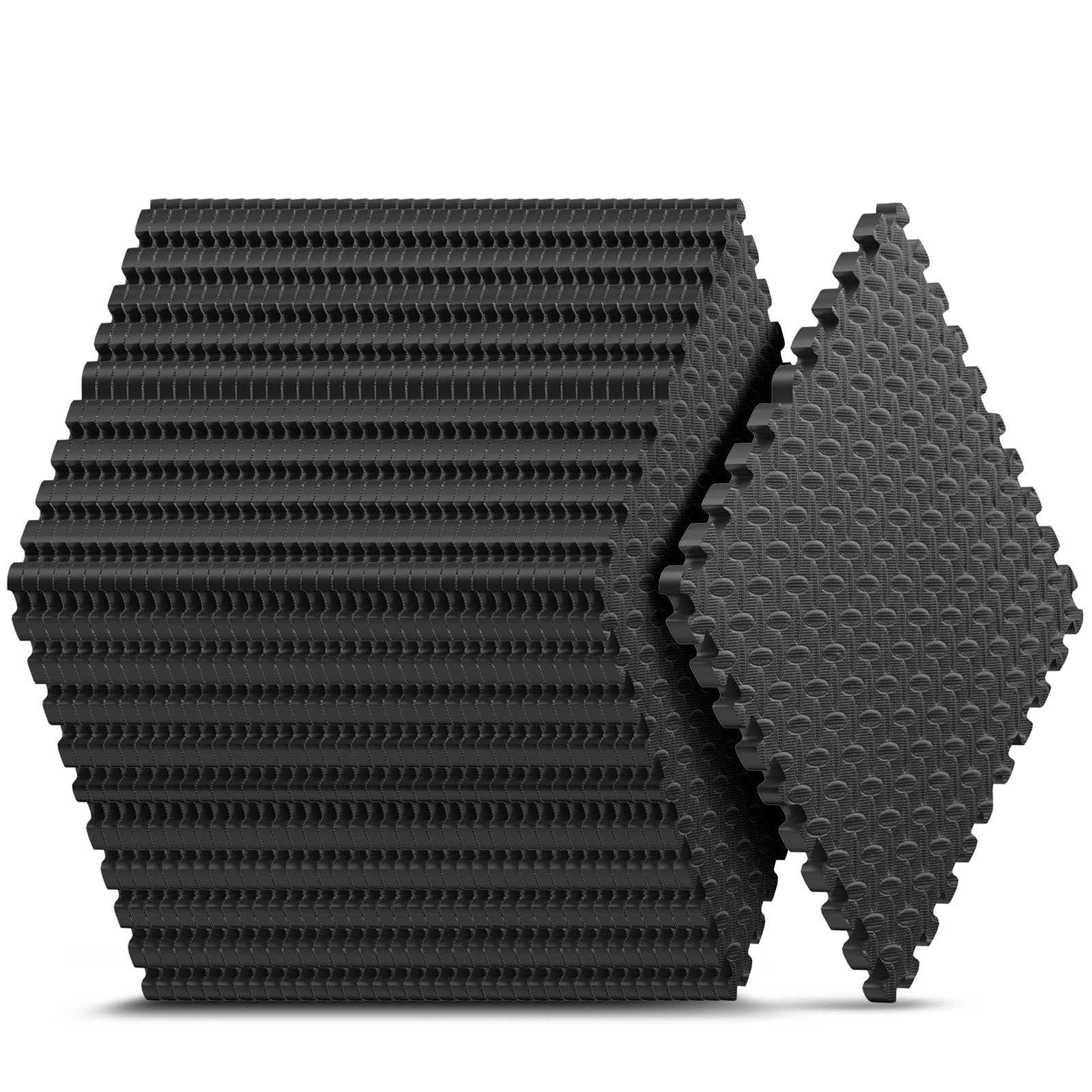
The Gorilla Mats 6x4 Mat uses a seam-free ProFoam surface with non-slip grip on both sides and an included carry bag, so a home workout floor unrolls, holds during cardio or kettlebell sessions, and stores in one piece. The 72 x 48-inch footprint covers full-body movements without lines or tile seams to catch a heel. Included straps make it simple to move the mat between rooms when the workout area changes.

This mat suits renters and multi-use home gyms where the workout area needs to disappear between sessions. Firm 1/4-inch ProFoam can feel hard for long floor stretches, so yoga-heavy routines may want an extra layer.

Pros

  • Durable ProFoam construction stands up to repeated workouts.
  • Non-slip top and bottom keep the mat planted on hard floors during dynamic movement.
  • 72 x 48-inch surface fits full-body workouts without seam interruptions.

Cons

  • Permanent whole-room garage flooring is outside the single 6x4-foot mat's footprint.
Our verdict

For renters who need a workout zone that disappears after use, the Gorilla Mats 6x4 Mat covers that job without the permanence of a tile floor.

Check Latest Price
4

Best for Heavy Weights

AIRHOP Rubber-Top 12pc

91 /100
Peggy's Score Outstanding

Key details

Coverage
48 sq ft
Material
Rubber top + EVA base
Thickness
0.56 in
Dimensions
24 x 24-in tiles
Check Details on Amazon

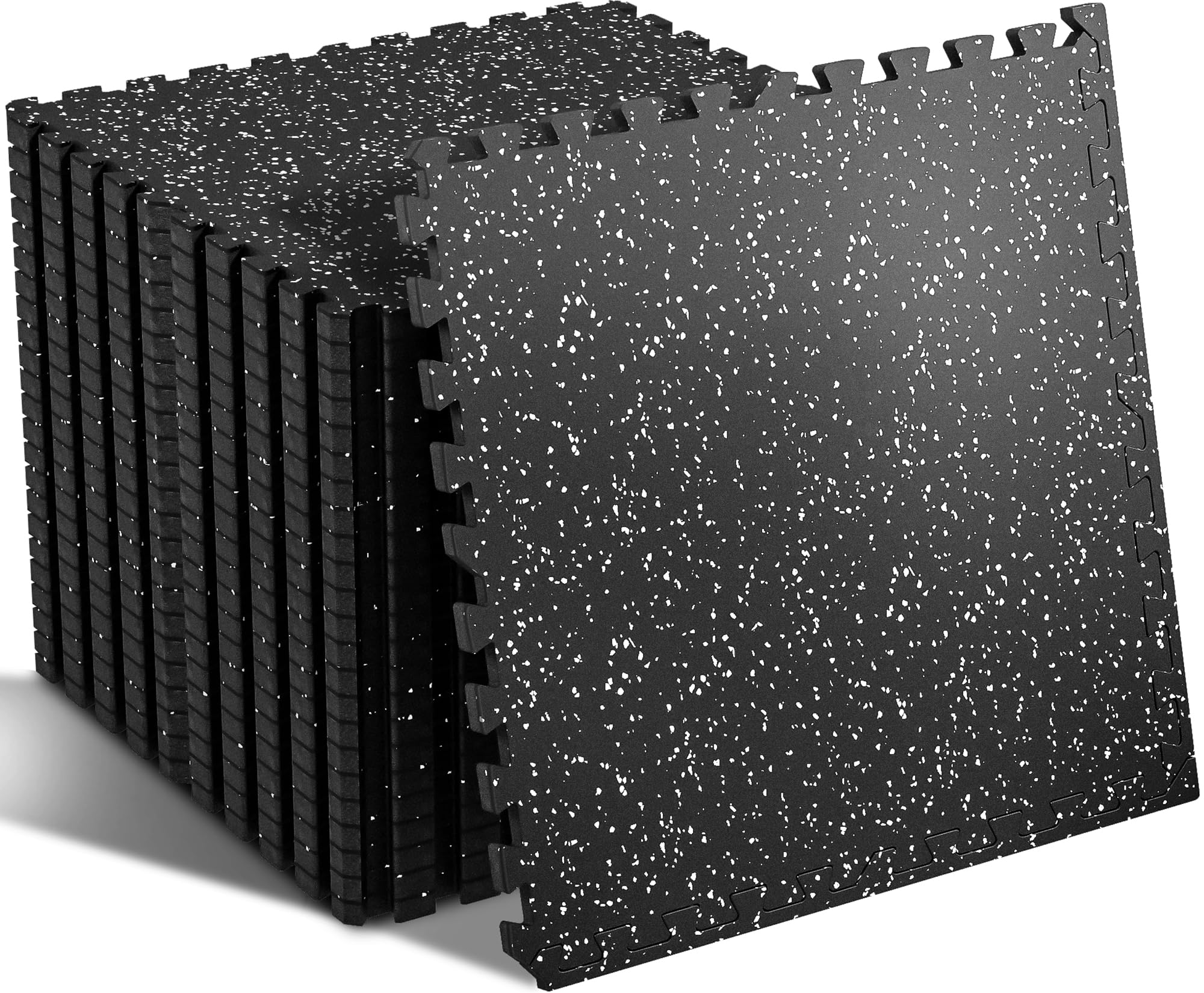
The AIRHOP pairs a 0.56-inch rubber top with an EVA base, giving it the impact resistance of a commercial gym floor without the installation hassle of solid rubber rolls. That rubber face is why it costs more than an EVA-only floor: dropped dumbbells land on a dense layer instead of foam, while the EVA base stays light enough to cut with a utility knife.

Pay the premium if your setup involves free weights, a rack, or barbell work in a garage or basement. The tile clicks together into a 48-square-foot floor, but this is not a budget option or a choice for smell-sensitive spaces: the rubber/chemical odor can be strong until the tiles air out.

Pros

  • Rubber top absorbs dropped weights and keeps the surface firmer than EVA-only tiles.
  • Carries heavy racks and barbell loads without the base compressing through the tile.
  • Interlocking tiles fit together quickly and cut cleanly for room edges.

Cons

  • During heavy deadlifts, a tile that sits slightly proud can catch a bar edge or break the smooth floor line.
Our verdict

This is the middle path: a floor that handles rack work and dropped weights while staying cuttable and interlocking.

Check Latest Price
5

Best Extra Cushioning

ProsourceFit 1-in Puzzle Mat

95 /100
Peggy's Score Outstanding

Key details

Coverage
24 sq ft
Material
High-density EVA
Thickness
1 in
Dimensions
24 x 24-in tiles
Check Details on Amazon

The 1-inch EVA build delivers the most cushioning among the interlocking tile options here, so floor exercises, stretching, and yoga on hard surfaces feel noticeably kinder on joints. Assembly is tool-free, and the puzzle edges stay aligned through regular workouts. The thick foam holds up under repeated use in home gyms and play areas.

This suits floor-based workouts, play zones, and bodyweight circuits more than dynamic, high-sweat sessions. On smooth hardwood or tile, the textured top can slide during quick lateral moves; concrete or garage floors give it better grip.

Pros

  • Thick 1-inch EVA padding cushions knees and elbows during floor work
  • Tool-free assembly and breakdown make it easy to rearrange or store
  • Dense foam holds up in home gym and play-area use

Cons

  • Coverage is only 24 sq ft
Our verdict

The extra inch of padding is the reason to choose this tile over the slimmer interlocking options.

Check Latest Price
6

Best Extra-Large Roll-Out

GXMMAT 6-ft Wide Mat

94 /100
Peggy's Score Outstanding

Key details

Coverage
Up to 96 sq ft
Material
PVC/memory foam
Thickness
0.27 in
Dimensions
6-ft wide, 16-ft long
Check Details on Amazon

Unlike the top pick's interlocking tiles, this mat is one continuous 6-foot-wide sheet up to 16 feet long. It needs no assembly and has no seams to separate under lateral movement. That width gives jump-rope, plyo, and MMA sessions enough side-to-side room, while the double-sided non-slip texture holds on most floors. The PVC/memory-foam build has held up under frequent use.

This is a dedicated home-gym surface rather than a take-anywhere mat. Sweat can make the surface slick mid-session, which is easier to live with when the mat stays down in one room.

๐Ÿ’ก Keep a towel within reach and let the mat air-dry before rolling it up.

Pros

  • One seamless 6-foot-wide surface up to 16 feet long
  • Double-sided non-slip texture keeps the mat stable on most floors.
  • PVC/memory-foam build has held up under frequent cardio and MMA use.

Cons

  • At 7mm, the mat is thin under heavy treadmills or squat racks, so use a dedicated equipment pad.
Our verdict

For an uninterrupted, movement-heavy home gym, this wide mat is the practical alternative to tiling your workout room.

Check Latest Price
7

Budget Home Gyms

ProsourceFit 1/2-in Tiles

93 /100
Peggy's Score Outstanding

Key details

Coverage
24 sq ft
Material
High-density EVA
Thickness
0.5 in
Dimensions
24 x 24-in tiles
Check Details on Amazon

These budget 1/2-inch EVA tiles deliver cushioned floor protection and tool-free assembly for light workouts and play areas. The 24 sq ft footprint fits a compact corner better than a whole room, and interlocking seams can separate during quick lateral moves โ€” steady training is the stronger use case.

Pros

  • Cushioned 1/2-inch EVA tiles protect floors from light equipment and workout impact.
  • Tool-free interlocking assembly makes setup and room reconfiguration easy.

Cons

  • Surface grip can be weak on carpet or smooth floors, letting tiles slide during workouts.
Our verdict

A practical choice for a compact home gym corner or kids' play space, where the budget price and easy assembly matter most.

Check Latest Price
8

Light Equipment Protection

Sunny Health Equip Mat

93 /100
Peggy's Score Outstanding

Key details

Coverage
Varies by size
Material
PVC foam
Thickness
0.16 in
Dimensions
Up to 90 x 39.5-in
Check Details on Amazon

This inexpensive, waterproof PVC foam mat in sizes up to 90 x 39.5 inches handles bikes and walking pads well. The thin 4.2 mm build can deform under a heavy treadmill, so its ceiling is light to medium cardio gear. Renters who need a sweat-resistant floor guard for a single machine are the target here.

Pros

  • Protects floors beneath bikes and walking pads at a budget price.
  • Waterproof surface wipes down quickly after sweaty sessions.

Cons

  • May slide on carpet when mounting or dismounting; less of an issue on hard floors.
Our verdict

For a single bike or walking pad, this mat is a cost-effective floor guard without committing to a full gym floor.

Check Latest Price
9

Indoor Cycling Bikes

Cycleclub 6mm Bike Mat

94 /100
Peggy's Score Outstanding

Key details

Coverage
12.5 sq ft
Material
PVC
Thickness
0.23 in
Dimensions
60 x 30-in mat
Check Details on Amazon

Cycleclub's 6mm PVC mat targets one job: protecting floors under a Peloton, spin bike, or compact treadmill. The 60 x 30-inch footprint and double-sided anti-slip surface fit that role well. Durability varies, with occasional tearing possible if the mat is dragged or used under heavier equipment; this is a bike mat, not a full-room gym floor.

Pros

  • Fits under Peloton, spin bikes, and compact treadmills with a 60 x 30-inch footprint.
  • 6mm padding and non-slip surface protect hardwood and carpet from sweat and scratches.

Cons

  • If the mat is dragged or placed under a heavier machine, edge tears can occur in some cases.
Our verdict

For a single spin bike or compact treadmill on hardwood, the Cycleclub is a cost-effective way to keep sweat and scratches off the floor; treat it as a stationary equipment mat, not a room floor.

Check Latest Price
10

Budget Equipment Protection

Marcy 1/4-in Equip Mat

93 /100
Peggy's Score Outstanding

Key details

Coverage
19.5 sq ft
Material
EVA foam
Thickness
0.25 in
Dimensions
78 x 36-in mat
Check Details on Amazon

An inexpensive 78 x 36 inch EVA mat with a non-slip matte surface, this protects hard floors beneath a single treadmill, bike, or rower. It absorbs vibration and resists scratches, but its footprint is smaller than the 8-foot equipment mat in this roundup, and sharp contact from cleats or metal feet can tear the foam.

Pros

  • Shields hard floors from scratches and vibration under treadmills, bikes, and rowers.
  • Budget-friendly price for a mid-size mat that covers a single machine's footprint.

Cons

  • Thin EVA foam won't cushion heavy dropped weights or high-impact training.
Our verdict

For a single stationary cardio machine on hard floors, this mat covers the basics at a budget price.

Check Latest Price
11

Temporary Play Areas

BeMaxx 12.6-in 18pc Mat

89 /100
Peggy's Score Excellent

Key details

Coverage
18 sq ft
Material
EVA
Thickness
0.4 in
Dimensions
12.6 x 12.6-in tiles
Check Details on Amazon

Assembles without tools into a lightweight, movable EVA pad that cushions standing and kneeling in a workout corner or playroom. The 12.6-inch tile design creates seams at every edge, and 18 sq ft covers a compact zone rather than a full gym floor โ€” acceptable for temporary setups and light activity.

Pros

  • Assembles and reconfigures without tools, so the layout can be changed to fit new spaces.
  • EVA padding cushions standing and kneeling during light workouts or play.

Cons

  • Interlocking joints can shift apart during lateral movement, which limits dynamic exercise.
Our verdict

Use it where the setup is temporary and the movements are light โ€” a playroom or compact workout corner โ€” rather than as a permanent gym floor.

Check Latest Price
12

Flexible Home Layouts

Yes4All Puzzle Mat 24sqft

93 /100
Peggy's Score Outstanding

Key details

Coverage
24 sq ft
Material
EVA foam
Thickness
0.44 in
Dimensions
24 x 24-in tiles
Check Details on Amazon

These 24-inch EVA tiles bring double-sided texture and border pieces, so a home gym floor assembles with clean edges and can be reconfigured as equipment changes. Traction falls short of the top tile pick for dynamic exercises, which keeps it below that tier even though steady lifting and machine use are fine.

Pros

  • Interlocking tiles and included border pieces assemble into a clean-edged floor layout you can rearrange as equipment changes.
  • EVA tiles cushion workouts while protecting the floor underneath from scuffs and impact.

Cons

  • During lunges or jumping jacks, the surface can feel slippery.
Our verdict

If you're laying down a workout floor in a garage or basement and want border pieces for a finished look, this set fits.

Check Latest Price
13

Budget Multi-Use Floors

Nazhura 12-Pack Mat 48sqft

91 /100
Peggy's Score Outstanding

Key details

Coverage
48 sq ft
Material
EVA
Thickness
0.5 in
Dimensions
24 x 24-in tiles
Check Details on Amazon

At 48 sq ft and a budget price, this 0.5-inch EVA set gives a home gym or playroom a cushioned floor quickly. On hardwood the top can feel slippery, and seams can separate during lateral movement, so it suits lower-impact workouts and general multi-use spaces. Specs mirror the top pick, but seam stability is the tradeoff.

Pros

  • Covers 48 sq ft of cushioned flooring at a budget price for a home gym or playroom.
  • Half-inch tiles assemble without tools and wipe down easily.

Cons

  • On smooth hardwood, the surface can feel slippery underfoot.
  • Interlocking seams can separate during lateral movement, opening gaps in the floor.
Our verdict

Choose this for a low-impact home gym or playroom where a budget 48 sq ft cushioned floor is the priority.

Check Latest Price
14

Garage Gym Flooring

SUPERJARE Rubber-Top 12pc

90 /100
Peggy's Score Outstanding

Key details

Coverage
48 sq ft
Material
EPDM rubber top, EVA base
Thickness
0.56 in
Dimensions
24 x 24-in tiles
Check Details on Amazon

EPDM rubber-top tiles cover 48 sq ft, giving garage gyms a durable surface for light to moderate weight training. Interlocking seams can separate under treadmills, so this works best in a free-weight zone rather than under machines. That tradeoff keeps it below the premium rubber-top tile in this lineup.

Pros

  • Rubber top holds up under repeated dumbbell and barbell work.
  • Tiles snap together without tools, so installation moves quickly.

Cons

  • Initial rubber/chemical odor can be strong until the tiles air out.
Our verdict

A garage free-weight build is the right home for this tile set.

Check Latest Price

How to Choose

Thickness

Thickness controls how much force reaches the floor. A 1/4-inch mat catches sweat and protects a floor from a treadmill, but it does not absorb impact from a dropped dumbbell. A 1-inch EVA mat compresses under your body and cushions knees and elbows during floor work.

More give makes lifting less stable. For dropped weights, choose a firmer rubber-top tile around 1/2 inch; for floor work, 1-inch EVA protects joints better.

Coverage and Tile Count

Coverage determines whether you get a whole-room floor or a small island. A 48 sq ft set of 24-inch tiles creates an 8 x 6 foot zone; a 24 sq ft set makes a 4 x 6 foot strip. Equipment mats are sized to the machine, not the room.

Small tiles are the hidden trap. They look cheap, but 12.6-inch squares create more seams per square foot than 24-inch tiles, and every seam is a potential separation point.

Material: EVA vs Rubber vs PVC

Material decides whether the mat is a compression layer, an impact layer, or a waterproof barrier. EVA foam is soft, inexpensive, and fine under bodyweight work, but it compresses under heavy equipment. Rubber-top tiles stand up to dropped dumbbells and rack feet. PVC is a waterproof barrier for sweaty machines.

Rubber's trade-off is odor: fresh tiles can smell strong until the curing compounds air out.

Surface Grip and Seams

Surface grip and seam stability are not the same thing. A mat can feel grippy underfoot while its puzzle seams separate when you push sideways. 'Non-slip' usually describes the top layer, not the tile-to-tile connection.

For jumping jacks, lunges, or sprints, tape the underside of seams or choose a seamless roll-out mat. That is the difference between a stable floor and one that shifts mid-rep.

Size and Dimensions

Dimensions matter for the equipment footprint and the human swing space. A treadmill needs a mat that extends beyond the machine base; an 8 x 4 foot mat fits most. A 6-foot-wide roll-out mat adds room for jump rope but takes up more storage.

Measure the machine base and the workout path before choosing, not just the room size.

Frequently Asked Questions