11 Best Medicine Ball in 2026: Match the Ball Type to Your Training

Find the right medicine ball for slams, wall-ball drills, or core work — avoid the wrong-tool mismatch that leaves you with a bounce when you need dead weight.

Medicine ball, slam ball, and wall ball get used interchangeably, but in a yoga and gym routine they are three different tools. A no-bounce sand-filled ball is built for slams; a soft 14-inch ball is built for catching; a bounce-style rubber ball suits classic throws, twists, and core work. Pick the movement first, and the right weight follows.

The first decision is not brand or price — it is dead impact versus rebound. A bounce-style all-rounder gives you more moves for one ball, while a no-bounce deadweight ball forces you to reset every rep and earns its keep in conditioning circuits. Choose a slam ball for wall-ball catches and you get an unforgiving surface; choose a wall ball for floor slams and you damage the shell.

1

Best Overall

Amazon Basics 10-lb Med Ball

96 /100
Peggy's Score Outstanding

Key details

Diameter
9.3 in
Construction
Bounce rubber
Grip Texture
Rubber
Weight Options
10 lb
Check Details on Amazon

The 10-lb core sits evenly inside the 9.3-inch shell, so overhead throws and rotational twists release cleanly. The textured outer layer keeps a firm grip during sweaty sets, and the shell manages normal med-ball bounces and drops without issue. That balanced feel is what makes partner tosses and full-body circuits flow.

This is for a home-gym user who wants one weighted ball for partner tosses, core circuits, squats, and general conditioning. Its bounce-style character is what makes that single-ball setup work; high-rep 14-inch wall-ball catches belong to a soft wall ball.

Pros

  • Strong rubber shell handles normal throws, drops, and partner drills.
  • Balanced core gives a natural feel on overhead throws and rotational movements.
  • Grippy surface keeps the ball in hand during sweaty training.

Cons

  • Rubber odor can be noticeable on a fresh unit and may linger.
  • Repeated hard floor slams can stress the shell; use a no-bounce ball for that job.
Our verdict

A balanced 10-lb bounce-style ball at a budget-friendly price for classic med-ball training.

Check Latest Price
2

Best Slam Ball

Yes4All Slam Ball

95 /100
Peggy's Score Outstanding

Key details

Diameter
9.75 in
Construction
No-bounce sand
Grip Texture
Raised rubber
Weight Options
10-40 lb
Check Details on Amazon

The PVC sand-filled shell drops dead on impact, so slam-ball circuits move straight into the next rep without chasing a rebound. That no-bounce response separates it from the bounce-style all-rounder in this lineup; it is a dedicated slam and conditioning tool.

This fits CrossFit, HIIT, and strength athletes who want a no-bounce ball for slams, core work, and conditioning circuits. Sand can shift and make overhead lifts feel off-center, and the raised rubber-tile texture can be rough on bare hands — but the dodgeball-style grip stays secure with sweaty palms, and buyers who prefer that classic textured hold have a clear reason to pick it.

Pros

  • Drops flat for no-bounce slam and HIIT work.
  • Holds up to repeated floor slams with minimal wear.
  • Textured grip stays secure when hands get sweaty.

Cons

  • For wall-ball catch drills, the deadweight shell cannot replace a soft wall ball.
Our verdict

For slam-focused conditioning on a budget, this deadweight ball is the dedicated no-bounce option worth slotting into a home gym.

Check Latest Price
3

Best Wall Ball

ProSource Soft Wall Ball

93 /100
Peggy's Score Outstanding

Key details

Diameter
14 in
Construction
Soft stuffed
Grip Texture
PU leather
Weight Options
8 lb
Check Details on Amazon

The ProSource Soft Wall Ball gives you a 14-inch PU-leather catch surface with double stitching and a lifetime warranty, so high-rep wall-ball shots and partner tosses land softer than they would on a compact rubber ball. The stuffed shell cushions catches without bouncing off the wall like a hard rubber model.

This suits CrossFit athletes and home gym users doing high-rep wall-ball work, partner tosses, and core training. The premium price is reasonable for a soft 14-inch ball aimed at wall-ball-specific training, and the large surface makes it easier to corral on high-rep sets.

Pros

  • Soft 14-inch PU-leather shell makes repeated catches comfortable during wall-ball and partner tosses.
  • Double stitching supports regular wall-ball use without shell separation.
  • Cost-effective compared with other soft wall balls in the 14-inch class.

Cons

  • Weight fill can sit off-center in some units, which may make the ball bounce or spin inconsistently off the wall.
Our verdict

This is the wall-ball-specific pick for athletes who want a large, cushioned catch surface in a 14-inch format.

Check Latest Price
4

Best Tread-Grip Slam Ball

ProsourceFit Slam Ball

94 /100
Peggy's Score Outstanding

Key details

Diameter
9 in
Construction
No-bounce sand
Grip Texture
Treaded PVC
Weight Options
5-50 lb
Check Details on Amazon

The ProsourceFit Slam Ball is a tire-tread no-bounce specialist: the dead-weight PVC shell absorbs hard floor slams and wall slams without bouncing back at you, and the lifetime warranty backs its durability.

Strength athletes who want a secure grip during aggressive conditioning are the right audience. Depending on hand size and sweat level, the tread can feel rough or slick; gloves are a practical option for sensitive bare hands. This is not a soft catch-and-throw wall ball; leave high-rep wall-ball catches to the soft 14-inch wall ball. For no-bounce slams and core work, it covers the training this buyer is after.

Pros

  • Dead-weight PVC shell holds up to repeated hard floor and wall slams.
  • Weight balance feels steady for overhead slams and wall tosses.
  • Works well for strength and conditioning circuits without bounce interference.

Cons

  • Sand-filled core can shift enough to be noticeable during quick movements.
Our verdict

Slam-heavy trainees get a durable, no-bounce conditioning ball at a fair price; catch-and-throw athletes should look at the soft 14-inch wall ball instead.

Check Latest Price
5

Best Budget Slam Ball

Fitvids Slam Ball

93 /100
Peggy's Score Outstanding

Key details

Diameter
9 in
Construction
No-bounce sand
Grip Texture
Textured rubber
Weight Options
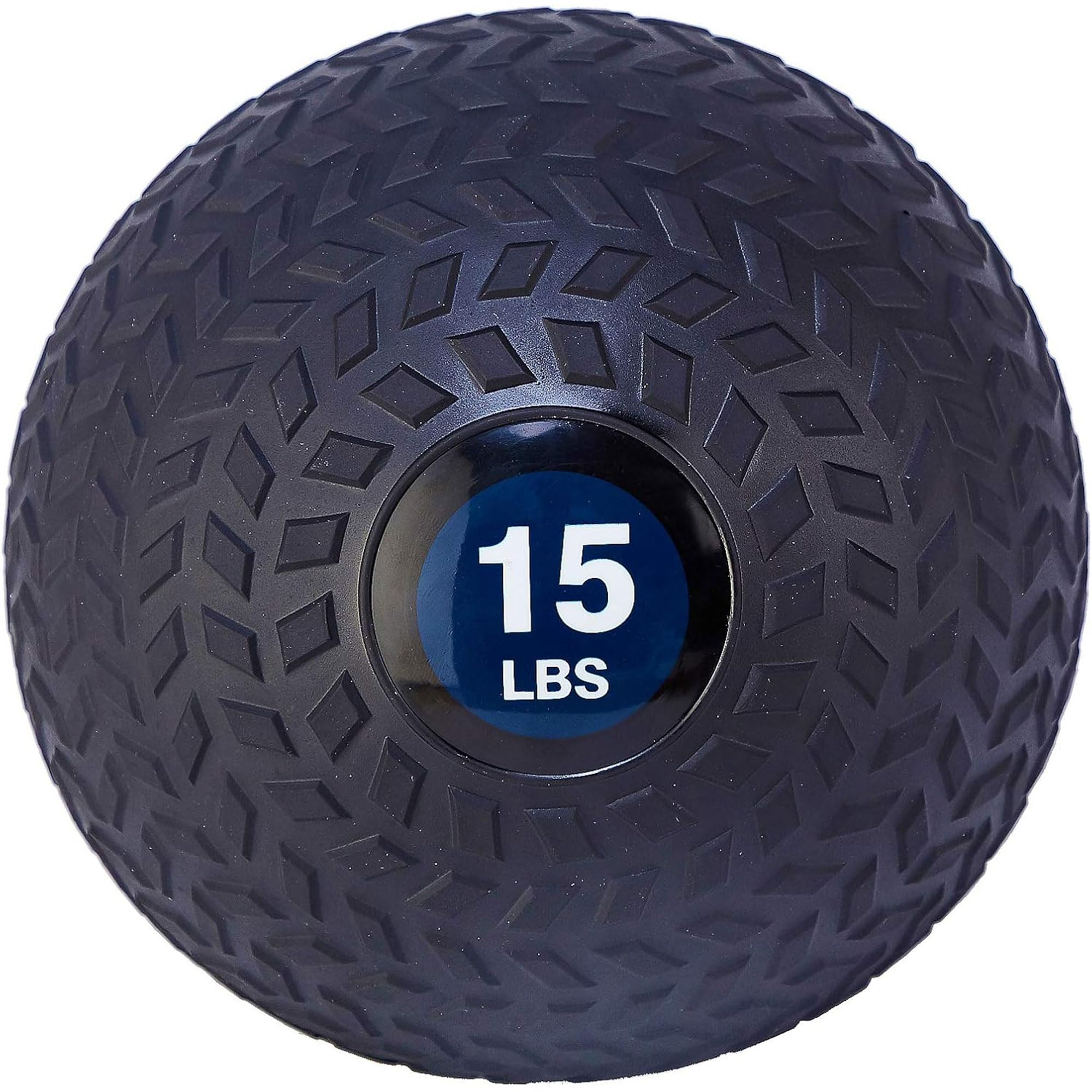
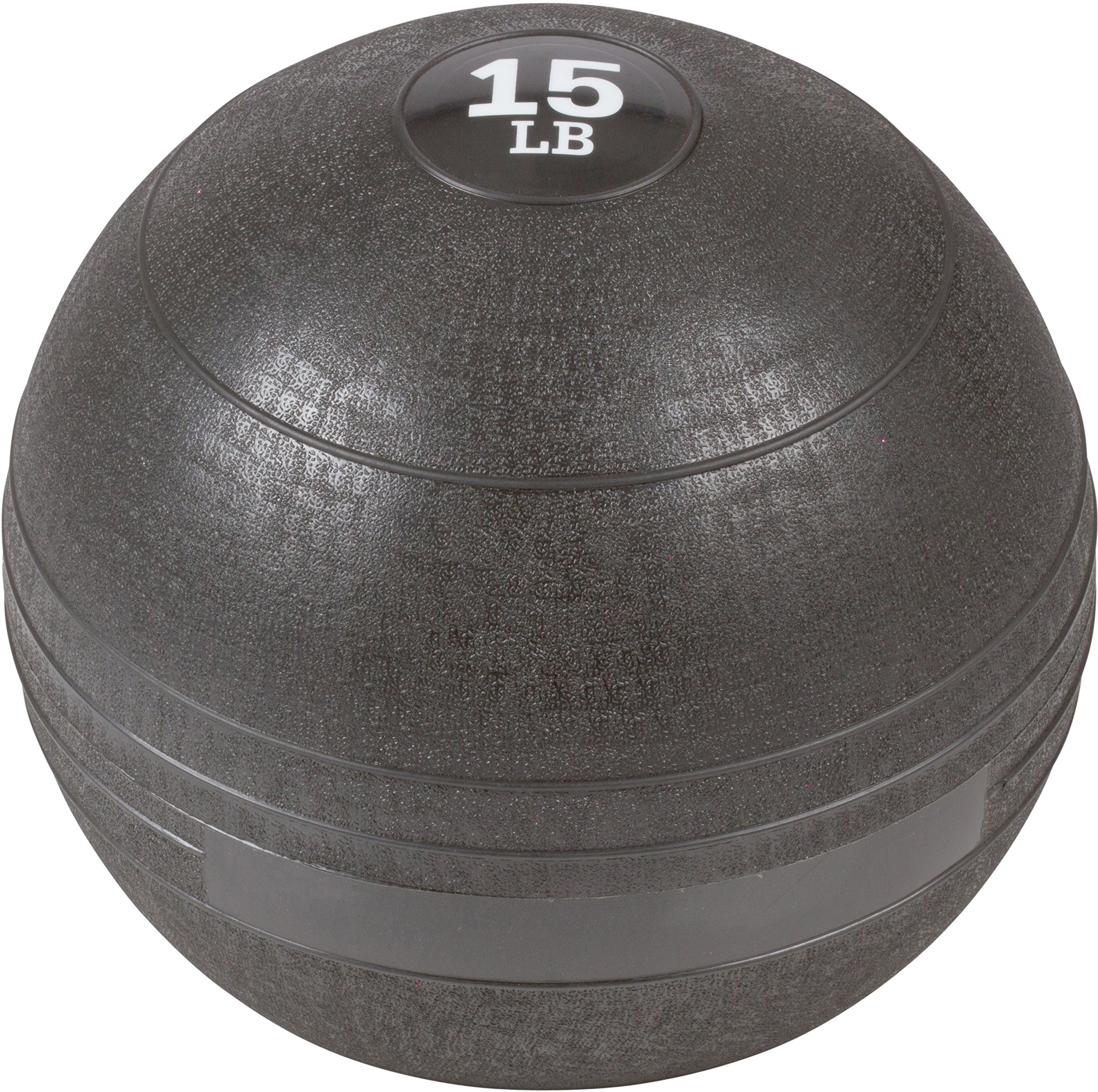
15 lb
Check Details on Amazon

The Fitvids slam ball pairs a 15-lb sand-filled shell with even weight distribution and a textured rubber grip, so floor slams stay dead and hands stay secure during HIIT circuits. A 2-year warranty is uncommon in this price tier. Unlike the lowest-cost alternatives, the fill stays balanced and the shell holds its shape under hard use.

This is for budget-minded beginners and home gyms that want a compact no-bounce ball for slams, throws, core work, and full-body conditioning. The 9-inch deadweight format is not a soft wall ball for high-rep catches.

💡 Gloves are a practical backup if the raised rubber texture feels rough on bare hands.

Pros

  • Sand-filled shell keeps weight balanced during slams and overhead throws.
  • Textured rubber grip stays secure in sweaty HIIT sessions.
  • Takes hard slams and holds its shape without becoming lopsided.

Cons

  • Advanced athletes who need 30 lb+ top-end weight will outgrow this 15-lb ball.
Our verdict

For slam-focused conditioning on a budget, this ball delivers balanced feel, a secure grip, and a 2-year warranty without the premium price.

Check Latest Price
6

Best with Dual Grips

ZELUS Med Ball with Dual Grips

94 /100
Peggy's Score Outstanding

Key details

Diameter
14 in
Construction
Bounce rubber
Grip Texture
Dual handles
Weight Options
10 lb
Check Details on Amazon

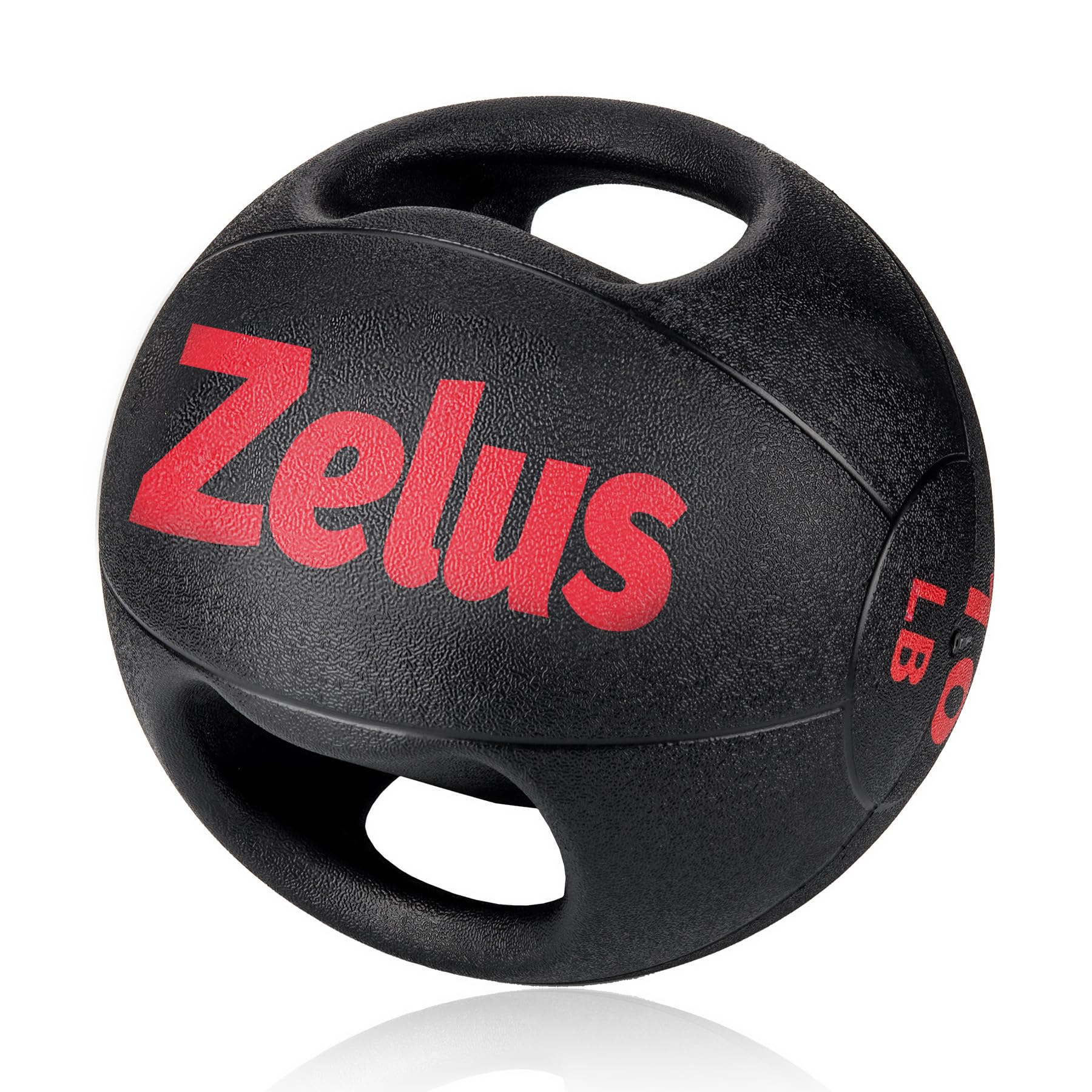
The dual anti-skid grips provide secure two-hand control that a classic handled med-ball lacks, and the 14-inch rubber shell is easy to hold at the chest, overhead, or between the knees. At 10 lb, it suits rotational twists, overhead holds, and mobility drills without feeling unwieldy.

The intended buyer is someone building a home-gym routine around controlled core and mobility sessions. Some units can carry a rubber/chemical smell despite the odorless claim, so sensitive noses should plan on airing it out before first use.

Pros

  • Dual anti-skid grips feel comfortable and secure for rotations and held positions.
  • The 14-inch rubber surface is easy to handle for home core and gym routines.
  • The 10-lb build feels balanced for controlled strength and mobility work.

Cons

  • Aggressive no-bounce floor slams belong to a dead-weight ball, not this handled design.
Our verdict

This medicine ball does its best work in controlled core and rotational training at home.

Check Latest Price
7

Soft Wall-Ball Work

Titan Soft Wall Ball

91 /100
Peggy's Score Outstanding

Key details

Diameter
14 in
Construction
Soft stuffed
Grip Texture
PU leather
Weight Options
10 lb
Check Details on Amazon

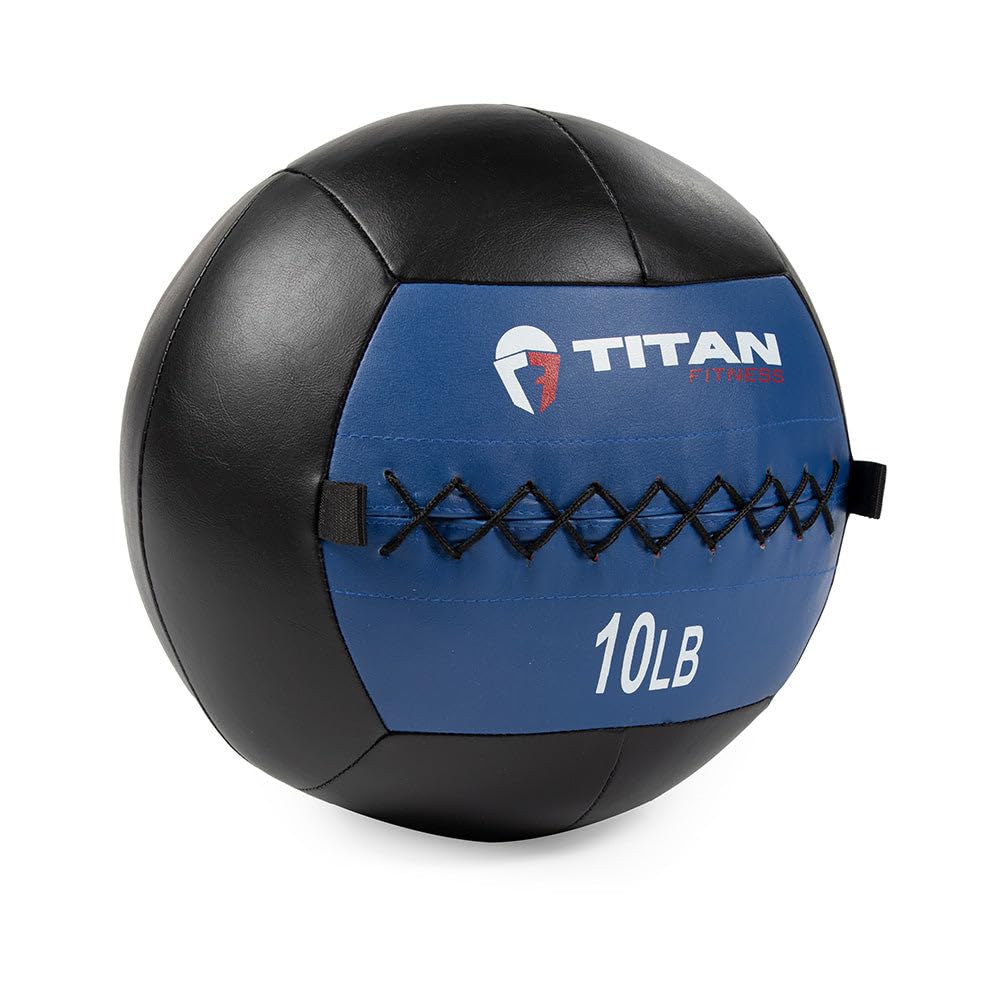
The 14-inch PU-leather shell gives wall-ball drills and partner throws a cushioned landing, and the double stitching supports repeated catch-and-throw sessions. Shape retention is the tradeoff, which puts it behind the ProSource wall ball for buyers who need consistent roundness during high-rep catches.

Pros

  • Double-stitched 14-inch shell provides a soft, catchable surface for wall-ball workouts.
  • Lower price than premium soft wall balls for a cushioned wall-ball option.

Cons

  • Soft shell can deform and become lopsided, causing wobble during catches and throws.
Our verdict

For home wall-ball drills and partner tosses, this is the budget-friendly way to get a soft, large catch surface.

Check Latest Price
8

Core Rotational Work

SPRI Med Ball with Handles

93 /100
Peggy's Score Outstanding

Key details

Diameter
Construction
Bounce rubber
Grip Texture
Rubber handles
Weight Options
10 lb
Check Details on Amazon

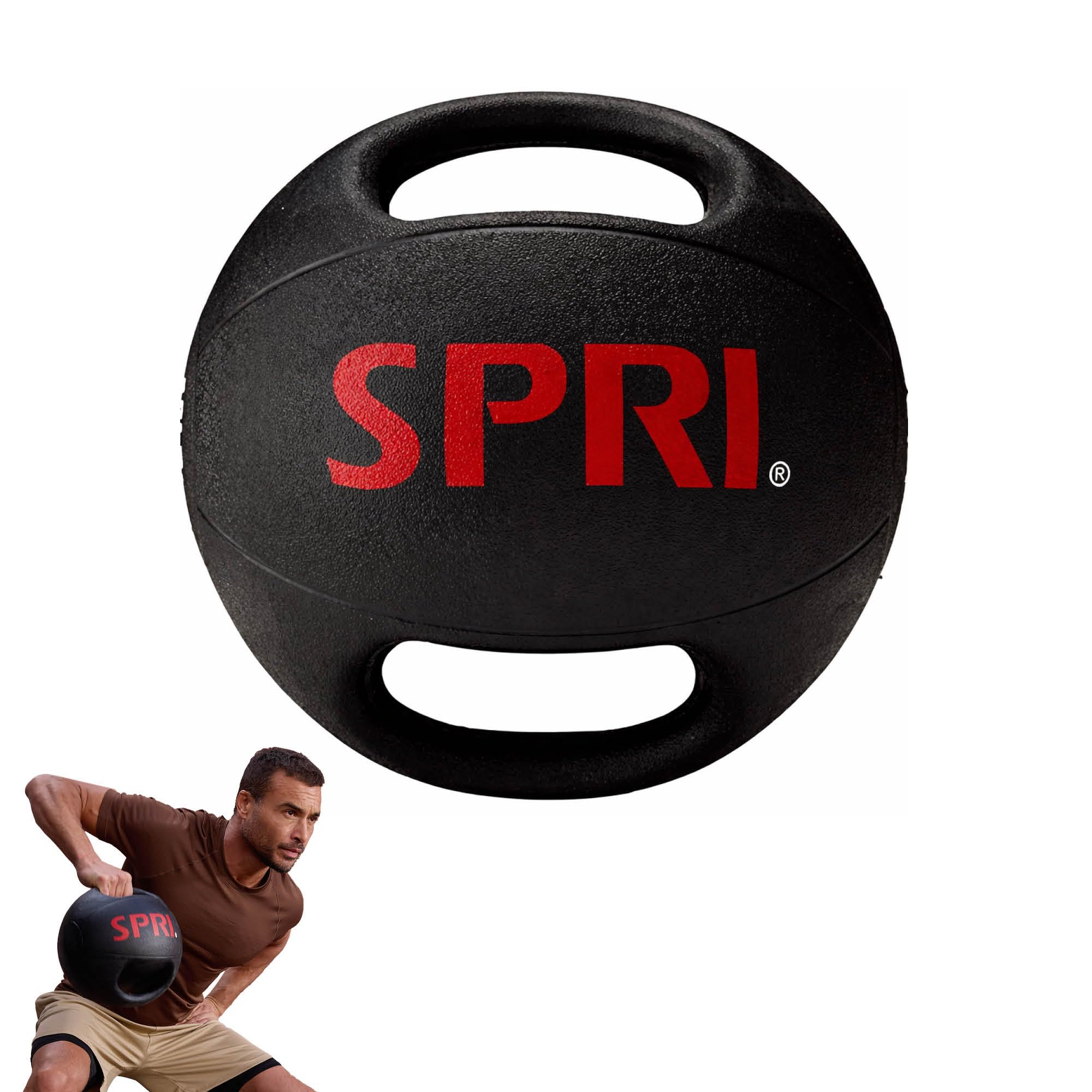
This handled rubber ball gives comfortable, controlled grips for core and rotational work in golf and tennis. It won't act like a no-bounce slam ball, so aggressive floor slams belong with dead-weight options. Some units carry a strong rubber smell, and sweat or enclosed storage can make that harder to ignore.

Pros

  • Handles provide a secure hold during core and rotational exercises
  • Rubber shell works for med-ball, kettlebell-style, and golf or tennis rotational training

Cons

  • For users who prefer a dual-handle grip, the single-handle layout is more limited.
Our verdict

The handled format fits golfers, tennis players, and core-focused lifters who prioritize grip control during rotational work.

Check Latest Price
9

Classic Core Training

Champion Sports Leather Ball

92 /100
Peggy's Score Outstanding

Key details

Diameter
7.79 in
Construction
Stuffed leather
Grip Texture
Synthetic leather
Weight Options
9-10 lb
Check Details on Amazon

Classic synthetic-leather shell with reinforced stitching and a compact 7.8-inch diameter suits controlled ab, core, yoga, and light strength routines. The old-school construction keeps a traditional look and comfortable grip. Slamming or high-rep wall-ball catches are outside its design boundaries; choose a no-bounce ball for those sessions.

Pros

  • Old-school stitched synthetic-leather shell gives a classic look and stable grip for controlled core work.
  • Compact 7.8-inch size suits home ab, balance, yoga, and light strength sessions.

Cons

  • Not built for slam-ball drills or high-rep wall-ball catches; keep it to controlled classic exercises.
Our verdict

Buyers who want a classic leather med-ball for core, ab, yoga, and light strength work get a clean option; slam and wall-ball training needs a purpose-built design.

Check Latest Price
10

Budget Slam Circuits

Trademark Slam Ball

92 /100
Peggy's Score Outstanding

Key details

Diameter
9 in
Construction
No-bounce sand
Grip Texture
PVC surface
Weight Options
15 lb
Check Details on Amazon

This 15-lb dead-weight PVC ball is one of the lowest-cost no-bounce slam options for circuit conditioning and boot-camp-style home workouts. Sand shifts inside the shell and the fill plug may loosen on some units, which is why it fits the budget slam tier rather than balanced wall-ball work. Good value for floor slams.

Pros

  • Dead-weight shell survives repeated floor slams at an entry-level price.
  • Large 15-lb ball works for circuit and home conditioning at a budget-friendly price.

Cons

  • Sand shifts inside the shell and the fill plug may loosen on some units.
Our verdict

The right budget option for boot-camp floor slams; keep it in the slam lane, not wall-ball catching.

Check Latest Price
11

Compact Slam Training

STRPRETTY Slam Ball

91 /100
Peggy's Score Outstanding

Key details

Diameter
7.8 in
Construction
No-bounce PVC
Grip Texture
Treaded PVC
Weight Options
10 lb
Check Details on Amazon

Compact and budget-friendly, the 7.8-inch treaded PVC shell keeps a 10-lb dead-weight ball easy to store and simple to use for slams, core work, and conditioning. Seam or weld separation can occur under hard slams, so this is a unit-level durability variance rather than a guaranteed outcome; that is what keeps it behind the heavier, warranty-backed options.

Pros

  • Treaded PVC shell grips well and holds up for the price, a good match for budget home-gym training.
  • Compact 7.8-inch dead-weight format delivers useful ab and strength-training work without hogging floor space.

Cons

  • 10-lb weight ceiling suits beginners but leaves no room to progress once the load feels light.
Our verdict

Best for compact home gyms and first-time slam-ball buyers who want a low-cost, grippy 10-lb option for circuit-style conditioning.

Check Latest Price

How to Choose

Construction Type

A no-bounce sand-filled ball stays dead on the floor, which forces you to bend, pick it up, and reset every rep. That is the conditioning effect. A soft stuffed wall ball gives on impact so your hands can handle high-rep catches, while a bounce-style rubber ball rebounds off hard surfaces and suits throws, twists, and partner work, but it is not built for repeated slams.

Weight Options

Sand-filled and stuffed balls feel heavier than their labeled weight during overhead work because the fill shifts and adds instability. A 15-lb slam ball can feel closer to 20 lb on a slow eccentric lower. Start lighter than you think, 10 lb for most first-time buyers, and move up only when the last two reps stay controlled.

Grip Texture

Texture is a trade-off between slip resistance and skin comfort. Raised rubber-tile patterns hold well with sweaty hands but can abrade bare palms; smooth rubber is easier on the hands and still grippy enough for most yoga and gym work. If your routine is all aggressive slams, treaded PVC gives the most secure hold, and gloves are a fair answer.

Diameter & Catch Surface

Diameter controls how the ball sits in your hands. A 7- to 9-inch ball is compact and easy to hold for slams and rotations; a 14-inch wall ball is basketball-sized, giving you a larger surface to catch on chest and arms. Wall-ball shots and partner tosses need the bigger diameter; core work and slams do not.

Durability & Warranty

The seam or weld is the first thing to go when a ball is used outside its intended job. A bounce-style rubber ball can crack if slammed into concrete; a soft wall ball can deform under impact. No-bounce slam balls hold up to floor work, and the warranty shows how much confidence the brand has in that build, so look for multi-year or lifetime coverage on heavy-use balls.

Frequently Asked Questions