13 Best Non-Slip Yoga Mat of 2026: Real Grip for Practice

The best non-slip yoga mat for sweaty palms, floor workouts, and joint-sensitive knees — and how to spot cushion-first mats that can't hold a pose.

Most 'non-slip' yoga mats are actually cushion mats. They protect knees during floor work, but in downward dog the surface shifts under your hands the moment you add weight or sweat. This isn't a trick; it's a material difference between NBR/foam mats built for padding and 5-6mm TPE/PVC mats built for traction.

The practical result: thicker is not automatically better for yoga. A 1-inch mat can feel great for Pilates and abs work while making standing balances feel unsteady. A moderately thick TPE or PVC mat gives your hands and feet a firmer surface to press into, and that stability matters more than plushness in most flows.

This guide separates the two jobs clearly: which mats hold their grip in practice, and which ones are better reserved for floor workouts and joint relief. Once you see the trade-off between cushioning and balance, the right choice for your home practice is much easier to make.

1

Best Overall Non-Slip Yoga Mat

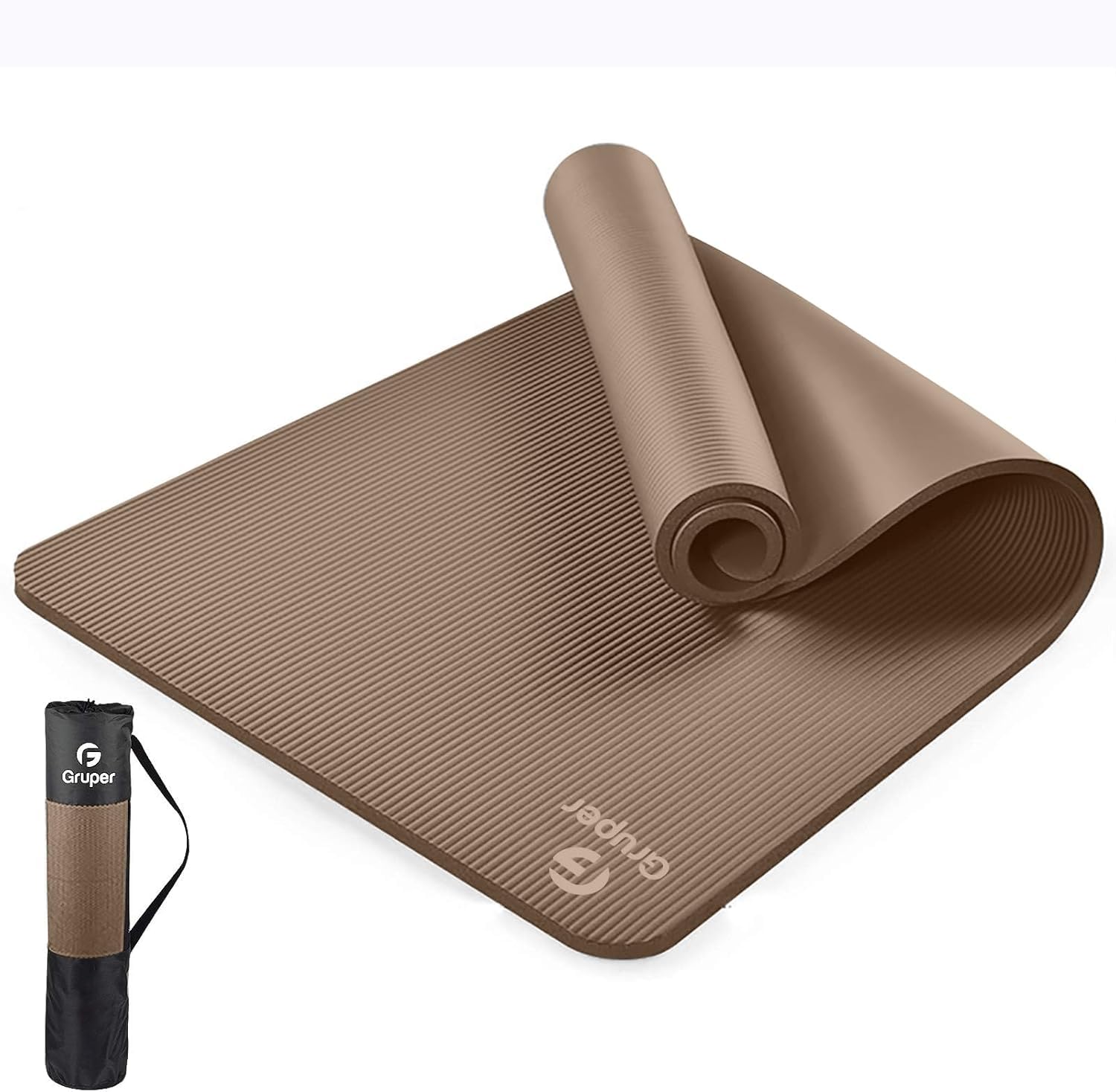
Gruper Non-Slip TPE Mat

89 /100
Peggy's Score Excellent

Key details

Material
TPE
Thickness
6mm
Dimensions
72 x 24 in
Accessories
Strap, storage bag
Check Details on Amazon

Gruper's 6mm TPE surface delivers the strongest non-slip grip in this category. The mat holds its position through yoga, Pilates, and floor workouts, and the 6mm thickness cushions knees and wrists without making balance poses feel unstable. A carrying strap and storage bag ride along, which pushes this mat ahead of entry-level alternatives that expect you to roll it under your arm. The strap clips around the rolled mat, and the storage bag keeps the floor clean between sessions. During normal dry practice, downward dog and lunges stay put, so there is no need for a separate towel or mat cover. The surface also stays firm enough for standing balances without squishing underfoot.

This pick suits barefoot home practice on smooth indoor floors. Home yogis and Pilates regulars who want grip, a true 6mm platform, and a low price should put it near the top of their list. The TPE surface can tear if exposed to shoes, pets, or rough surfaces, so keep it on smooth indoor floors. If you need plush cushioning for joint pain, a 10mm or thicker foam mat is the better fit.

Pros

  • 6mm TPE surface holds firm through yoga, Pilates, and floor workouts.
  • Cushioning supports knees and wrists without losing the firm floor connection.
  • Construction quality reads solid for the budget tier.

Cons

  • Sweaty or hot practice can reduce hand and foot grip.
  • Surface durability is limited when the mat is pushed beyond smooth indoor floors.
Our verdict

For home yoga and floor workouts that need grip more than extra width or maximum padding, this budget 6mm TPE mat is the practical pick.

Check Latest Price
2

Best for Alignment & Extra Width

Heathyoga Alignment TPE Mat

91 /100
Peggy's Score Outstanding

Key details

Material
TPE
Thickness
6mm
Dimensions
72 x 26 in
Accessories
Check Details on Amazon

The 26-inch width and printed body alignment lines are the main draw. This 6mm TPE mat gives home practitioners a stable, cushioned surface with extra side-to-side room, plus placement cues that standard mats lack.

Best for home yogis, Pilates users, and floor-workout regulars who want placement cues in dry, low-sweat sessions. Heavy sweat can soften the grip, and the new-mat odor can linger until aired out, so hot-yoga lovers should choose the top pick. The 6mm cushion suits moderate floor work but not maximum joint-padding needs.

Pros

  • Printed alignment lines make hand and foot placement easier without breaking flow.
  • 6mm TPE balances knee cushioning with a stable base for standing poses.
  • Cost-effective for the alignment and width features it includes.

Cons

  • Rough floors, shoes, or sharp objects can mark the TPE surface over time.
Our verdict

Choose this mat for dry, low-sweat home practice when alignment cues and extra width matter most.

Check Latest Price
3

Best Extra-Thick Cushioning

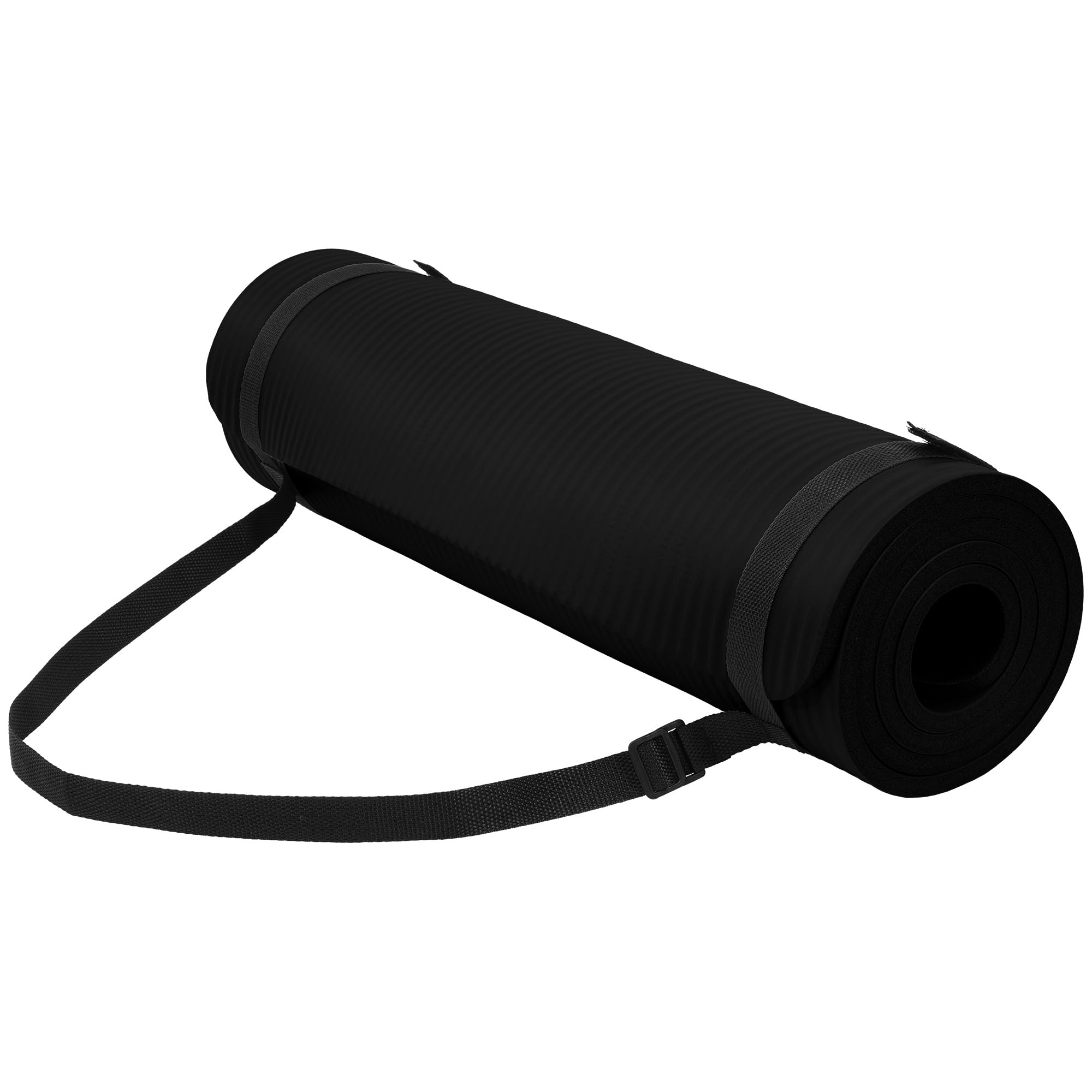
Amazon Basics 1-Inch Thick Mat

93 /100
Peggy's Score Outstanding

Key details

Material
NBR foam
Thickness
1 in
Dimensions
74 x 24 in
Accessories
Carrying strap
Check Details on Amazon

One inch of dense NBR foam delivers the cushioning that protects knees, hips, and wrists during hard-floor workouts. The extra-thick profile is generous enough for side-lying stretches and core work that press the hips into the floor. The included carrying strap makes it easy to move between rooms. This comfort-first personality separates it from thinner mats in the category.

Budget-focused home exercisers doing yoga, Pilates, stretching, and floor work on hard floors get the most from it. The foam surface is best kept on smooth indoor floors rather than rough surfaces or shoes; this is a floor-work mat, not a hot-yoga surface. It offers strong value for a budget-priced home mat.

Pros

  • Cushions knees, hips, and wrists during floor work on hard surfaces.
  • Plush one-inch thickness supports stretching and Pilates without joint pressure.
  • Strong value for the amount of padding in a budget-friendly home mat.

Cons

  • Downward dog and balance poses can feel slippery because the surface prioritizes cushioning over traction.
Our verdict

For knee-sensitive exercisers who want a thick home workout surface, this mat delivers comfort without the premium price.

Check Latest Price
4

Best Budget Workout Mat

Fitvids Half-Inch High-Density Mat

91 /100
Peggy's Score Outstanding

Key details

Material
High-density foam
Thickness
1/2 in
Dimensions
71 x 24 in
Accessories
Carrying strap
Check Details on Amazon

The half-inch high-density foam cushions knees and wrists on hard floors, and the carrying strap makes it easy to roll up and move between rooms. It is the budget-friendly pick for seated stretches, Pilates, and bodyweight floor moves, with enough padding to keep joints comfortable during longer sessions.

This is a comfort-first mat for knee-sensitive users doing floor exercises on hard surfaces; treat it as a replaceable budget cushion mat rather than a long-term non-slip yoga surface. It suits casual home workouts better than balance-focused practice.

💡 Keep it on smooth indoor floors and use the strap when carrying it.

Pros

  • Thick half-inch foam cushions knees and wrists on hard floors.
  • Soft high-density feel stays supportive without excessive bounce.
  • Carrying strap makes the mat easy to roll up and move.

Cons

  • Foam can show dents or tears if dragged across rough surfaces.
  • Grip on smooth floors can be inconsistent in sweaty sessions.
Our verdict

For floor workouts that need joint cushioning, this budget mat fits; its low entry cost makes replacement painless.

Check Latest Price
5

Best for Knee Support

Retrospec Solana 1-Inch Mat

91 /100
Peggy's Score Outstanding

Key details

Material
Foam
Thickness
1 in
Dimensions
72 x 24 in
Accessories
Nylon carrying strap
Check Details on Amazon

The Solana's 1-inch foam cushioning is its reason to exist: knees, hips, and backs get noticeable relief on hard floors during yoga and Pilates. That depth sets it apart from the slimmer 6mm TPE mats that lead on grip, but it is not a mat for regular class commutes. This is a home comfort mat first, for knee- and back-sensitive users doing floor work on smooth surfaces. The trade-offs are surface durability and the strap: foam can tear on rough edges or pet claws, and the strap can be missing or ineffective for class transport.

Pros

  • Thick 1-inch foam cushions knees, hips, and back during floor-based yoga and Pilates.
  • Soft, cushioned surface keeps hard-floor workouts comfortable for sensitive joints.
  • Knee support stands out for poses that put weight on the floor.

Cons

  • For balance poses, the thick foam compresses underfoot, so the surface isn't as precise as a slimmer TPE mat.
Our verdict

Choose the Solana when joint-friendly cushioning at home matters more than a precise non-slip surface; the slimmer TPE mats in this set handle grip better.

Check Latest Price
6

Best Budget Thick Mat

CAP Barbell Half-Inch Mat

92 /100
Peggy's Score Outstanding

Key details

Material
NBR
Thickness
12mm
Dimensions
68 x 24 in
Accessories
Carrying strap
Check Details on Amazon

The 12mm NBR layer is the standout: it cushions knees, hips, and wrists through floor work, and the budget price keeps this thick-mat option accessible. The included carrying strap makes storage easier, and the plush base suits dry home routines. In a non-slip mat search, this is the comfort-first entry rather than the traction leader.

Budget home exercisers doing abs, stretching, Pilates, and light yoga on smooth indoor floors will get the most from it. This is a cushion-first mat rather than a non-slip or all-purpose surface, so match it to dry, low-sweat routines.

Pros

  • Thick 12mm NBR padding cushions knees, hips, and wrists during floor work.
  • Budget-friendly price makes it one of the least expensive thick mats in the set.
  • Comfortable base for yoga, Pilates, and stretching routines without extra padding.

Cons

  • Dragged across rough concrete, the soft NBR foam can tear.
  • In sweaty practice, hands and feet can slide on the NBR surface.
Our verdict

For budget-minded home exercisers who want thick padding under their joints, this is a cost-effective choice. If your routine is built on sweaty grip work, a firmer TPE mat matches that need better.

Check Latest Price
7

Thick Cushion Mat

Gaiam Thick 10mm NBR Mat

93 /100
Peggy's Score Outstanding

Key details

Material
NBR
Thickness
10mm
Dimensions
72 x 24 in
Accessories
Carrying strap
Check Details on Amazon

At 10mm thick, this NBR mat delivers substantial cushion under knees and wrists for floor stretches at a beginner-friendly price. A chemical smell can linger after unboxing, surface wear can appear sooner than with denser mats, and soft padding offers less stability in balance poses. It's a comfort-first mat for light home floor work, not a non-slip yoga surface.

Pros

  • Thick 10mm padding cushions knees and wrists during floor stretches and light yoga.
  • Entry-level price makes this an easy first mat for home stretching routines.

Cons

  • A strong chemical smell can be present when new and may take time to fade.
Our verdict

For knee-sensitive beginners doing floor stretching at home, the thick padding covers the essentials if you can let the mat air out first.

Check Latest Price
8

Stylish Beginner Mat

Gaiam Premium 6mm Printed Mat

95 /100
Peggy's Score Outstanding

Key details

Material
PVC
Thickness
6mm
Dimensions
68 x 24 in
Accessories
Check Details on Amazon

The printed 6mm PVC surface looks sharp and gives dry yoga, Pilates, and floor workouts a stable base at a budget price. Color options add personality without inflating cost. Non-slip performance drops once hands get damp, so hot yoga or heavy-sweat sessions need a grip-first TPE mat instead. This Gaiam suits style-conscious beginners whose practice stays dry.

Pros

  • Premium prints and color options stand out at this price tier.
  • Firm 6mm PVC base gives dry yoga and Pilates a stable platform.

Cons

  • Grip can turn slippery in hot yoga or whenever hands get damp.
Our verdict

If your practice stays dry and appearance matters, this printed Gaiam is a budget-friendly option; choose a grip-first TPE mat when sweat is part of the routine.

Check Latest Price
9

Extra-Wide Cushioning

Gruper Extra Thick NBR Mat

91 /100
Peggy's Score Outstanding

Key details

Material
NBR
Thickness
10 or 15mm
Dimensions
24 or 32 in wide
Accessories
Strap, storage bag
Check Details on Amazon

The Gruper's 10 or 15mm NBR slab provides generous cushioning for knees and back, and the optional 32-inch width gives floor workouts extra room. Used as a comfort-first exercise mat, it absorbs impact well. Its non-slip behavior is inconsistent, so it is not the answer to slippery-downward-dog concerns, and surface durability is limited compared with the TPE top pick.

Pros

  • 10 or 15mm NBR padding cushions knees and back during floor-based work.
  • Optional 32-inch width provides a broad surface for spreading out during workouts.

Cons

  • On smooth floors the mat can slide, and the top can cling to feet in downward dog.
Our verdict

For a comfort-first floor workout at home, this extra-wide mat delivers; only buy it when cushioning clearly matters more than grip.

Check Latest Price
10

Beginner Pose Practice

NewMe Fitness Printed Pose Mat

95 /100
Peggy's Score Outstanding

Key details

Material
PVC
Thickness
5mm
Dimensions
68 x 24 in
Accessories
Check Details on Amazon

The mat’s 70 printed poses give beginners an on-demand visual reference for alignment and sequencing, reducing the need to glance at a phone or TV. On carpet, it delivers its instructional promise for dry, low-intensity practice. Hard floors and sweaty sessions push it past its comfort zone.

Pros

  • Stamped pose diagrams give beginners a constant visual cue for alignment and sequencing.
  • Graphics remain legible throughout practice, even with repeated use.

Cons

  • Thin 5mm PVC offers limited knee cushioning and may lose grip in downward dog.
Our verdict

For beginners wanting pose guidance during dry, low-sweat home practice on carpet, this mat’s printed diagrams add learning value that a plain mat can’t match.

Check Latest Price
11

Budget Alignment Mat

YOGATI Alignment-Line Mat

91 /100
Peggy's Score Outstanding

Key details

Material
TPE
Thickness
6mm
Dimensions
72 x 24 in
Accessories
Check Details on Amazon

Alignment lines on a 6mm TPE base make positioning easy for low-intensity stretching, and the firm surface holds up fine at a budget price. Color options add appeal. The base feels thin on hard floors, so this is a starter mat for occasional practice rather than the grip leader in this lineup.

Pros

  • Printed alignment lines clarify hand and foot placement for beginners.
  • Firm 6mm TPE cushioning handles occasional floor sessions without bottoming out.

Cons

  • In hot yoga or sweaty practice, the surface can turn slippery.
Our verdict

Pick this when your sessions are dry, light, and focused on alignment; it earns its budget price there.

Check Latest Price
12

Light Casual Stretching

UMINEUX TPE Yoga Mat

91 /100
Peggy's Score Outstanding

Key details

Material
TPE
Thickness
6mm
Dimensions
72 x 24 in
Accessories
Sling, storage bag
Check Details on Amazon

This 6mm TPE mat keeps the load light and the look appealing, with a sling and storage bag for easy transport. Grip is not its strong suit: hands can slide in downward dog, and the surface can tear. That makes it a style-forward travel mat for dry, casual sessions rather than a daily hard-use surface.

Pros

  • Attractive lines and soft colors make this one of the nicer-looking mats in its price range.
  • The 6mm TPE base gives a middle-ground cushion that suits light yoga and stretching.

Cons

  • Sweaty sessions and rough floors fall outside this mat's comfort zone.
Our verdict

Pick this mat when the priority is a light, good-looking travel companion for dry, low-sweat practice rather than maximum grip.

Check Latest Price
13

Lifetime Studio Yoga

Manduka PRO 6mm Mat

91 /100
Peggy's Score Outstanding

Key details

Material
PVC
Thickness
6mm
Dimensions
71 x 26 in
Accessories
Check Details on Amazon

The 6mm PVC surface is dense and stable, and the 26-inch width gives larger practitioners real floor coverage. The lifetime warranty reinforces the long-term studio-mat proposition. Price and weight are the boundaries: this is a home or studio fixture for committed practitioners, not a budget or travel mat.

Pros

  • 26-inch width gives taller or larger practitioners more floor coverage than standard mats.
  • Lifetime warranty makes the premium PVC build a long-term investment for studio use.

Cons

  • For budget shoppers or anyone carrying a mat to classes, the premium price and heavy roll will be the limiting factors.
Our verdict

For committed practitioners with a fixed studio or home space, the wide 6mm surface and lifetime warranty support the investment. Travelers and budget shoppers should choose a lighter, lower-cost mat instead.

Check Latest Price

How to Choose

Thickness

Thickness controls the line between cushion and stability. A 4-6mm mat lets your hands and feet feel the floor, which improves balance and press-down grip. Mats of 10mm and above absorb more joint impact but add give under your feet, so standing poses become less precise as your weight sinks into the foam.

For floor exercises and sensitive knees, thicker is fine. For yoga balances, 4-6mm is the better tool.

Material

Material determines how the surface behaves under sweat. TPE and PVC mats are denser and more closed-cell than NBR, so they provide firmer traction and wipe down more easily. NBR and foam mats are soft and springy, but their spongy top makes hands and feet more likely to slide during downward dog.

TPE mats also tend to have less new-mat smell than NBR or PVC, although individual batches vary.

Surface Grip vs Floor Grip

Read 'non-slip' as two separate jobs: top-surface grip keeps your hands and feet from sliding, while bottom grip keeps the mat from skating across the floor. A thick foam mat can have strong floor grip but still feel slippery on top once sweat forms.

For sweaty flows, choose a 5-6mm TPE or PVC mat with a closed-cell surface and consider adding a yoga towel.

Width and Length

Standard mats run 68-72 inches long and 24 inches wide. A 26-inch width gives extra room for wide-legged stances and flowing transitions, while longer mats help taller practitioners avoid hanging off the end in savasana.

Extra-wide options add floor space but increase roll size and weight, so carrying them to a studio is more cumbersome.

Accessories

Straps and bags matter if the mat travels. A basic carrying strap is enough for a thick home mat, while a sling or bag makes a 6mm TPE easier to bring to class.

Printed alignment lines act as a visual cue, not a mechanical feature; they help beginners with placement but they do not change traction.

Frequently Asked Questions