6 Best Yoga Cards for Kids of 2026: The Ones Kids Actually Use

The best yoga cards for kids balance clear pose instruction with actual engagement, whether you need an active game or a calm-down deck for big feelings.

The challenge with kids' yoga cards is not finding a deck. It's finding one that gets used beyond the first unboxing. Many sets look cute on the shelf but rely on loose cards, vague illustrations, or a flashcard format that loses a preschooler's attention within minutes.

The decks that work tend to split into two jobs. Some teach accurate poses with clear visuals and color-coded organization, which is what parents and instructors need for structured sessions. Others lean into play: rhyming prompts, dice, and themed categories that turn yoga into a game kids request.

Age labels matter less than you'd think. A 3+ deck gets used by two-year-olds in family settings, while a young-kids deck shows up in kindergarten and therapy rooms. The right purchase hinges on engagement style more than the number on the box.

1

Best Overall

Yoga Pretzels

95 /100
Peggy's Score Outstanding

Key details

Format
Loose cards
Age Range
Ages 2-7
Activities
50 activities
Special Features
Solo & partner poses
Check Details on Amazon

The 50-card deck spans solo poses, partner balances, and breathing exercises, giving parents and kids' yoga teachers a broad starting point without a formal lesson plan. Each card carries a bright illustration and a short instruction, and the pictures are large enough for young kids to copy the shape directly. Partner poses are a standout, and the mix of sitting, standing, and group activities keeps sessions from turning repetitive. The deck holds up well in therapy and school settings, where an adult can pull a few relevant cards instead of working through a fixed sequence.

This deck suits families with children in the 2–7 range and kids' yoga teachers who need a go-to set for warm-ups, partner work, and breathing breaks. It is also a practical classroom tool: cards can be laid out for a child to choose a pose or passed around for paired work. Older kids ready for advanced athletic poses will outgrow the beginner-focused activities, and grownups who want dice, scoring, or game mechanics should look at the card games in this group instead. For families that want yoga as a shared activity, the partner poses alone make the deck a solid buy.

Pros

  • Age-appropriate for young kids in family, therapy, and school settings.
  • Engaging enough that children ask to use it on their own.
  • Easy-to-follow picture cues reduce the need for an adult demo.

Cons

  • The beginner pose range is aimed at ages 2–7; older kids ready for athletic sequences will outgrow it.
  • Buyers expecting dice, scoring, or game mechanics will find this to be a card deck rather than a game.
Our verdict

For ages 2–7, this is the starter deck that covers the most ground: solo poses, paired balances, and breathing exercises in one box.
Check Latest Price
2

Best for Accurate Pose Learning

Yoga for Children Yoga Cards

93 /100
Peggy's Score Outstanding

Key details

Format
Boxed loose cards
Age Range
Ages 3+
Activities
50+ activities
Special Features
Color-coded categories
Check Details on Amazon

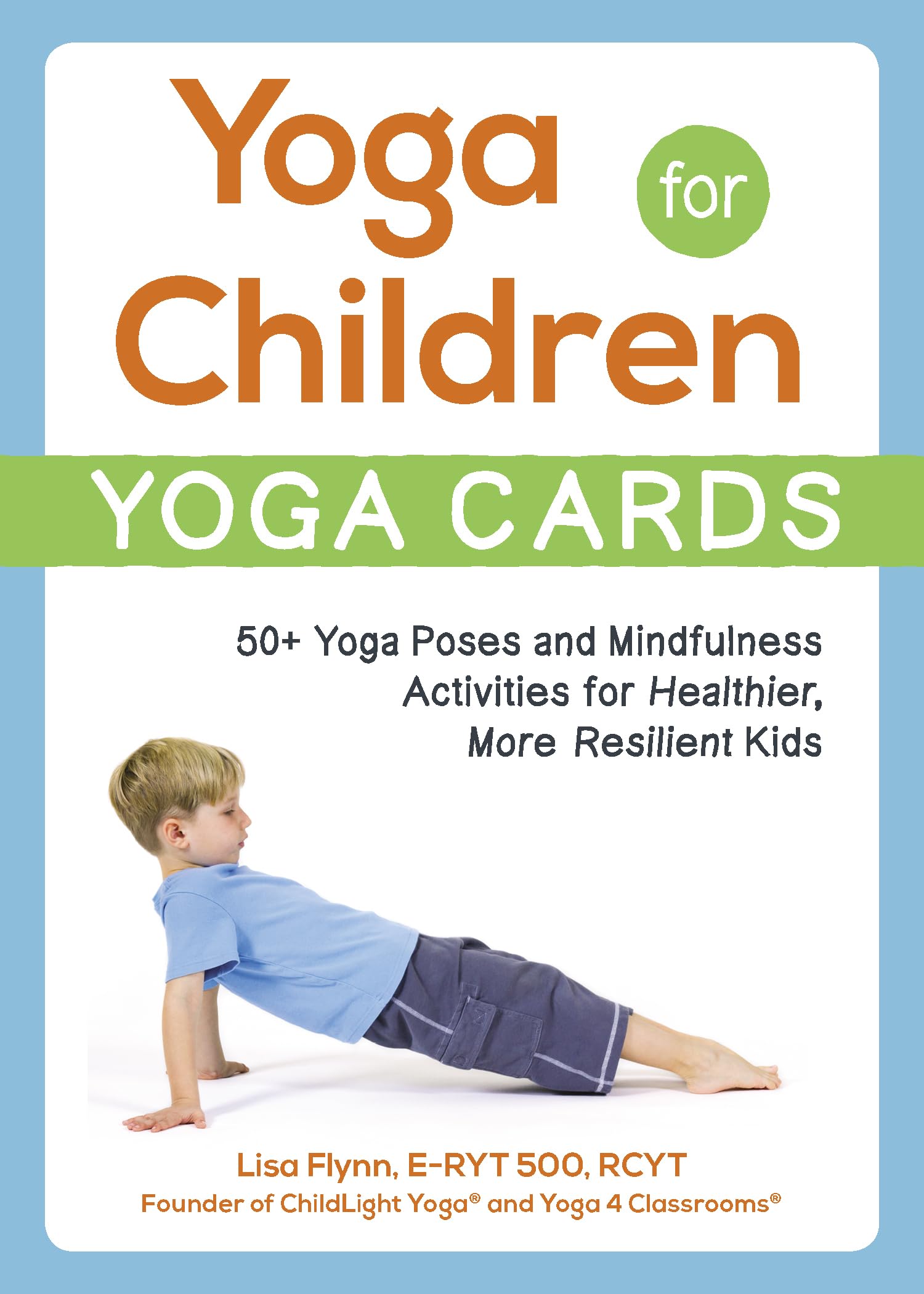
Yoga for Children Yoga Cards leads with oversized, color-coded cards and realistic images that kids can copy exactly. The sturdy stock handles small-hand use well, and the visual instruction is clear enough to guide a pose without an adult demonstrating. Where a broader starter deck leans on activity variety, this set prioritizes correct form and easy visual reference.

Parents and classroom instructors who want color-coded lesson planning and realistic posture modeling are the right fit. It is not a game, so the flashcard format works best when an adult leads the session; toddlers who need a simpler themed animal deck will do better elsewhere.

Pros

  • Clear, realistic images let kids copy each pose without a demonstration.
  • Large, sturdy cards are easy for small hands to hold and reuse.
  • Color-coded categories make lesson planning quick for teachers and parents.

Cons

  • When comparing decks for a specific age, no printed age range leaves readiness judgment to the parent.
Our verdict

If accurate pose learning and organized session planning are the priorities, this mid-range deck delivers.

Check Latest Price
3

Best for Classrooms & Teachers

Kids Yoga Cards Challenge

92 /100
Peggy's Score Outstanding

Key details

Format
Loose card deck
Age Range
All ages
Activities
Poses plus 15 games
Special Features
Difficulty stars, mantras
Check Details on Amazon

Printed difficulty stars take the guesswork out of leveling a group, and 15 game ideas give an instructor a ready-made lesson. Partner poses add a cooperative option that keeps older kids engaged while younger ones build confidence on simpler cards. The illustrations read clearly for pre-readers while keeping a school-age feel.

The best fit is a kids' yoga teacher, classroom educator, or homeschool parent running brain breaks with mixed ages. It works best as an adult-led activity, where the instructor chooses who gets which card and moves the group from one pose to the next.

💡 Let one adult deal and collect the cards to get the most classroom use from the deck.

Pros

  • Printed difficulty stars make leveling a group simple and remove guesswork for instructors.
  • Partner poses give mixed-age kids a cooperative activity and keep older students invested.
  • Fifteen game ideas and positive mantra prompts turn the deck into a ready-made group resource.

Cons

  • Card stock is lighter than classroom-grade material, so lively group handling can show wear.
Our verdict

A group leader gets a deck that organizes itself through printed levels and partner-ready poses.

Check Latest Price
4

Best Yoga Card Game

YOGi FUN Yogi Kit

91 /100
Peggy's Score Outstanding

Key details

Format
Game box, 2 dice
Age Range
Ages 3-8
Activities
40 cards, 4 games
Special Features
Rhyming dice play
Check Details on Amazon

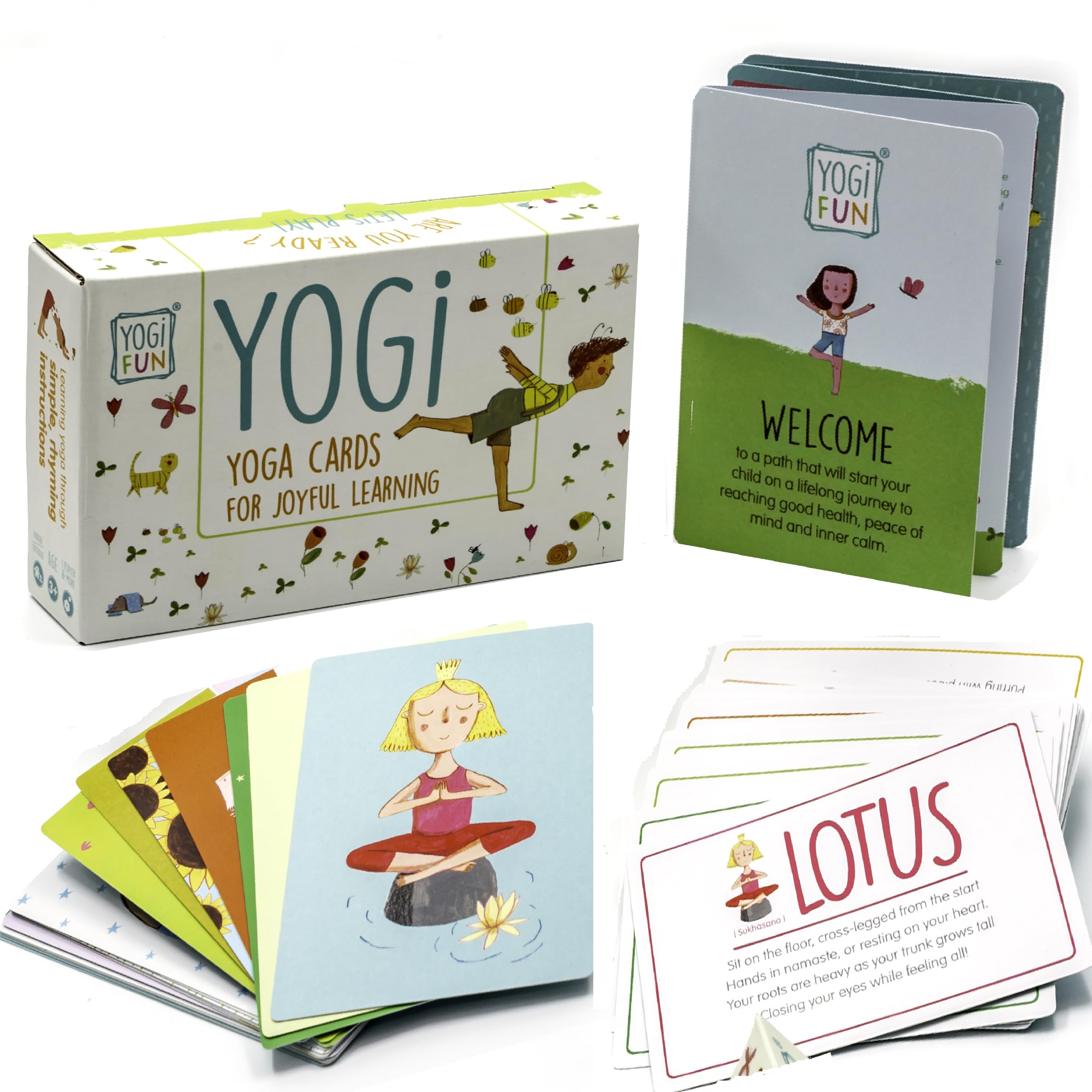
The YOGi FUN Yogi Kit is the rare yoga card set that actually plays like a game. Forty rhyming cards, two DIY dice, and four play modes turn poses into memory matches and cooperative dice rolls, so kids move without needing a formal lesson. Where the broader starter deck in this roundup prioritizes pose variety, this one doubles down on engagement.

It suits families with children 3-8 who want screen-free active play, and toddlers as young as 2.5 can join the rhyming cues. Montessori/Waldorf-style homes and small playdates fit the cooperative format. The card stock is thinner than premium decks, so very rough preschool handling can crease cards; this is not a comprehensive pose library, but a game-first activity set.

💡 Keep play adult-led or on a tabletop; unsupervised rough handling can shorten card life.

Pros

  • Rhyming cards and dice make yoga feel like a group game, keeping kids moving and laughing.
  • Young children can join in, with toddlers as young as 2.5 participating alongside older siblings.
  • Cute illustrations and rhyming cues help kids remember poses without adult instruction.

Cons

  • Very rough preschool handling can crease the thin card stock, unlike premium decks.
Our verdict

For families who want movement and giggles instead of formal pose instruction, this kit delivers a screen-free game younger kids will actually play.

Check Latest Price
5

Best for Emotional Regulation

Little Yogi Deck

93 /100
Peggy's Score Outstanding

Key details

Format
Loose cards
Age Range
Ages 4-8
Activities
Breathing & poses
Special Features
Emotion categories
Check Details on Amazon

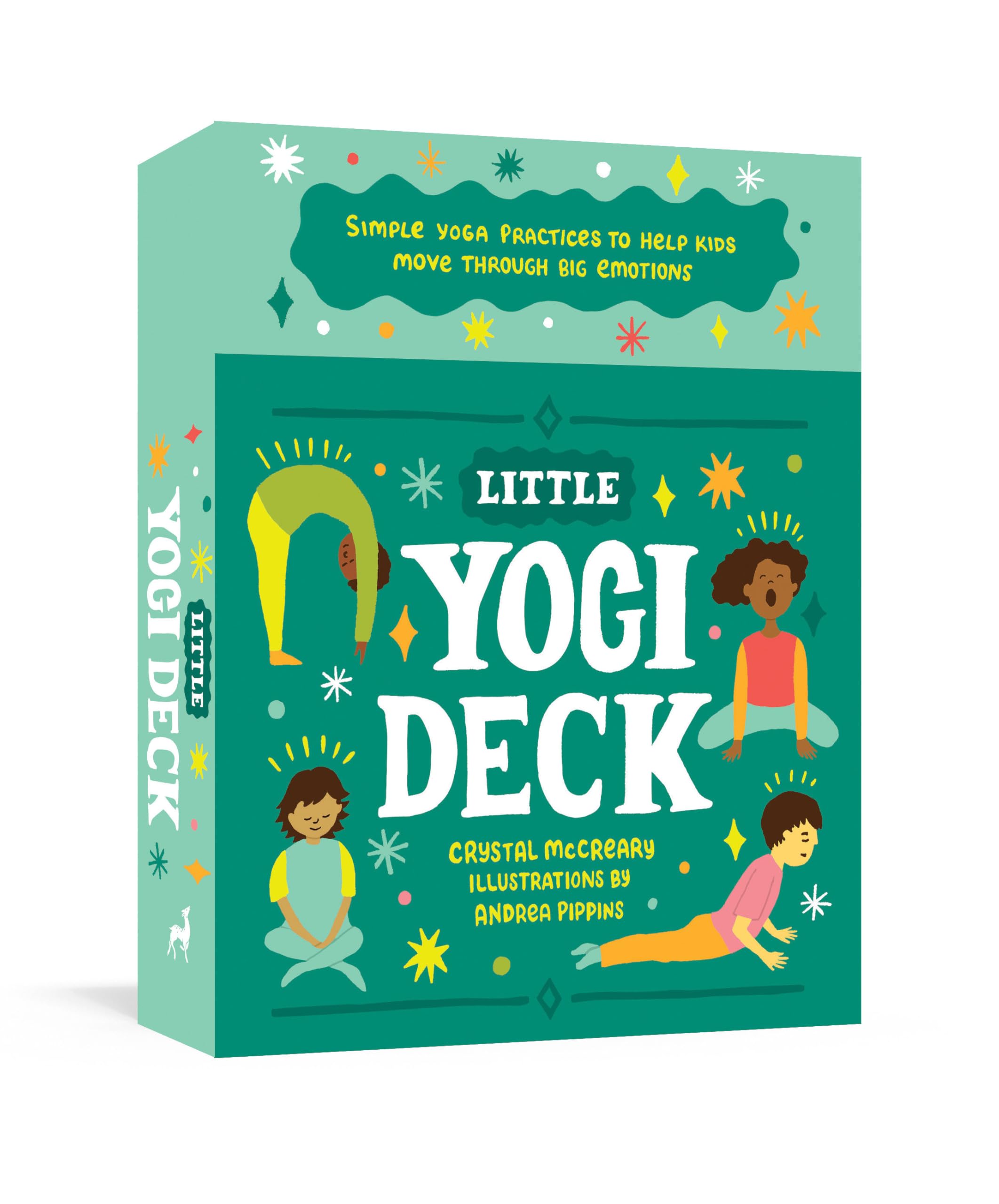
Color-coded emotion categories set this deck apart: a child can choose a card by mood and move through yoga, breathing, or a short meditation in response. Oversized cards with inclusive illustrations are easy for small hands, and the step-by-step prompts let an adult guide a session without previous yoga experience.

This is the right fit for parents, counselors, and mindfulness-focused classrooms working with ages 4-8 on emotional regulation. Children who respond to warm, inclusive imagery will take to it quickly. It is not the card set for kids expecting a large variety of active poses.

💡 Let the child pick a card by mood, then add a pose-focused deck if they still want more movement.

Pros

  • Emotion-color-coded organization lets a child choose an activity based on their current feeling.
  • Oversized cards with inclusive illustrations are visually inviting and easy for small hands to manage.
  • Step-by-step prompts make adult-led sessions easy to run straight from the deck.

Cons

  • Breathing and mindfulness cards outnumber new physical pose instruction, which may disappoint kids wanting active poses.
Our verdict

A premium-priced calm-down deck for parents and counselors helping ages 4-8 work through feelings.

Check Latest Price
6

Preschoolers, Budget

Mollybee Preschool Yoga

92 /100
Peggy's Score Outstanding

Key details

Format
Ring-bound cards
Age Range
Ages 3+
Activities
40 themed poses
Special Features
Themed sessions
Check Details on Amazon

This budget-friendly deck pairs 40 themed poses with a ring-bound format sized for small hands. Around the World, On the Farm, and At the Beach sessions keep ages 3-5 engaged in simple movement. The simpler content and fewer structured features make this a low-cost introduction for parents and preschool teachers, not a progression tool.

Pros

  • Beginner-friendly themed poses keep toddlers and preschoolers moving without prior yoga experience.
  • Ring-bound cards stay together and fit small hands for on-the-go use.

Cons

  • For circle-time use, the compact 3.5-inch cards may need to be held up for a group to see.
Our verdict

A parent with one or two preschoolers at home will get the most use out of this as a starter activity — before a child asks for harder poses.

Check Latest Price

How to Choose

Poses and Activities

Card count matters less than the number of distinct activities. Some decks list 40 cards but use two per pose for memory play, so the real pose count is lower. Count unique poses, not total cards.

Game-heavy decks trade instructional depth for engagement: rhyming prompts and dice keep kids moving but do not teach alignment cues. Pose-focused decks support physical sequence building. Match that balance to the child who will use it.

Age Range and Readiness

Age labels are a rough guide because young kids copy pictures before they understand formal instructions. A 3+ deck works with two-year-olds at home, while a 2-7 deck shows up in kindergarten and therapy settings.

The real change is attention span, not motor ability. Toddlers respond to bright, simple illustrations; older kids need challenge or more athletic poses. Match difficulty to the child's tolerance for sitting still, not just age.

Card Size and Build

Card size changes how kids interact with the deck. Large cards are easy to see and hold but take up floor space; small cards travel better but are harder for a group to follow.

Card stock determines lifespan. Lighter stock shuffles easily but creases under repeated preschool handling; ring-bound cards stay together but limit reordering.

Format and Organization

Loose cards are the default because teachers can sort and shuffle before class. The trade-off is clutter: loose cards scatter unless stored in a box, bag, or binder ring.

Ring-bound decks keep everything together and suit travel or one-on-one sessions. Game boxes add storage and dice but make it harder to pull a single card mid-lesson. Match the format to the setting.

Built-In Structure

The biggest differentiation is organization. Difficulty ratings scale a session, emotion categories let a child choose by mood, and game mechanics turn movement into play.

Mindfulness-heavy decks often contain fewer distinct physical poses than pose-first decks. Match the structure to the daily problem: a child needing big movement likely wants a different deck than one needing calm.

Frequently Asked Questions