15 Best Yoga Pose Cards in 2026: The Ones That Fit Your Practice

The best yoga pose cards for your level and setting: kids' activities, teacher sequencing, chair routines, or foundational home practice.

Yoga pose cards look like a simple buy: a deck of poses, some cues, and you are ready to plan a practice. The catch is that the category is split between kids' activities, adult study tools, and teacher sequencing systems. A deck aimed at a preschool game is not the same tool as a sequencing system, and a teacher's reference can overwhelm a beginner with Sanskrit.

The decision comes down to the job the deck needs to do. A smaller beginner set with clear alignment cues is often more useful for home practice than a huge reference library, while a teacher planning mixed-level classes needs the bigger pose library. For kids and seniors, card size, readability, and built-in structure matter more than pose count.

Cards are best used for planning and study, not as a mid-flow prompt. If you build a sequence before you get on the mat, almost any good deck becomes more valuable.

1

Best Overall

WorkoutLabs Yoga Cards

91 /100
Peggy's Score Outstanding

Key details

Card Build
Waterproof plastic, 5x3.5in
Target User
Adult beginners
Pose Library
47 foundational poses
Instruction Depth
Alignment cues, benefits
Check Details on Amazon

The WorkoutLabs Yoga Cards package 47 foundational asanas into a waterproof deck with alignment cues, three pranayama techniques, a meditation guide, and five practice sequences. Each card pairs the pose name with benefits and body alignment, so an adult beginner can study or assemble a home practice without a video. The included sequences give structure to someone who does not yet know how to order a balanced flow, while the compact cards fit easily into a travel bag.

The plastic cards hold up to being spread on a studio floor, tucked in a gym bag, or wiped down after practice. The 5 x 3.5-inch size is better for laying out a sequence before you move than for flipping through mid-flow, which matches this deck's role as a study and planning tool. During a home session, the instruction text stays right next to the pose for a quick reference, and the waterproof surface means sweat or a spilled water bottle is not an issue.

This is for adult beginners, home practitioners, and yoga teacher trainees who want to learn foundational asanas and review Sanskrit names. The 47-pose library is deliberately foundational, so advanced practitioners will outgrow it; it also won't replace playful kids' decks or chair-specific card sets. For the right buyer, that focused scope is the deck's strength rather than a flaw, and the balance of portability, clarity, and sequence support makes it the practical starting point in this category.

Pros

  • Durable waterproof cards survive travel, studio floors, and repeated handling.
  • Clear instructions and strong visuals make self-study and pose review easy.
  • Practice sequences and pose cards support routine building for new students.

Cons

  • The 47-pose library is foundational; advanced practitioners will eventually need a deeper companion deck.
  • It is not built for playful kids' classes or chair-specific yoga sessions.
Our verdict

For adult beginners and teacher trainees, this is the practical all-rounder: waterproof, portable, and sequenced enough to start a home practice without a screen.

Check Latest Price
2

Best for Teachers & Sequencing

Asana Moon Yoga Cards

92 /100
Peggy's Score Outstanding

Key details

Card Build
Linen cardstock
Target User
Teachers, trainees
Pose Library
120+ poses, 108 cards
Instruction Depth
Sanskrit + English names
Check Details on Amazon

A 120+ pose deck with Sanskrit and English names, skill and chakra color-coding, and 12 included sequences makes this the natural study companion for teachers and teacher-training students. The cards group poses by skill level and energy centers, so building a class plan or reviewing asana categories is more direct than flipping through a book. The linen-texture cardstock is dense enough for repeated in-classroom handling.

The large 108-card scope can overwhelm a casual beginner, so treat it as a study deck for teachers and serious home practitioners rather than a starter set. For home exercisers who want a waterproof travel deck, the slimmer top pick in this roundup makes more sense.

Pros

  • 120+ poses with Sanskrit and English names support sequence building and pose study.
  • Skill and chakra color-coding let you pull cards by difficulty or focus.
  • Linen-texture cardstock holds up to repeated classroom use.

Cons

  • Premium price is steep if you only need a handful of basic poses.
Our verdict

Serious teachers and trainees should keep this on the desk for class planning and Sanskrit review; casual practitioners should start with the slimmer waterproof deck.

Check Latest Price
3

Best for Kids & Families

Yoga Pretzels

95 /100
Peggy's Score Outstanding

Key details

Card Build
Activity deck
Target User
Kids, families
Pose Library
50 activity cards
Instruction Depth
Simple activity prompts
Check Details on Amazon

Fifty activity cards with partner poses and breathing exercises make Yoga Pretzels a family deck rather than a structured teaching curriculum. The bright illustrations and simple cues fit ages 2-7, and the mix of solo and partner poses keeps toddlers and early elementary kids moving together. Breathing exercises add a screen-free way to wind down after the wiggly play.

Parents introducing yoga at home, kids' yoga teachers, and school counselors can use this across home, school, and therapy settings. This is an activity deck for kids, not a structured adult asana reference; adults who need sequencing depth should choose a teacher-focused card set.

Pros

  • Toddlers and early elementary kids stay engaged with poses and activities pitched to their age.
  • Children enjoy picking cards and doing partner poses together, so it works as a group activity.
  • Clear, bright illustrations and simple instructions let grownups use the deck without prep.

Cons

No notable drawbacks to flag.

Our verdict

Keep this in a family room or kids' classroom for a low-stress, screen-free movement break.

Check Latest Price
4

Best for Kids' Yoga Teachers

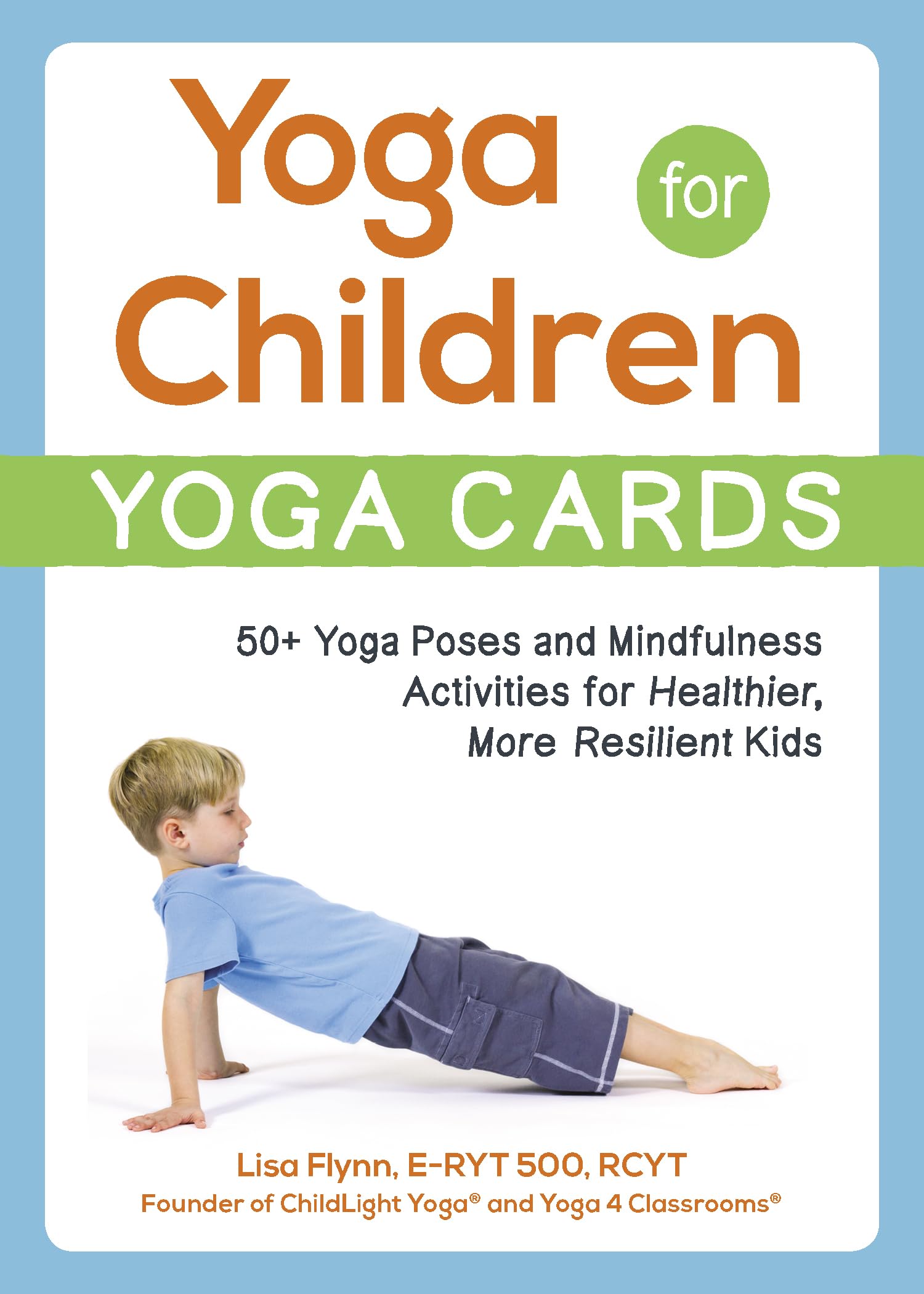
Yoga for Children Cards

93 /100
Peggy's Score Outstanding

Key details

Card Build
Oversized cards
Target User
Kids' instructors
Pose Library
50+ poses, activities
Instruction Depth
Instructions on back
Check Details on Amazon

The Lisa Flynn deck is organized around leading a children’s session: oversized visuals, back-of-card instructions, and color-coded categories for Mindful Me, Time to Breathe, Strike a Pose, and Rest & Relax give a group leader enough structure to run a class without sorting through a pile of poses.

This is for kids’ yoga instructors, parents with children ages 3-8, and school counselors or PE teachers. The content is aimed at children, so adult sequencing depth is not included; adult practitioners seeking advanced asana or Sanskrit-heavy references should look to a teacher-focused sequencing deck.

Pros

  • Oversized visuals and card size make it easy for a group of kids to see each pose.
  • Color-coded categories make it simple to mix breathing, poses, rest, and mindfulness activities.
  • Back-of-card instructions give adult leaders enough guidance without needing a separate script.

Cons

No notable drawbacks to flag.

Our verdict

For anyone leading yoga with children, this deck belongs in the class bag.

Check Latest Price
5

Best Chair Yoga for Seniors

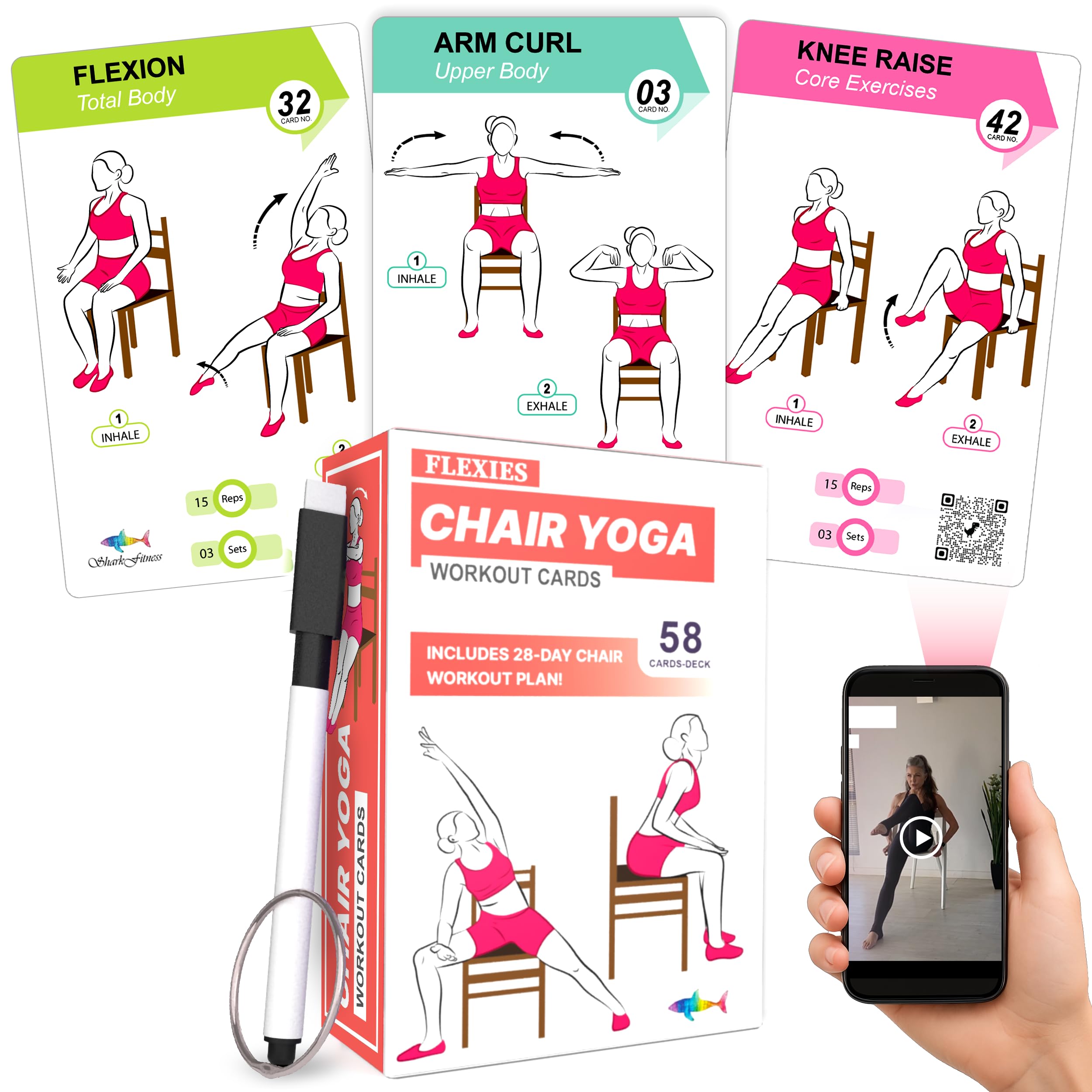
Flexies Chair Yoga Cards

86 /100
Peggy's Score Excellent

Key details

Card Build
Waterproof, color-coded
Target User
Seniors, beginners
Pose Library
58 chair cards
Instruction Depth
Step-by-step directions
Check Details on Amazon

The Flexies Chair Yoga Cards bring structure to seated practice: 58 waterproof cards are color-coded by body area, each with an easy-to-hard slider, and the 28-day chart plus dry-erase goal cards turn individual exercises into a plan you can track.

This suits seniors, beginners, and caregivers who want a low-impact routine with visible progress, including people working around a recent surgery or injury, and it stays seated from first card to last. Advanced yogis and anyone who prefers standing or vinyasa flow will be better served by a broader pose library. Buyers who need extra-large print should compare the budget large-print chair deck in this roundup.

Pros

  • Clear step-by-step directions make each seated pose easy to follow.
  • Shuffling the deck creates varied seated workouts without needing standing poses.
  • The 28-day chart and dry-erase goal cards make progress visible and build accountability.

Cons

  • Cards can run smaller than some senior-focused sets; text may be tight for vision-sensitive users.
Our verdict

A guided seated program with built-in tracking, this deck suits anyone who would rather follow a plan than improvise from pose cards.

Check Latest Price
6

Best Budget Chair Yoga

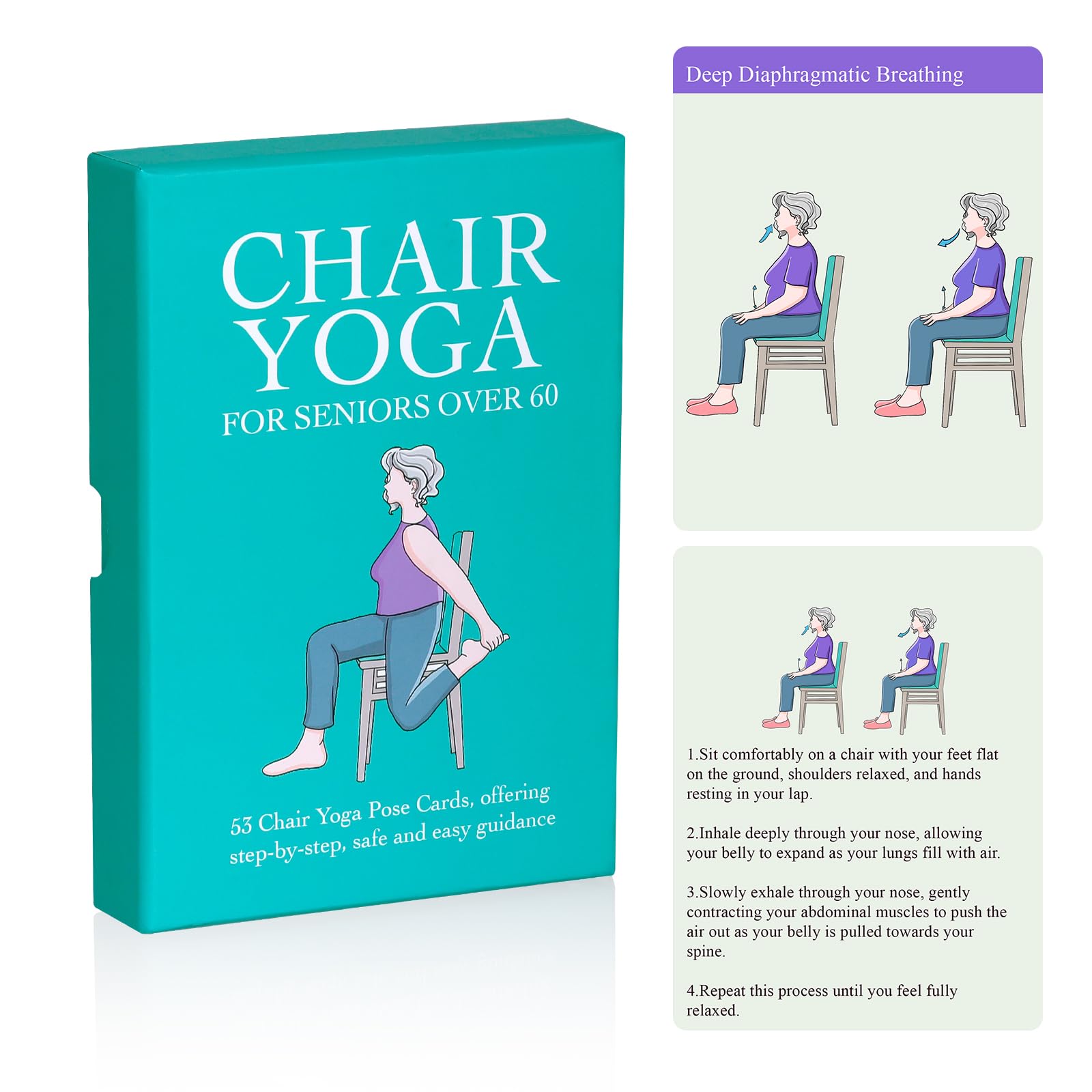
GiftNest Chair Yoga Cards

85 /100
Peggy's Score Excellent

Key details

Card Build
Large print, 5.91in
Target User
Seniors, limited mobility
Pose Library
53 chair cards
Instruction Depth
Step-by-step instructions
Check Details on Amazon

The GiftNest chair yoga deck is a budget-friendly set of 53 large-print cards with step-by-step directions, aimed squarely at seniors and seated movers. Card stock and print quality hold up for the price, and the oversized text makes following along from a chair easy.

This suits older adults, retirees, and people recovering from surgery or injury, plus caregivers who want an inexpensive movement tool. There's no preset daily calendar, so you build your own routine; a few cards may pair photo and text imperfectly, but the intended move is usually clear. Advanced practitioners looking for a deep sequencing reference should look elsewhere, but for the intended audience the large print and simple directions are the main draw.

Pros

  • Seated exercise variety with clear, easy-to-follow directions.
  • Large print and card size are readable from a seated position.
  • Card quality is good for the budget price.

Cons

  • No rep counts are included, so you decide how many rounds to do.
Our verdict

For caregivers and older adults who want an inexpensive, readable chair exercise deck, this is the budget pick to start with.

Check Latest Price
7

Best for Advanced Sequencing

Mark Stephens Sequencing Deck

90 /100
Peggy's Score Outstanding

Key details

Card Build
Illustrated cards, booklet
Target User
Experienced teachers
Pose Library
Major asanas, prep/counter
Instruction Depth
Sanskrit, counters, booklet
Check Details on Amazon

This sequencing deck pairs a wide range of asanas with prep and counter poses, Sanskrit names, and a guidance booklet that charts how the poses fit together. It is a compact alternative to the color-coded teacher's reference library in this roundup, with a sharper focus on pose relationships than on foundational instruction.

That focus assumes existing yoga knowledge. Experienced students planning home practice and teachers-in-training studying pose relationships will get the most from the deck. Complete beginners, especially those new to Sanskrit terms, may find the cues difficult to use as a first teaching tool.

💡 Keep the included booklet open while arranging prep and counter pose pairs for a new class.

Pros

  • Pairs every major asana with prep and counter poses, making sequence planning coherent.
  • Sanskrit names and pose relationships serve as a study aid for teachers and trainees.
  • Illustrations are clear and readable at a glance during class prep.

Cons

  • Complete beginners may find the Sanskrit-heavy cues and advanced pose range a steep entry point.
Our verdict

For teachers and training candidates who already read Sanskrit names and know asana basics, this deck turns pose relationships into a usable planning tool.

Check Latest Price
8

Adults and Pairs

Stack 52 Yoga Cards

91 /100
Peggy's Score Outstanding

Key details

Card Build
Large suited cards
Target User
Adults, pairs
Pose Library
104 poses
Instruction Depth
QR video tutorials
Check Details on Amazon

Stack 52's 104-pose library pairs every card with a QR video demo, and rated difficulty levels make it easy to build a varied workout on the fly. The game format works best for energetic paired or family practice, but it does not match the instructional depth or teacher-focused utility of top sequencing decks.

Pros

  • Well-made, easy-to-read cards keep the deck simple to use during practice.
  • QR video demos show you the pose before you try it, which supports new moves.

Cons

  • Teachers or self-study practitioners may miss the detailed alignment cues and Sanskrit names included in sequencing decks.
Our verdict

For pairs or families who want a social, game-like practice with video support, this deck keeps sessions moving. Contemplative study or teacher sequencing calls for a more instruction-heavy deck.

Check Latest Price
9

Preschool Families

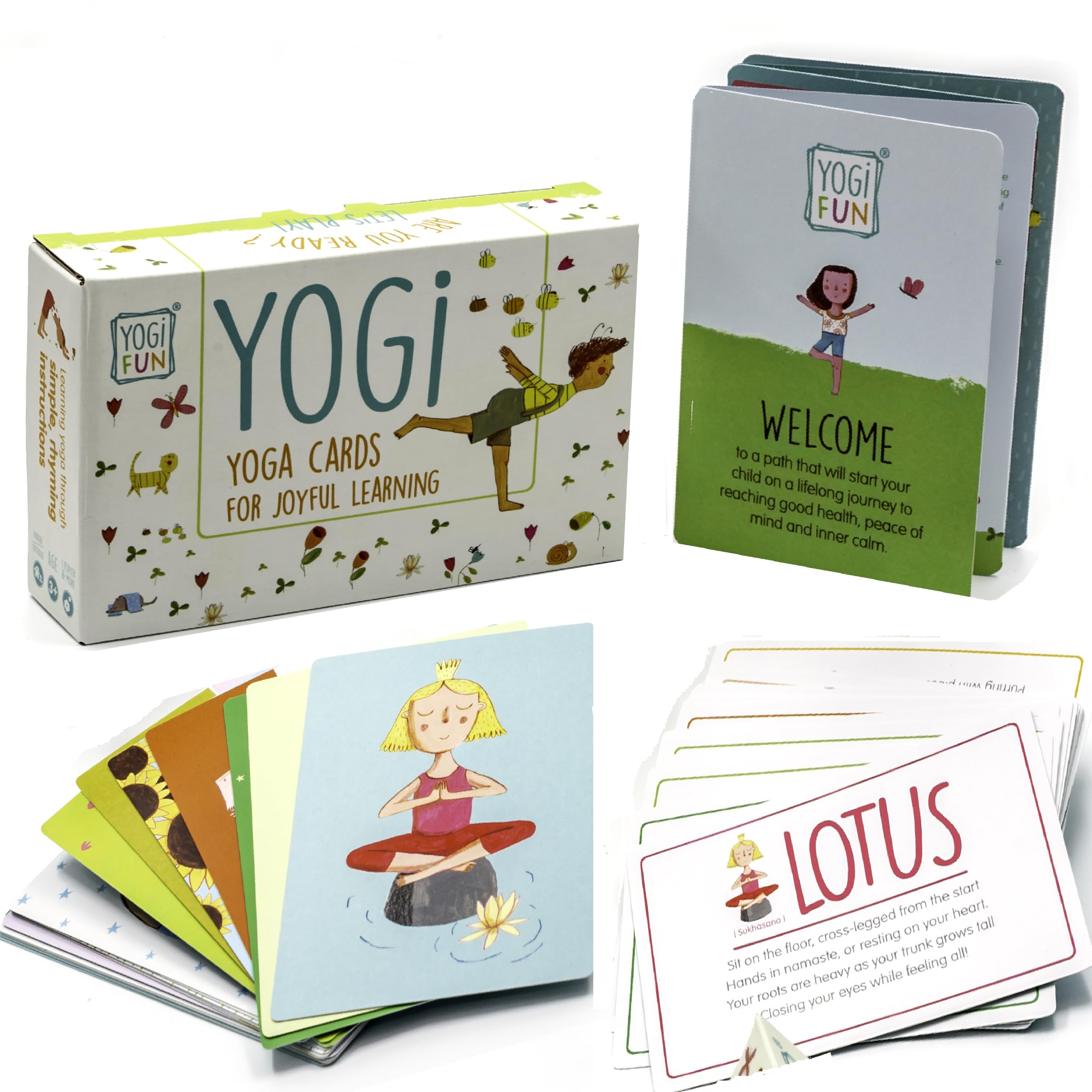
YOGi FUN Yogi Kit

91 /100
Peggy's Score Outstanding

Key details

Card Build
Cardboard cards
Target User
Preschoolers, families
Pose Library
40 yoga cards
Instruction Depth
Rhyming pose poems
Check Details on Amazon

YOGi FUN gets preschoolers moving with 40 rhyming yoga cards, two dice, and four group games that fit family play and classroom brain breaks. Rhymes are simple, illustrations engaging, and the format stays playful rather than instructional. That game-first approach means it won't satisfy adults looking for sequencing cues; thin cardstock can also show wear under heavy preschool use.

Pros

  • Simple rhyming dice game that keeps groups of preschoolers moving and engaged together.
  • Low-pressure yoga introduction with bright illustrations that appeal to young kids.

Cons

  • Thin cardstock can show wear when preschool groups handle cards roughly.
Our verdict

Pick this for a preschool playdate, classroom brain break, or family game shelf with adult supervision — not for sequencing study or serious practice.

Check Latest Price
10

Also Great

Kids Yoga Challenge Cards

92 /100
Peggy's Score Outstanding
Check Details on Amazon

Star difficulty ratings make it easy to choose poses, and partner poses plus mantras get kids working together. Teachers and parents can grab a card for a quick activity break with zero planning. Cardstock can show wear under heavy classroom handling, and content stays kids-focused, so adult sequencing and Sanskrit cues are absent.

Pros

  • Star difficulty ratings make it easy to match poses to kids' energy and skill levels.
  • Partner poses and mantras turn a single card into a shared group activity.

Cons

  • Cardstock can show wear under repeated classroom use.
Our verdict

Fits kids' yoga teachers and parents who want shared challenge poses and quick activity breaks; adult practice or Sanskrit work needs a different deck.

Check Latest Price
11

Preschoolers and Parents

Mollybee Preschool Yoga

92 /100
Peggy's Score Outstanding

Key details

Card Build
Ring-bound cardboard
Target User
Toddlers, preschool
Pose Library
40 activities, 20 cards
Instruction Depth
Simple activity prompts
Check Details on Amazon

Themed activities like Around the World and On the Farm make the deck engaging for toddlers and preschoolers, and the compact 20-card format travels well in a diaper bag. The plastic ring may open and scatter cards, so a quick check before each session covers it. Poses are simple, so older kids and serious practitioners will quickly outgrow this set.

Pros

  • Keeps toddlers and preschoolers active with playful themed prompts.
  • Compact ring-bound format fits in a diaper bag or purse for travel.

Cons

  • Plastic ring closure may open unexpectedly and scatter the cards.
Our verdict

For parents and preschool teachers who need a portable movement break for ages 3 and up, this deck works once you check the ring closure before each session.

Check Latest Price
12

Home Practitioners

Grand Basics Yoga & Stretch

0 /100
Peggy's Score Fair

Key details

Card Build
Waterproof plastic
Target User
Home exercisers
Pose Library
121+ exercises, two decks
Instruction Depth
Beginner instructions
Check Details on Amazon

Two waterproof decks bundle 121+ poses and 26 ready-made routines at a single-deck price point — a strong screen-free option for home exercisers and travelers. The 12 create-your-own cards add customization. As a yoga teaching reference, this is a fitness deck rather than a thorough yoga teaching system, so it suits practitioners who want structure without sequencing depth.

Pros

  • Two waterproof decks cover both yoga and stretching, so one set replaces two separate purchases.
  • Ready-made routines are easy to follow, which lowers the barrier for home beginners.

Cons

  • For yoga teachers, the deck is oriented to general fitness rather than to sequencing depth.
Our verdict

Home exercisers and travelers get strong value from ready-made yoga-plus-stretch workouts; teachers should pick a sequencing-specific deck.

Check Latest Price
13

Teacher Trainees

Zinsk Yoga Cards

91 /100
Peggy's Score Outstanding

Key details

Card Build
3x5 flashcards
Target User
Teacher trainees
Pose Library
70 pose cards
Instruction Depth
Alignment cues, modifications
Check Details on Amazon

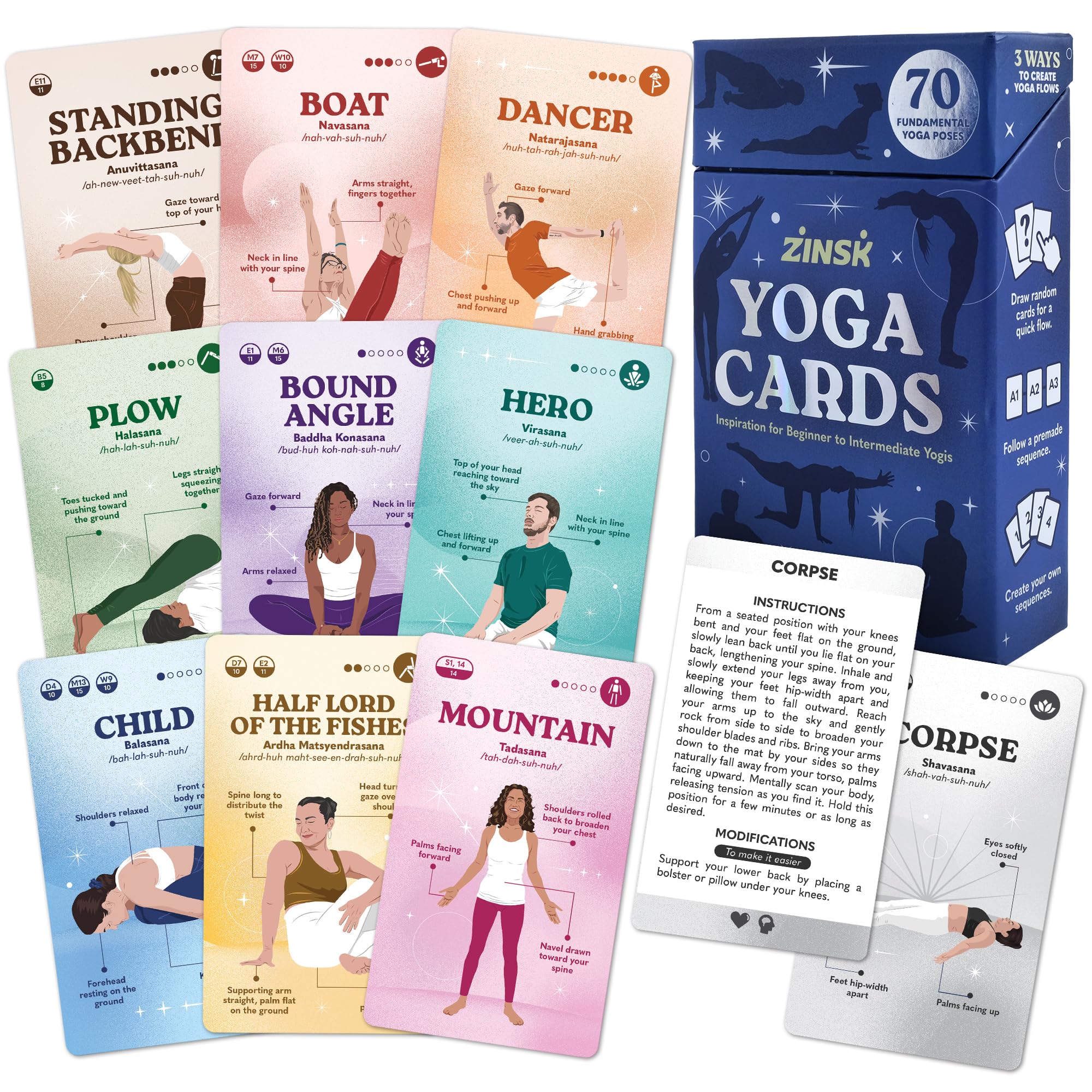
Zinsk's 70 pose cards pair clear alignment cues with modification ideas and intention prompts, making them a focused study deck for teacher trainees. The 3x5 format travels well, and the language supports sequence building. It lands below the top pick because the beginner-intermediate range leaves advanced sequencing outside its scope; the waterproof all-rounder remains the broader home-practice option.

Pros

  • Clear pose directions and modification ideas support self-practice and teaching prep.
  • Useful for sequencing and class planning, especially for newer teachers.

Cons

  • Premium pricing is a barrier for budget-conscious buyers.
Our verdict

Teacher trainees focused on modification detail and class-building language get the most from this set.

Check Latest Price
14

Adults and Gifts

Yoga Asana Cards

92 /100
Peggy's Score Outstanding

Key details

Card Build
Boxed card set
Target User
Adults, gift buyers
Pose Library
50 pose cards
Instruction Depth
Pose names, sequence guide
Check Details on Amazon

This compact set pairs 50 pose cards with 25 ready-made sequences, so you can move through a session without building your own plan. It is a wellness-focused sequence deck rather than a full teaching reference, so it suits practitioners who already know basic pose mechanics. Beginners who need cue-by-cue direction should start with a more instructive deck.

Pros

  • Ready-made sequences bundled with pose cards save planning time for home practice.
  • Compact boxed format works well as a wellness-focused gift set.

Cons

  • For those needing beginner cue-by-cue directions or a fixed Ashtanga series, the deck can feel too general.
Our verdict

This deck fits practitioners who know basic pose mechanics and want sequence structure; cue-by-cue beginners should choose a more instructional set.

Check Latest Price
15

Ashtanga Students

Ashtanga Primary Series

92 /100
Peggy's Score Outstanding

Key details

Card Build
Large boxed cards
Target User
Ashtanga students
Pose Library
Primary Series cards
Instruction Depth
Alignment cues, Sanskrit
Check Details on Amazon

Large, sturdy cards lay out the Primary Series in order, pairing Sanskrit names with alignment cues. Home practitioners can use them for Mysore-style study or memorization drills. The deck assumes you already know Ashtanga cues and sequencing, so beginners unfamiliar with the series will need outside instruction. That narrow focus suits only Ashtanga students, who get a focused study tool.

Pros

  • Large, durable cards with accurate pose photos make repeated Primary Series study easy.
  • Useful for memorizing the Primary Series and preparing for Mysore or teacher training.

Cons

  • Independent use requires prior knowledge of Ashtanga cues and the Primary Series order.
Our verdict

For Ashtanga students committed to memorizing the Primary Series, this deck earns its place next to the mat; outside that lineage, a broader sequencing deck fits better.

Check Latest Price

How to Choose

Pose Library

Pose count is not the same as pose breadth. A 47-pose beginner deck built around foundational asanas is easier to internalize than a 120-pose reference because each card gets more attention. A home practitioner usually gets more value from a smaller library with clear organization.

A huge deck also creates a planning problem: when every option is in the pile, pulling a coherent sequence takes longer than the practice itself. Teachers may want that raw material; beginners usually do not.

Instruction Depth

Instruction depth is where a deck reveals its intended audience. Alignment cues and modifications help a new student trust the pose; Sanskrit names and pose relationships help a teacher-in-training remember the system. A deck cannot be both a simple cue card and a full teaching manual without becoming cluttered.

The physical trade-off is simple: more text per card means smaller type or larger cards, and either choice changes how the deck handles on a mat.

Sequences Included

Ready-made sequences turn a stack of cards into a session. Without them, the buyer has to understand vinyasa logic, counter-pose relationships, and class pacing before starting. For beginners and seniors, a deck with a plan, such as five sequences, a 28-day chart, or a series order, is more likely to become a habit.

Sequences also create a constraint: a fixed series deck is valuable for one style but stops being useful if you want a different practice.

Card Durability and Size

Card build determines where a deck can live. Waterproof plastic handles travel bags, kitchen counters, and sweaty hands; paper cardstock is fine for a quiet home practice but softens over time. Size matters just as much: oversized cards are easier for kids and seniors to read but harder to shuffle.

Target User Fit

Target user fit should be the final filter. Adults need alignment cues and pose categories; kids need playful images and short activities; seniors need large print and seated variations. A deck that works well for a kids' yoga teacher can still be wrong for that same teacher's own home practice.

Frequently Asked Questions