14 Best Balance Board of 2026: Pick the Board for Your Training

Find the balance board that fits your training style, floor type, and skill level — the right board depends on how and where you'll use it.

Balance board marketing makes them look one-size-fits-all, but the right board depends on how you'll use it. A rocker that suits ankle rehab won't challenge a surfer, and a free-rolling board can be too much for desk-side standing. Board type, deck width, and floor traction matter more than brand or price.

Price can mislead in both directions. Budget wood boards hold their own against premium roller boards for most home training; expensive options earn their cost only when the movement pattern matches your sport or rehab goal. A seven-mode kit is genuinely useful, but if the deck starts separating after weeks of use, that versatility becomes a trade-off, not a benefit.

For yoga core work, gym balance circuits, physical therapy, or all-day desk movement, choose the motion style and deck size that fit your body and floor. That match, not the sticker price, keeps the board in your routine.

1

Best Overall

StrongTek Wooden Balance Board

92 /100
Peggy's Score Outstanding

Key details

Deck Size
17.5 x 13.5 in
Board Type
Rocker / wobble
Adjustability
None
Weight Capacity
350 lbs
Check Details on Amazon

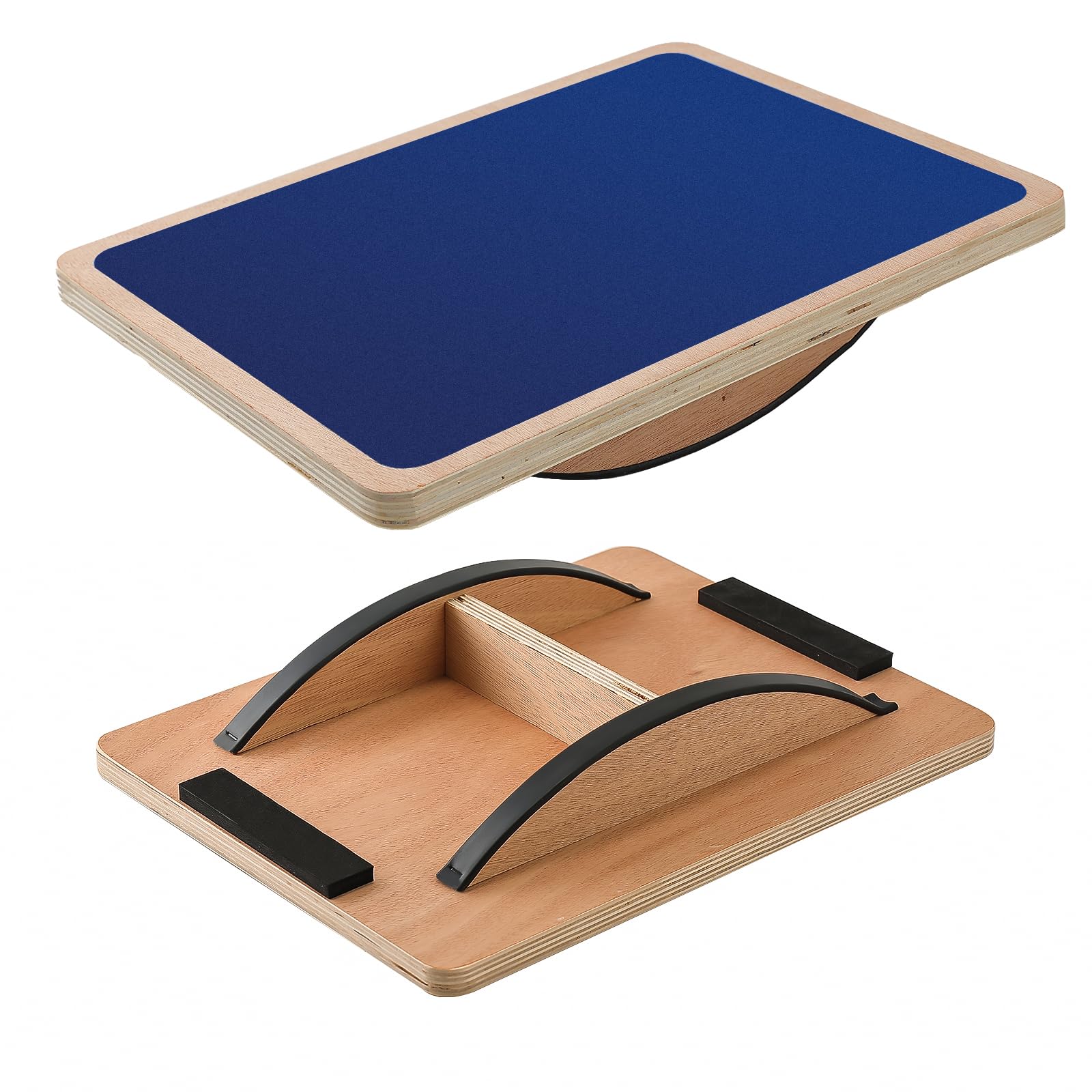
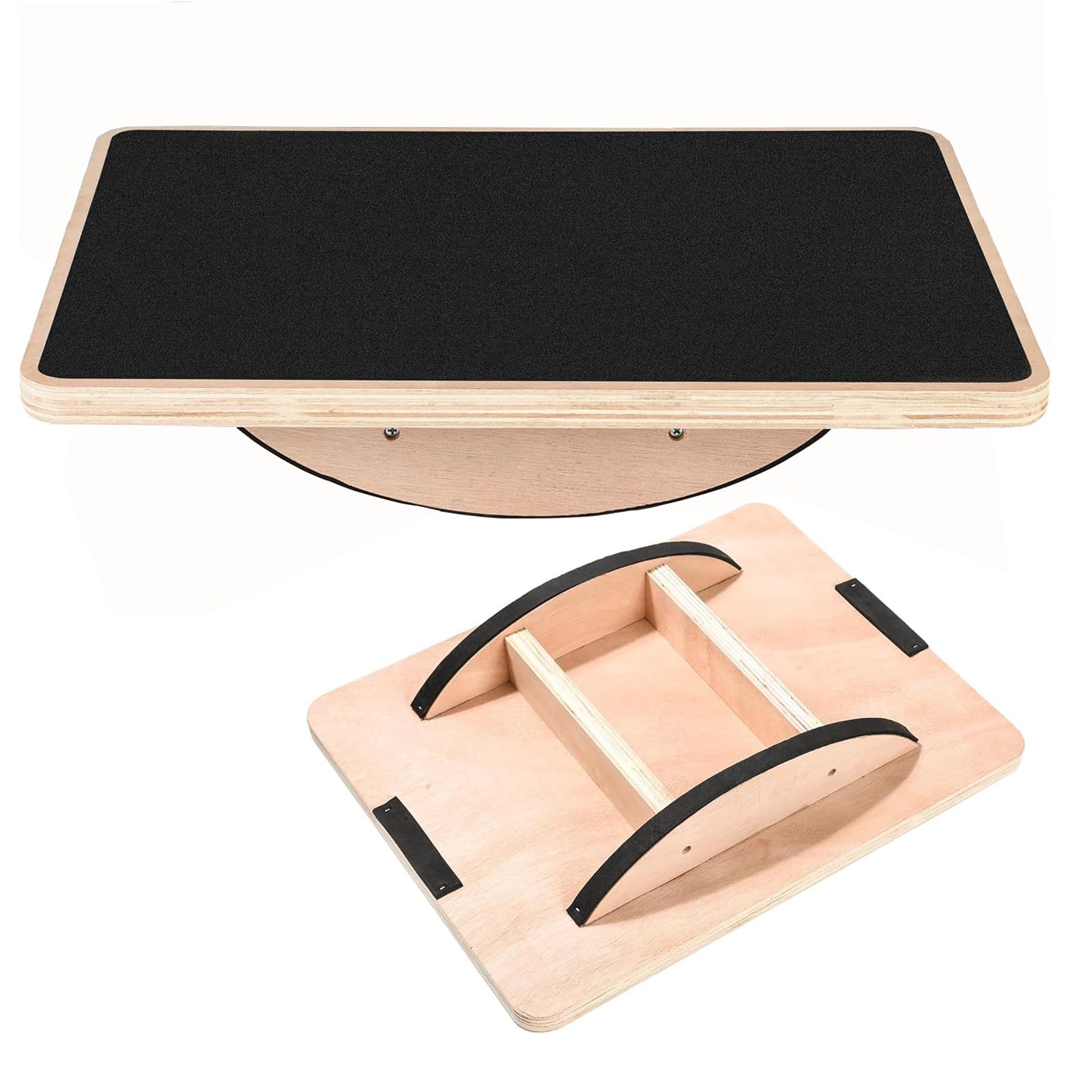
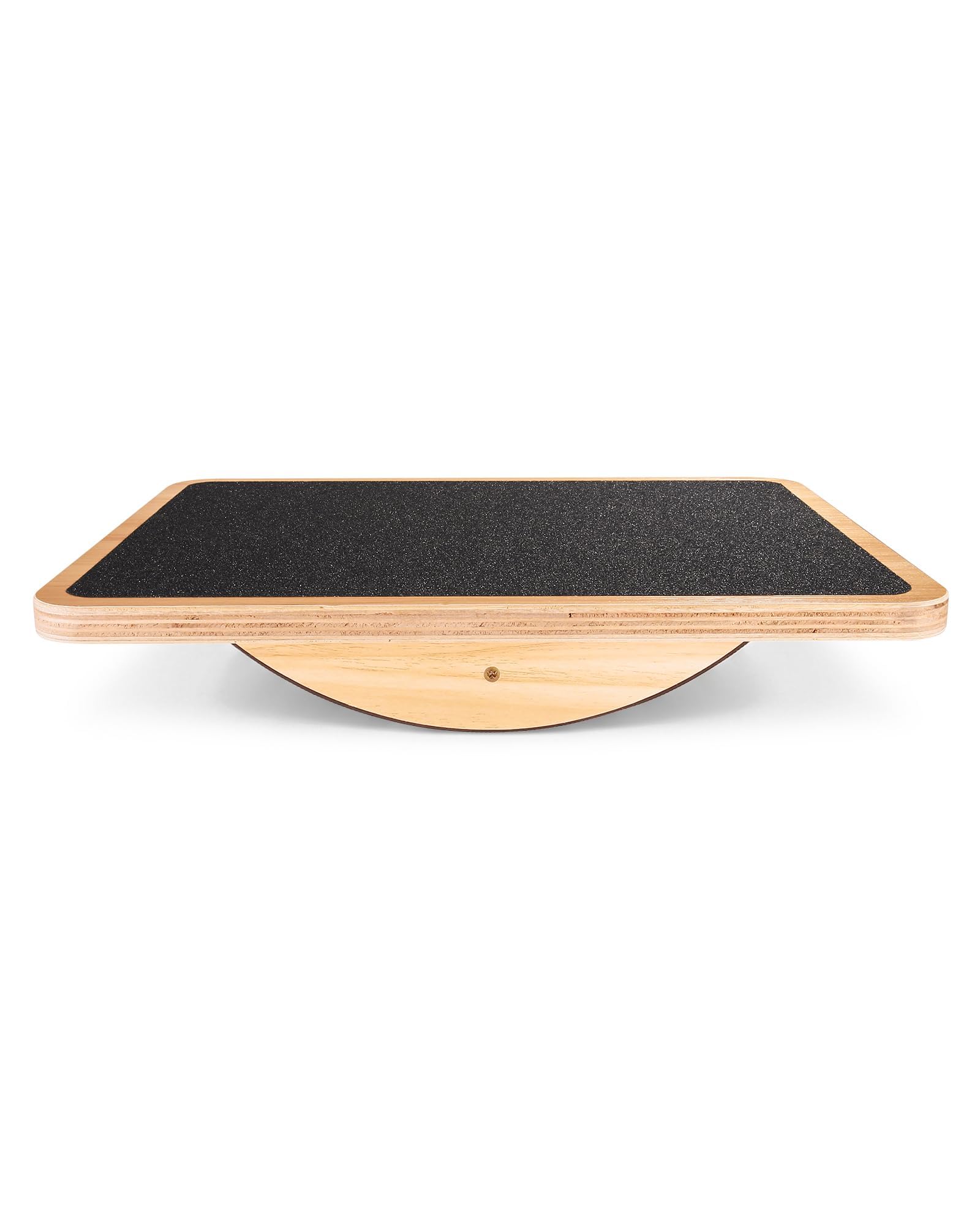
The hardwood plywood construction resists splitting and warping even under frequent daily use, supported by a 350-lb capacity that accommodates heavier users without creaking. The smooth rocker arc provides enough instability to engage core muscles and improve ankle stability without being intimidating for first-time users. The arc is intentionally mild, so it functions more as a gentle fidget surface during desk work than a high-intensity wobble challenge. This design choice suits home physical therapy, standing desk use, and beginner-to-intermediate balance training — exactly what this board was built for.

This board is best for someone recovering from a lower-leg injury, adding movement under a standing desk, or building foundational balance skills. The rocker curve is intentionally shallow, so experienced balance athletes and roller-board users will want a board with more tilt or a multidirectional wobble. If you need a single-plane rocker that won't slide on carpet and won't break after a few months, this delivers at a budget-friendly price.

Pros

  • Harwood plywood construction resists warping and cracking through years of daily use.
  • Improves core strength, balance, and ankle stability
  • Cost-effective rocker that stays quiet and stable without plastic parts or gimmicks.

Cons

  • Basic rocker arc can feel too mild for users accustomed to roller boards or high-wobble training.
Our verdict

The StrongTek board gives you a dead-simple rocker that holds up to daily use and works for therapy, desk fidgeting, and foundational balance work — without the complexity or durability risks of multi-mode systems.

Check Latest Price
2

Best Budget 360 Wobble Board

Amazon Basics Wobble Board

93 /100
Peggy's Score Outstanding

Key details

Deck Size
15.75 x 15.75 in
Board Type
360 wobble
Adjustability
None
Weight Capacity
265 lbs
Check Details on Amazon

A compact 15.75-inch 360 wobble board at an entry-level price is a low-risk introduction to balance training for home fitness, physical therapy, and standing-desk movement. The wood deck supports basic core and stabilizer work without demanding a steep learning curve, and the footprint slides under a desk when off-duty.

It suits budget-conscious beginners and desk workers who want light movement rather than high-intensity training. The 15.75-inch deck and smooth bottom work best on a mat over hard floors; at a standing desk, it turns idle standing into a low-level ankle and core workout. It is the board to choose when you want to test whether balance training belongs in your routine.

💡 Wear indoor training shoes if the textured top feels rough on bare feet.

Pros

  • Entry-level price keeps the cost low for trying 360 balance training.
  • Wood deck supports regular core and stabilizer work for most home routines.
  • Covers standing-desk movement and basic rehab use in a compact footprint.

Cons

  • Compact deck limits wide-stance exercises and feels tight for larger feet.
Our verdict

Buy it as a low-cost trial run for balance work; the simple design makes it easy to decide whether a more advanced board is worth it.

Check Latest Price
3

Best Multi-Mode Trainer

Sportneer 7-Mode Balance Board

94 /100
Peggy's Score Outstanding

Key details

Deck Size
Board Type
Wobble, roller, ball
Adjustability
Magnetic stops, 7 modes
Weight Capacity
450 lbs
Check Details on Amazon

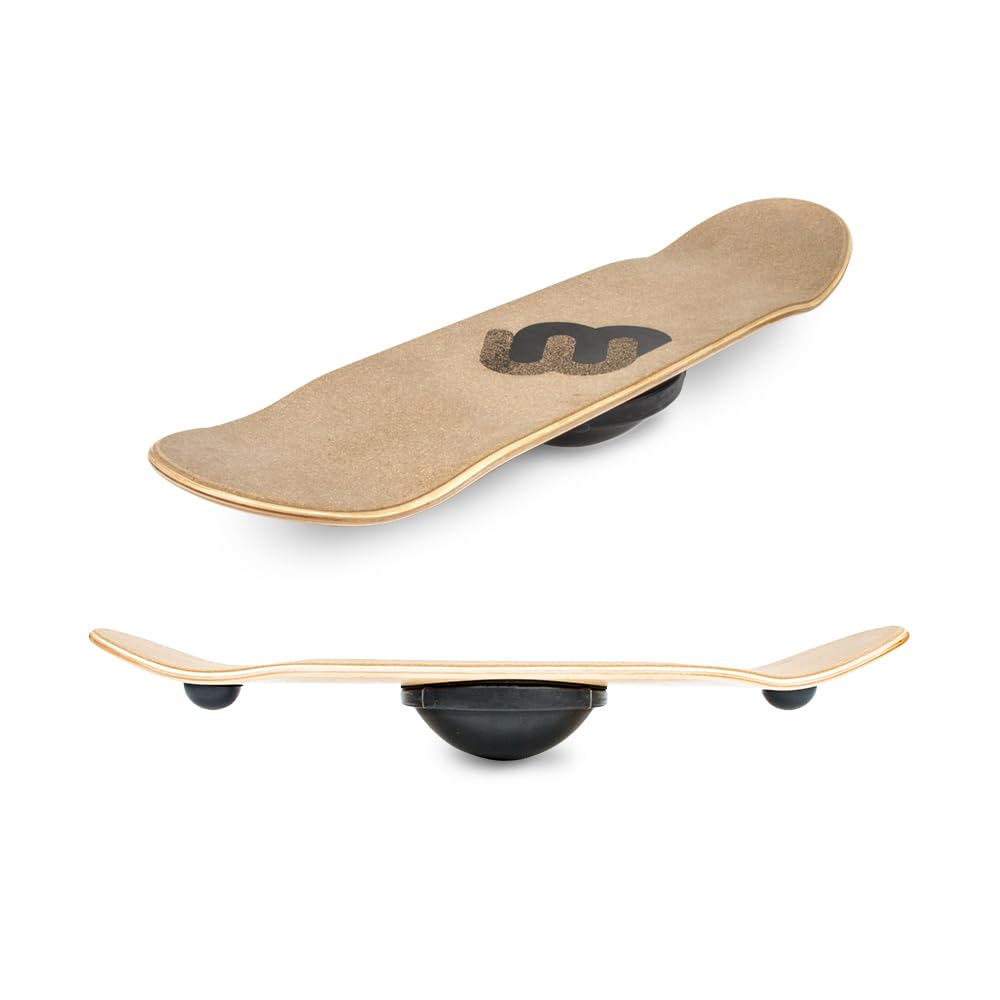
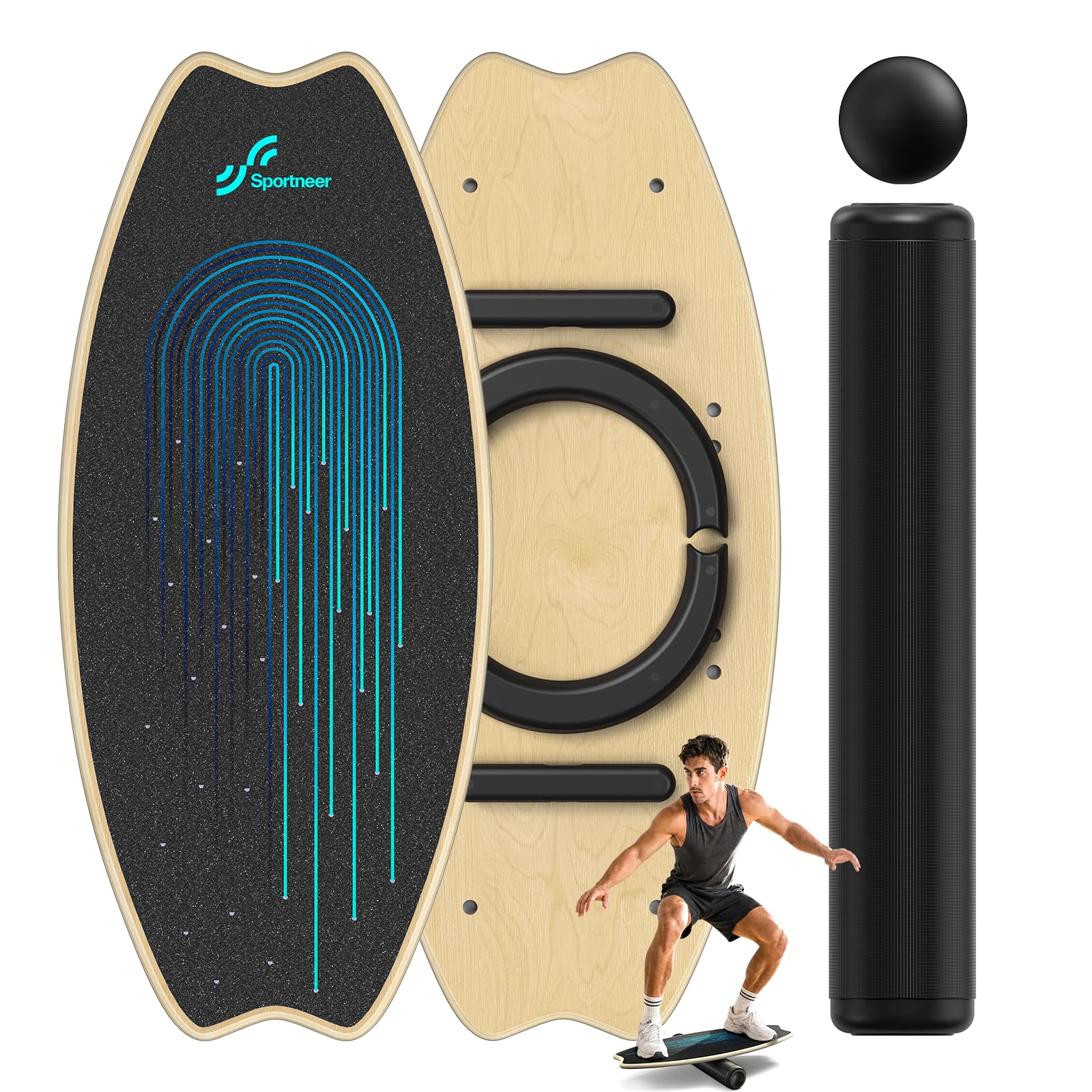
Seven modes, magnetic stoppers, a roller, and a ball come in one birch-wood kit rated for 450 lbs, giving athletes and families a real progression path without switching boards. The magnetic stops snap in place with no tools, so moving from a beginner-friendly wobble to free-rolling balance takes only a few seconds.

Surfers, skateboarders, and anyone training core strength at home will find the extra modes useful, and the 450-lb capacity leaves room for heavier adults. Some units can show lamination or cracking after about a month of use, so inspect the birch deck before hard-floor sessions; durability-focused buyers will get more certainty from the simpler rocker board in this guide.

💡 Store the roller and ball as a set so setup between modes stays quick.

Pros

  • Builds core strength, balance, and stability through a clear progression from beginner wobble to free-rolling movement.
  • Seven modes and magnetic stops let different skill levels share one board without extra equipment.
  • Magnetic stoppers snap in place without tools, so moving between modes fits naturally into a workout.

Cons

  • Multi-mode kit includes a roller, ball, and four magnetic stops to keep track of; a single rocker is simpler to store.
Our verdict

When a basic rocker no longer challenges you, this multi-mode kit keeps you progressing without buying a second board.

Check Latest Price
4

Best Adjustable Sports Trainer

Revbalance 101 v2

95 /100
Peggy's Score Outstanding

Key details

Deck Size
Board Type
Roller board
Adjustability
MagSwitch magnetic stops
Weight Capacity
400 lbs
Check Details on Amazon

The Revbalance 101 v2 pairs MagSwitch magnetic stops with Durasoft grip in a roller board that scales from beginner attempts to intermediate board-sport sessions. Direction changes stay controlled because the stops shorten or lengthen the roller path, so riders can set their own challenge level.

Skateboarders, snowboarders, surfers, and families get one board for off-season conditioning and casual core work. The adjustable stops give a real progression path, but advanced riders may outgrow the default challenge despite the stops; those past intermediate will want a more demanding setup.

💡 Move the MagSwitch stops closer together while you learn, then widen them as your balance improves.

Pros

  • Solid platform construction keeps the deck stable under shifting weight.
  • Build quality carries a premium feel across the magnetic stops and grip surface.
  • Families can share it for casual balance work while athletes train for board sports.

Cons

  • Riders with larger feet can find the deck short for a fully planted stance.
Our verdict

Buyers who want roller-style movement with adjustable difficulty get the runner-up to the simpler rocker-style top pick.

Check Latest Price
5

Best for Surf and Paddle Training

Revbalance Swell 2.0

94 /100
Peggy's Score Outstanding

Key details

Deck Size
Board Type
Roller board
Adjustability
MagSwitch magnetic stops
Weight Capacity
450 lbs
Check Details on Amazon

The Swell 2.0 pairs an extended roller with heel-to-toe and side-to-side motion, giving surfers, paddleboarders, and wakesurfers a dry-land replica of water-sport stances. The high-density polyethylene deck feels firm underfoot, and the MagSwitch magnetic stops allow a narrow starting range before you open up the travel. Unlike an all-around adjustable roller trainer, this deck is tuned to water-sport movement patterns.

This is a specialized tool for water-sport athletes and serious balance trainers who want a longer roller. The sport-specific movement does not suit casual desk workers, who will get more value from a rocker-style board or a simpler roller.

💡 Start with the magnetic stops set close, then widen the travel as your stance steadies.

Pros

  • Extended roller and two-directional motion let surfers, SUP riders, and wakesurfers rehearse sport-specific stances on land.
  • High-density polyethylene board and roller stand up to repeated dry-land training sessions.
  • Magnetic stops allow beginners to narrow the roller range first, then widen it as skill builds.

Cons

  • Premium price and sport-specific design make it a poor value for budget shoppers who just want a general-purpose board.
Our verdict

For water-sport athletes, the Swell 2.0 turns dry-land training into movement that carries into the water.

Check Latest Price
6

Best for Physical Therapy and Rehab

Fitterfirst Pro Rocker Board

92 /100
Peggy's Score Outstanding

Key details

Deck Size
20 in wide
Board Type
Adjustable rocker
Adjustability
Three tilt angles
Weight Capacity
350 lbs
Check Details on Amazon

The 20-inch Baltic-birch deck with 10-, 12-, and 15-degree tilt settings gives this a clinical feel from the first step-on. The platform remains steady under heavy use, and the wide surface gives feet enough room to adjust before increasing the angle. This is a single-plane rocker, so it targets knee and ankle movement along one axis rather than rotating through 360 degrees.

This is for knee or ankle rehab, senior balance training, and clinical settings where controlled progression matters. The adjustable tilt has a learning curve at higher angles, so start at 10 degrees and move up as control improves.

💡 Use a wall or counter for support when first learning the 12- and 15-degree angles.

Pros

  • Three tilt angles give a clear progression from gentle to more demanding rehab work.
  • Commercial-grade construction holds up in clinic and home settings.
  • Wide 20-inch platform supports larger feet during balance and recovery workouts.

Cons

  • Single-plane rocker only; it is not a 360-degree wobble board.
Our verdict

For controlled knee and ankle rehab or senior balance work, this rocker's adjustable tilt and stable platform make it worth the premium price.

Check Latest Price
7

Best Classic Balance Board

Indo Board Original

96 /100
Peggy's Score Outstanding

Key details

Deck Size
Board Type
Classic roller board
Adjustability
None
Weight Capacity
350 lbs
Check Details on Amazon

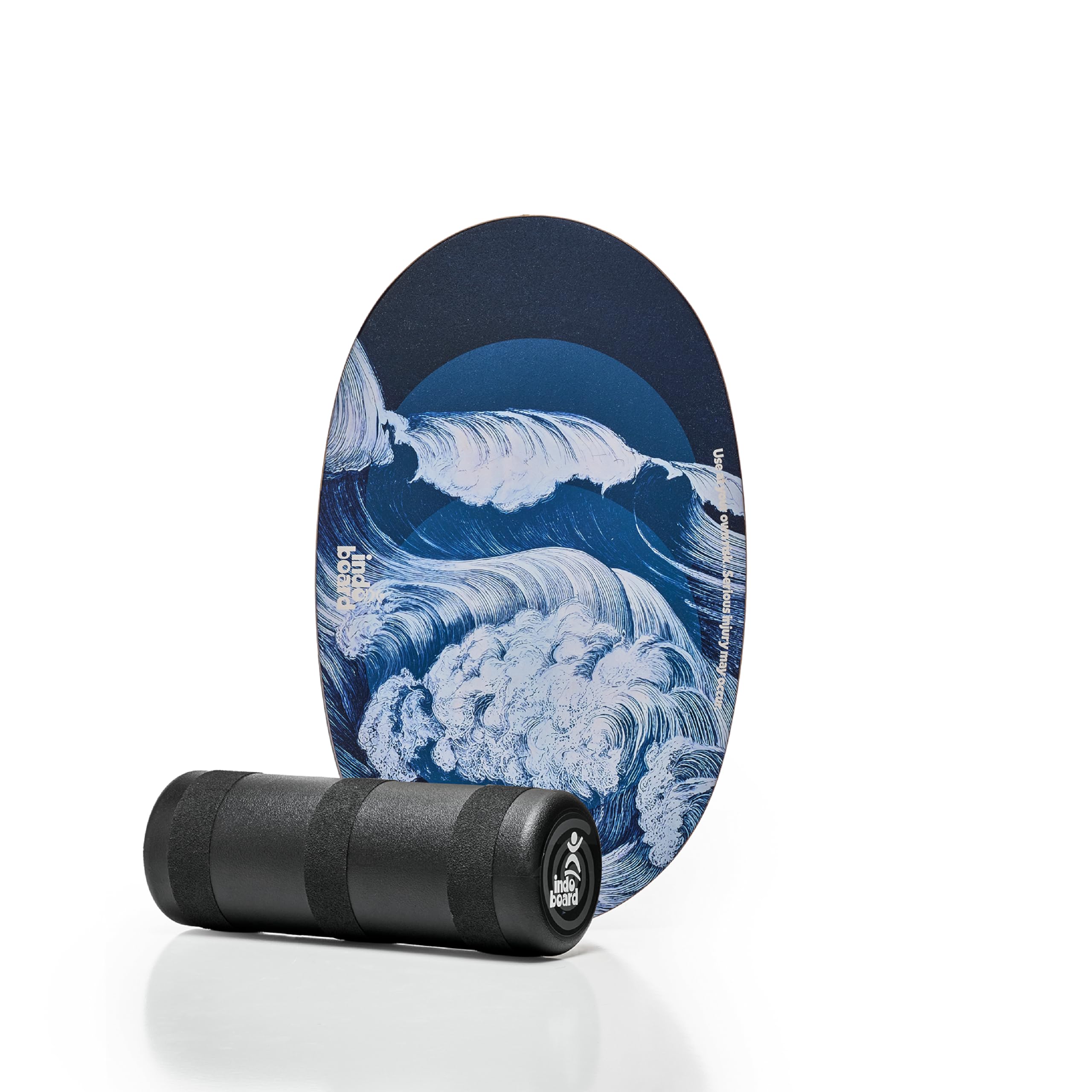
The Indo Board keeps the original free-rolling maple board-and-roller format, putting balance work entirely on the rider. Its simple construction is precisely why core-strength enthusiasts and board-sport athletes seek it out, and the maple deck has a polished finish that holds up to repeated use.

This is for riders who enjoy a pure practice curve rather than guided stops. Beginners without adjustable stoppers will need a wall or spotter and patience, though the free-rolling motion starts to click within a few sessions. It suits families, surfers, skateboarders, and snowboarders who want one board for ongoing skill-building.

Pros

  • Builds core strength and balance through a challenging free-rolling motion.
  • Maple deck and roller feel solid underfoot and hold up to frequent sessions.
  • Fun, addictive challenge that keeps families and athletes engaged long-term.

Cons

  • Package contains only the board and roller, so you'll need to supply a mat or clear practice area.
Our verdict

The Indo Board is a premium-priced trainer for riders who want the original free-rolling ride and are willing to build skill through practice. Riders who need guided progression will get more from the adjustable roller board in this lineup.

Check Latest Price
8

Standing Desk Agility

Whirly Board Spinner

92 /100
Peggy's Score Outstanding

Key details

Deck Size
32 x 8.25 in
Board Type
Spinning board
Adjustability
None
Weight Capacity
400 lbs
Check Details on Amazon

The 360-degree spin on a 32-inch maple deck with cork grip turns standing-desk hours into active core and leg work. For hockey, tennis, pickleball, and agility athletes, the free-spinning motion matches rotational movement patterns. The 8.25-inch-wide deck and spinning motion can overwhelm absolute beginners, and the premium price keeps this a specialty tool rather than a universal pick.

Pros

  • Builds core, leg strength, and balance through active standing-desk use.
  • Seven-ply Canadian maple and cork grip hold up under daily desk standing.

Cons

  • For wider stances or larger feet, the 8.25-inch deck limits comfortable foot placement.
Our verdict

It fits standing-desk users and rotational-sport athletes who don't need a wide platform; beginners and large-foot users should choose the budget rocker in this set instead.

Check Latest Price
9

Runners' Foot Rehab

MOBO Board

93 /100
Peggy's Score Outstanding

Key details

Deck Size
14.72 x 13.9 in
Board Type
Foot rocker board
Adjustability
Multiple rocker pieces
Weight Capacity
300 lbs
Check Details on Amazon

The MOBO Board isolates foot and ankle movement more directly than a general wobble board, and the multiple rocker pieces suit runner recovery work. But it is a narrow tool: foot-specific focus limits general core and balance use. Axis changes can be fiddly, and the rockers can slide on hard floors, so plan on a mat.

Pros

  • Targets foot arch and ankle stability more directly than a general wobble board.
  • Multiple bamboo rocker pieces allow focused lower-leg work with adjustable movement angles.

Cons

  • The 300-lb weight limit excludes larger adults who need a higher-capacity board.
Our verdict

For runners adding targeted lower-leg work to an existing routine, use this board alongside a general balance board rather than instead of one.

Check Latest Price
10

Beginners and Seniors

HAPOO Wooden Wobble Board

88 /100
Peggy's Score Excellent

Key details

Deck Size
16.5 x 13 x 2.5 in
Board Type
Wobble / rocker
Adjustability
None
Weight Capacity
350 lbs
Check Details on Amazon

This no-assembly wood rocker suits desk-side standing, gentle home therapy, and beginner balance work on a budget. The 16.5-inch deck feels sturdy underfoot, and the motion stays controlled enough for older adults to use without hesitation. Experienced balance trainers will find the intensity cap early, so this is not a progression tool for advanced work.

Pros

  • Boosts core strength, balance, and ankle mobility with a controlled motion that beginners can manage.
  • Wood deck is well-constructed for the price, with no assembly and a 350-lb capacity.

Cons

  • Shallow rocker range provides limited wobble amplitude, so advanced balance athletes will want more.
Our verdict

A sensible entry-level rocker for desk-side movement and light rehab, as long as your goal is gentle daily motion.

Check Latest Price
11

Ankle Rehab, Desk

Yes4All Wooden Balance Board

90 /100
Peggy's Score Outstanding

Key details

Deck Size
17.5 x 13.5 x 3 in
Board Type
Rocker board
Adjustability
None
Weight Capacity
350 lbs
Check Details on Amazon

This 17.5-inch hardwood rocker is a budget-friendly rehab and standing-desk board: the 350-lb deck supports ankle strengthening and side-to-side stability work without feeling flimsy. The shallow rocker angle is fine for desk movement and early rehab, though experienced PT patients may want more challenge, and the bottom non-slip covering can wear down on hard floors.

Pros

  • Strengthens ankles and supports balance work with a simple rocking motion.
  • Solid hardwood deck holds up in daily home and desk routines.

Cons

  • Bottom non-slip covering can wear off, letting the board slide on hard floors.
Our verdict

Fits budget ankle rehab and standing-desk routines when the shallow rocker angle matches your level.

Check Latest Price
12

Families and Beginners

Juoe Wooden Wobble Board

89 /100
Peggy's Score Excellent

Key details

Deck Size
17.5 x 13.5 x 3 in
Board Type
Wobble / rocker
Adjustability
None
Weight Capacity
350 lbs
Check Details on Amazon

Hardwood wobble/rocker board at a family-friendly price: 350-lb capacity and a compact footprint make it easy to store and forgiving for kids. The size is the boundary — adults with larger feet and older kids may outgrow the challenge quickly. This is a household rocker, not a serious adult training platform.

Pros

  • Budget-friendly hardwood deck handles 350 lbs, suiting kids and lighter adult workouts.
  • Rocker motion engages core and balance for beginners and family sessions.

Cons

  • Compact 17.5-inch deck can feel small for adult feet and easy for older kids chasing more difficulty.
Our verdict

For families who want a low-cost balance board for kids and light adult use, this fits; adult training needs a larger deck.

Check Latest Price
13

Budget PT Workouts

Yes4All Plastic Wobble Board

89 /100
Peggy's Score Excellent

Key details

Deck Size
16.34 in diameter
Board Type
360 wobble
Adjustability
None
Weight Capacity
300 lbs
Check Details on Amazon

The 16.34-inch TPE board pairs carrying handles with a massage-spike surface, so it travels easily between home and gym. It strengthens core and lower-leg balance for daily training. Grip can be slippery in socks, and the deck is snug; the missing price also makes value comparisons harder than leaders. Users who wear shoes can still use it.

Pros

  • Builds balance and core strength through a full 360-degree range.
  • Supports ankle, calf, and lower-leg strengthening for home physical therapy.

Cons

  • Hard handle holes can be uncomfortable during pushup-style workouts.
Our verdict

For budget-focused adults seeking a portable 360 board, this is a reasonable fit.

Check Latest Price
14

Budget Ankle Rehab

VANKUTL Wooden Wobble Board

89 /100
Peggy's Score Excellent

Key details

Deck Size
16.45 x 12.99 in
Board Type
Wobble / rocker
Adjustability
None
Weight Capacity
350 lbs
Check Details on Amazon

This entry-level wood rocker gives post-injury ankle work and desk-side movement a budget-friendly option with a solid feel. A flat spot in the rocker curve can make the glide uneven on certain boards, and the top budget rocker adds a larger deck and more consistent motion for a modest step up.

Pros

  • Supports balance, ankle strength, and post-therapy routines.
  • Well-made and impressive for the price.

Cons

  • Low challenge level can leave experienced balance trainers wanting more.
Our verdict

For budget-focused buyers who need a simple wood rocker for ankle recovery and desk-side movement, this board fits when price is the deciding factor.

Check Latest Price

How to Choose

Board Type

Rocker boards tilt on one plane, making them predictable for rehab and desk-side use. Wobble boards tilt in 360 degrees, engaging more stabilizers. Roller and spinning boards move freely, demanding active correction and rewarding sports-specific training.

Choose the type that matches your goal: a single-plane rocker for gentle ankle work, a 360 wobble for general core, a roller for board sports, and a spinning board for rotational agility.

Deck Size

Deck width determines how comfortably you stand and whether you can do squats or pushups on the board. A compact 15-inch deck suits light fidgeting, but leaves larger feet hanging off the edges.

If the board is too narrow, you grip with your toes, shifting work away from hips and core. Measure your stance and consider wider boards for lower-body work.

Weight Capacity

Capacity affects stiffness and feedback, not just safety. A board rated for 265 lbs can flex under a heavier rider, while a 450-lb-rated board stays rigid.

Pick a capacity comfortably above your body weight so the board does not feel overworked.

Surface and Traction

Top grip keeps your feet planted; bottom traction keeps the board from sliding on your floor. These are separate issues.

Hard floors are where boards slide most. Even boards labeled non-slip can slide on smooth surfaces, so look for a rubber or textured bottom and test near a wall or mat.

Adjustability

Adjustable stops and tilt angles let you raise difficulty in small steps instead of jumping to a free-rolling board. Magnetic stops are the most convenient because they swap without tools.

More moving parts can wear out or feel fiddly. Check that the mechanism feels solid before choosing a multi-mode board over a simpler one.

Frequently Asked Questions